Study shows how Parkinson’s drug disrupts the gut microbiome

New research by the University of Southampton has revealed how a commonly prescribed Parkinson’s disease drug disrupts the gut microbiome, potentially causing health complications.
The Southampton scientists, working with colleagues at the universities of Vienna, Boston and Aalborg, have shown the drug ‘entacapone’, and possibly other similar medications, starve important microbes living in the gut of a source of iron which helps them to function normally.
The study, published in
Nature Microbiology
, explores the often-overlooked impact of human-targeted drugs on the microbial communities that play a critical role in human health.
Drugs and our useful microbes
Our gut microbiome is formed of trillions of bacteria, viruses and other microorganisms – the majority of which live in the large intestine in a symbiotic relationship with the host body. This community of microbes plays a crucial role in keeping us healthy and is increasingly being linked to brain health and immune, metabolic and nervous system function.
Previous research has concluded that pharmaceutical drugs, particularly those targeting the nervous system, can adversely affect gut microbes. In-turn, this can affect both the health of the patient, such as causing diarrhoea and also the effectiveness of the drug. The researchers of this latest study wanted to find out which microbes are most affected and whether anything can be done to help protect them.
Lead author of the study,
Dr Fátima Pereira
of the University of Southampton, comments: “Our study underscores the broad concept that pharmaceuticals, even those not designed to target microbes, can influence the microbiome in unintended ways. There are gaps in the medical community’s knowledge in the field of drug-microbiome interactions and our research helps to shed more light on this complex area of study.”
A novel approach
The scientists collected human faecal samples from nine healthy adult men and women. None had recently taken antibiotics (known to deplete the microbiome) or had a history of digestive disease.
Initially, therapeutic concentrations of two drugs were applied to the samples and incubated in controlled laboratory conditions; entacapone, which is used by some Parkinson’s patients to prolong the effectiveness of other drugs for the condition, and loxapine succinate, which is used in the treatment of schizophrenia.
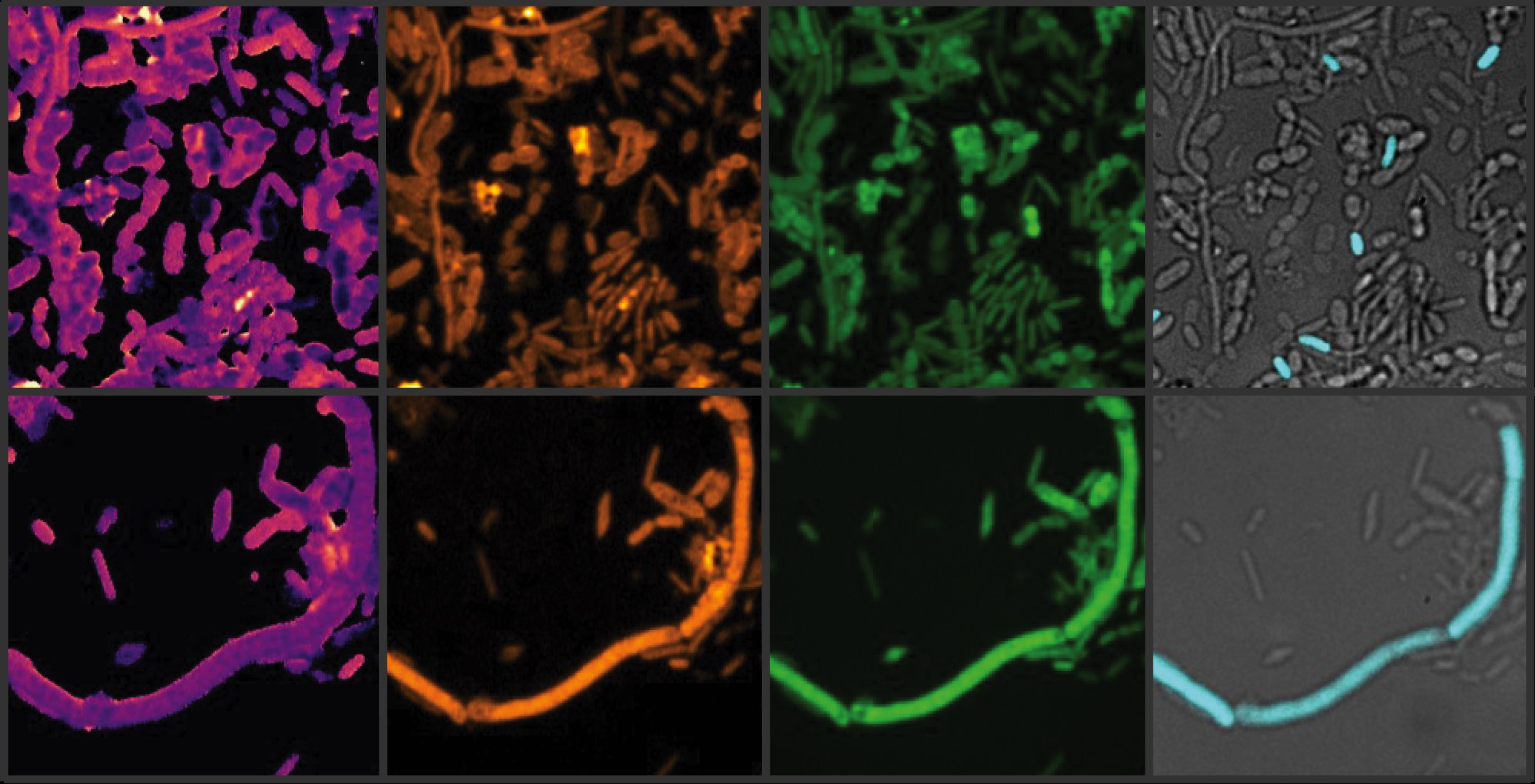
These samples were sent to the Boston University Photonics Centre. Scientists there used highly-sophisticated molecular and imaging techniques, including heavy water labelling combined with Stimulated Raman Spectroscopy (SRS). These novel methods allowed microbial activity to be measured in unprecedented detail at single-cell level.
What the scientists discovered
The team found that loxapine succinate depleted the microbiome to a limited effect, but that entacapone had a much stronger effect. After up to 24 hours of incubation, the Parkinson’s drug had significantly depleted a proportion of certain types of microbes in the samples and reduced the activity of many others. Conversely, E. coli dramatically expanded in the presence of entacapone.
The scientists concluded that the drug entacapone ‘chelates’ iron. In other words, it binds to iron molecules and prevents them from being accessed as an important micronutrient by microbes, leading to their inhibition. They proved this by adding an excess of iron to their samples and observing a reversal of the effect of the drug.
“By showing that entacapone induces iron deficiency, we have uncovered a new mechanism of drug-induced gut dysbiosis, in which the drug selects for E. coli and other potentially pathogenic microbes well adapted to iron limiting conditions,” said Michael Wagner, scientific director of the Excellence Cluster and vice-head of the Centre for Microbiology and Environmental Systems Science (CeMESS) at the University of Vienna.
Future treatment
“Oral iron supplementation reduces the absorption of entacapone in the small intestine. However its microbiome-depleting effects could potentially be mitigated by delivering iron directly to the colon. Much more investigation is needed, but if administered in appropriate amounts, this new therapy might aid in the preservation of microbiome stability for Parkinson’s patients taking entacapone,” explains Dr Fátima Pereira of the University of Southampton.
The researchers caution that their experiments have been conducted in the lab, not within the body, and that further testing and investigation are needed before any treatment change could be recommended or implemented for patients. Additionally, as Parkinson’s patients are often on complex drug regimens, there is a need to examine how these combined treatments collectively impact the gut microbiome.