Southampton part of multimillion pound drive to identify individual cancer risk
Doctors could soon be able to predict your individual chances of getting cancer and offer personalised detection and prevention, thanks to a new research project involving the University of Southampton.
Southampton is part of a new £10 million programme which will use AI and state-of-the-art analytics to better predict a person’s risk of developing cancer.
The Cancer Data-Driven Detection programme will harness vast quantities of data to increase the number of people diagnosed with cancer at its earliest stages.
The programme was announced today [22 January] by Cancer Research UK, the National Institute for Health and Care Research (NIHR) and the Engineering and Physical Sciences Research Council (EPSRC).
The programme aims to access and link data from different sources - including health records, genomics, family history, demographics, and behavioural data - to develop advanced statistical models that help scientists accurately predict who is most likely to get cancer.
Alongside this, the programme will develop powerful new tools which use AI to analyse the data and calculate an individual’s risk of cancer throughout their lifetime.
Over the next five years, the funding will build the infrastructure required to access and link these datasets, train new data scientists, create the algorithms behind the risk models and evaluate the algorithms and AI tools to ensure that they are giving accurate and clinically useful information about cancer risk.
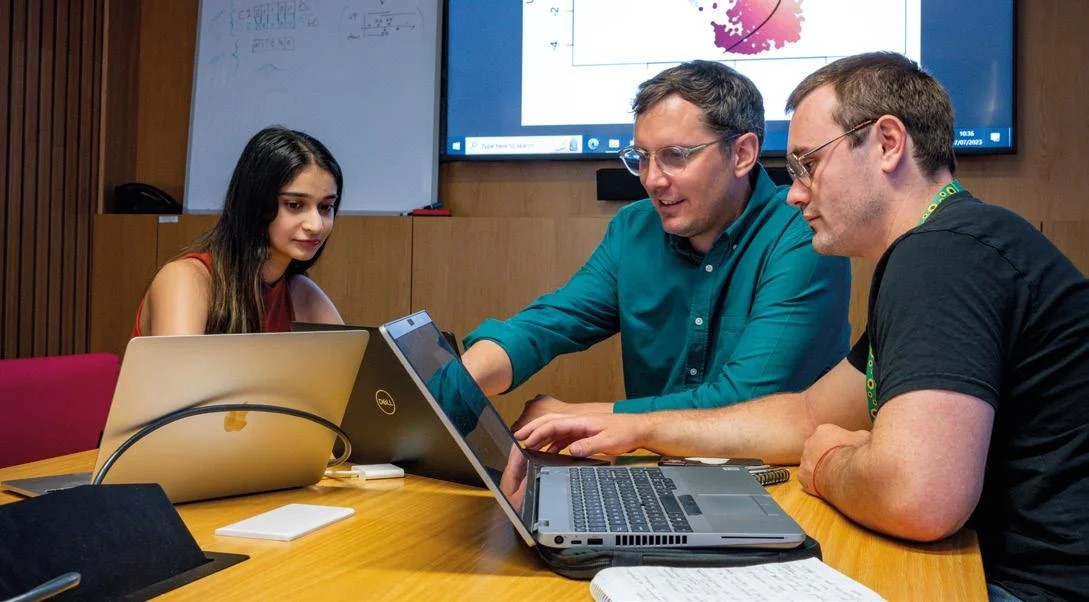
Dr Owen Rackham , Associate Professor at the University of Southampton, is leading the programme’s Advanced Analytics and Multifactorial Modelling workstream. His research team will work on creating predictive models from data on genetic and other omic information.
He said: “As data grows in complexity and volume, so too does the need for innovative approaches that can translate it into actionable insights.
“The messy large-scale datasets we work with demand ingenuity to uncover meaningful patterns. The idea is to combine this with other data such as health records and administrative data to find the best way to predict cancer risk.
“Like many of us, my life has been impacted by the brutal realities of cancer, making this challenge closer to home than many.”
The scientific programme will be guided by partnerships with cancer patients, the public, clinical experts and industry, while addressing ethical and legal considerations to ensure that the models and tools work well in practice.
The models generated from this research could be used to help people at higher risk of cancer in different ways. For example, the NHS could offer more frequent cancer screening sessions or screening at a younger age to those at higher risk, whilst those at lower risk could be spared unnecessary tests.
People identified as higher risk could also be sent for cancer testing faster when they go to their GP with possible cancer signs or symptoms. Individuals at higher risk could also access different ways to prevent cancer.
Director of the Cancer Data Driven Detection programme and Professor of Cancer Risk Prediction at the University of Cambridge, Professor Antonis Antoniou, said: “Finding people at the highest risk of developing cancer, including those with vague symptoms, is a major challenge. The UK’s strengths in population-scale data resources, combined with advanced analytical tools like AI, offer tremendous opportunities to link disparate datasets and uncover clues that could lead to earlier detection, diagnosis, and prevention of more cancers.
“The Cancer Data Driven Detection programme will build the partnerships and infrastructure needed to make data-driven cancer early detection, diagnosis and prevention a routine part of frontline healthcare. Ultimately, it could inform public health policy and empower individuals and their healthcare providers to make shared decisions. By understanding individual cancer risks, people can take proactive steps to stop cancer before it gets worse or even begins in the first place.”
Science Minister, Lord Vallance, said: “There are huge opportunities in AI to improve UK healthcare, from scans detecting illnesses earlier to bringing NHS waiting lists down by planning appointments more efficiently, and these will continue to develop.
“This investment in harnessing the potential of data to spot those at risk of cancer represents the sort of innovation the Government’s new AI Opportunities Action Plan sets out to realise, so this technology improves lives, while transforming public services and boosting growth.”
The Cancer Data Driven Detection programme is jointly supported by Cancer Research UK, the National Institute for Health & Care Research, the Engineering & Physical Sciences Research Council, Health Data Research UK, and Administrative Data Research UK.