Entanglement, Topological Quantum States of Matter, and ’The Second Quantum Revolution’ Event
.jpg)
- Time:
- 14:30 to 16:00
- Date:
- 2025-10-22 12:31:00
- Venue:
- Turner Sims Concert Hall
Event details
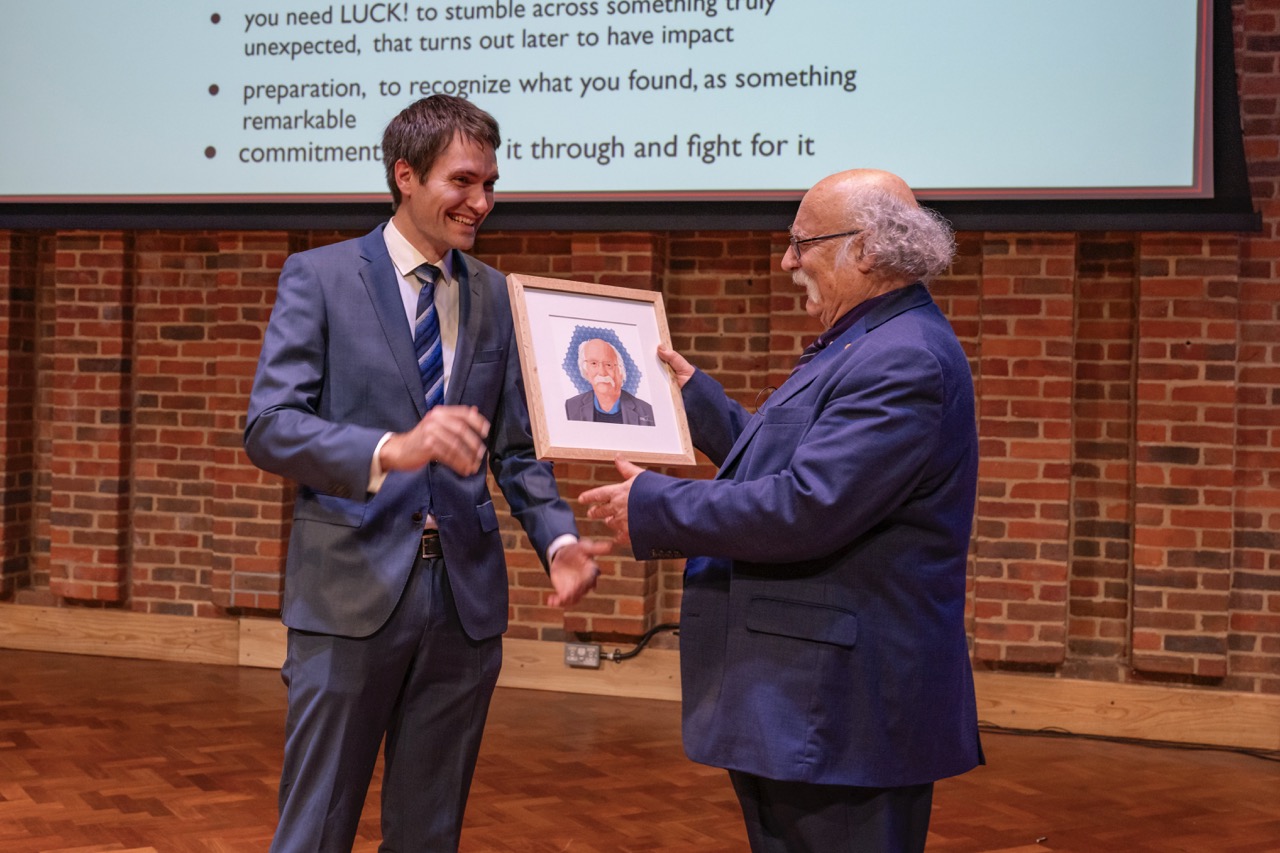
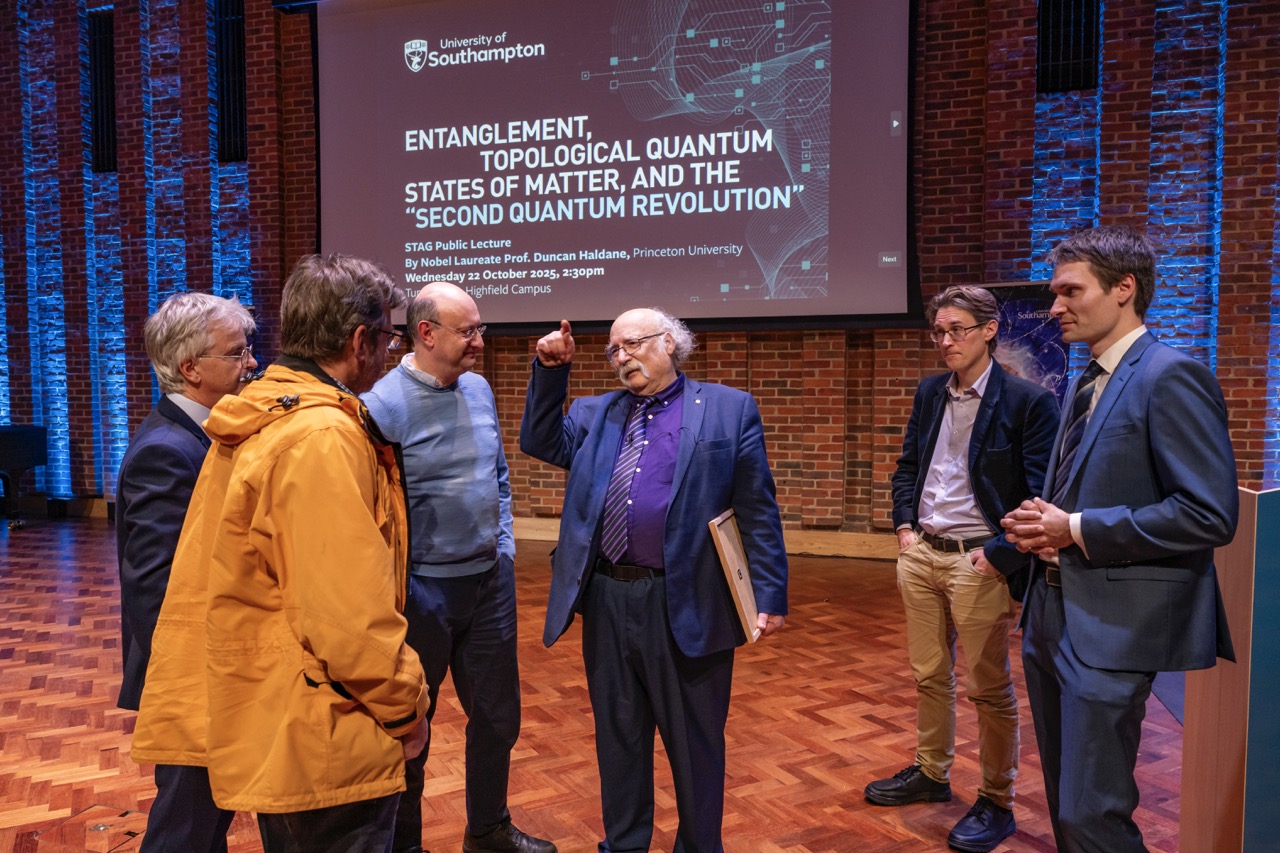
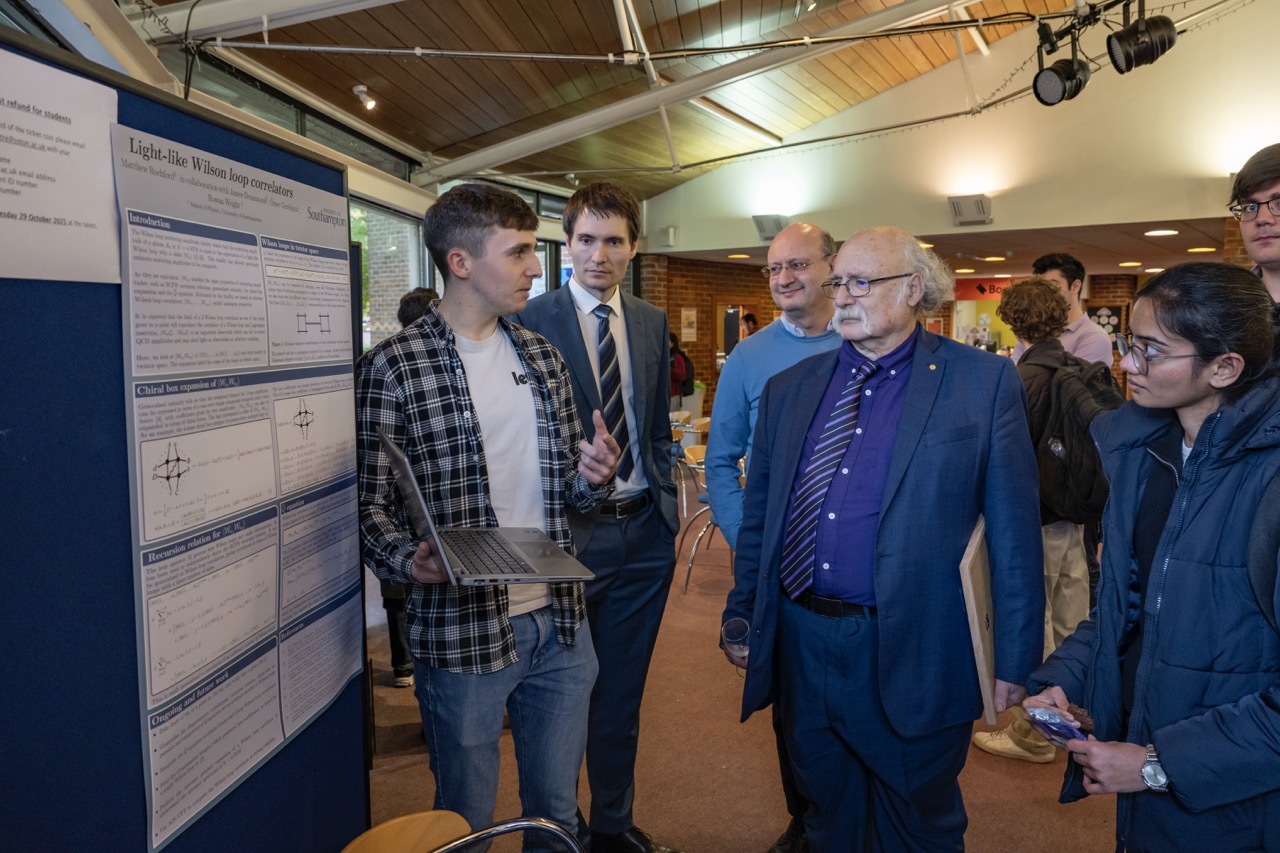
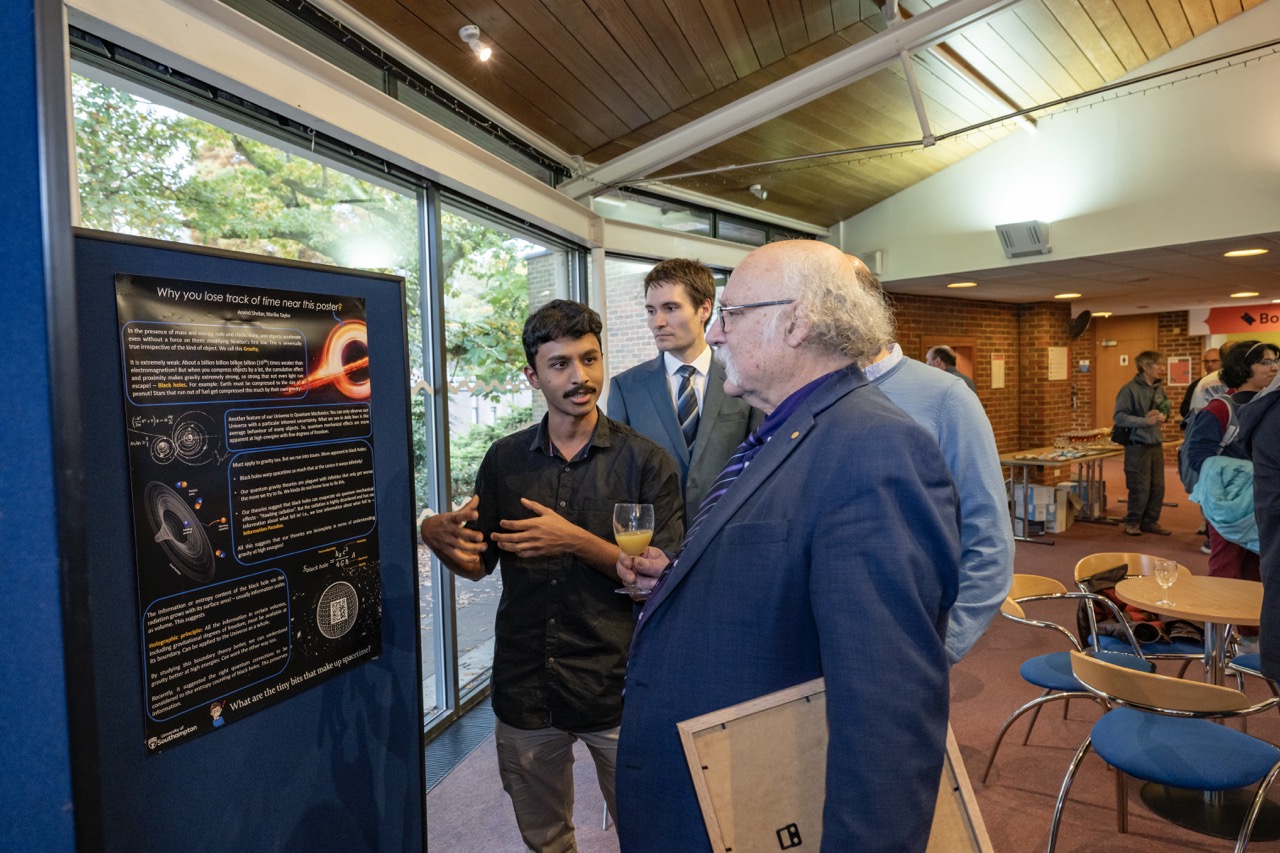
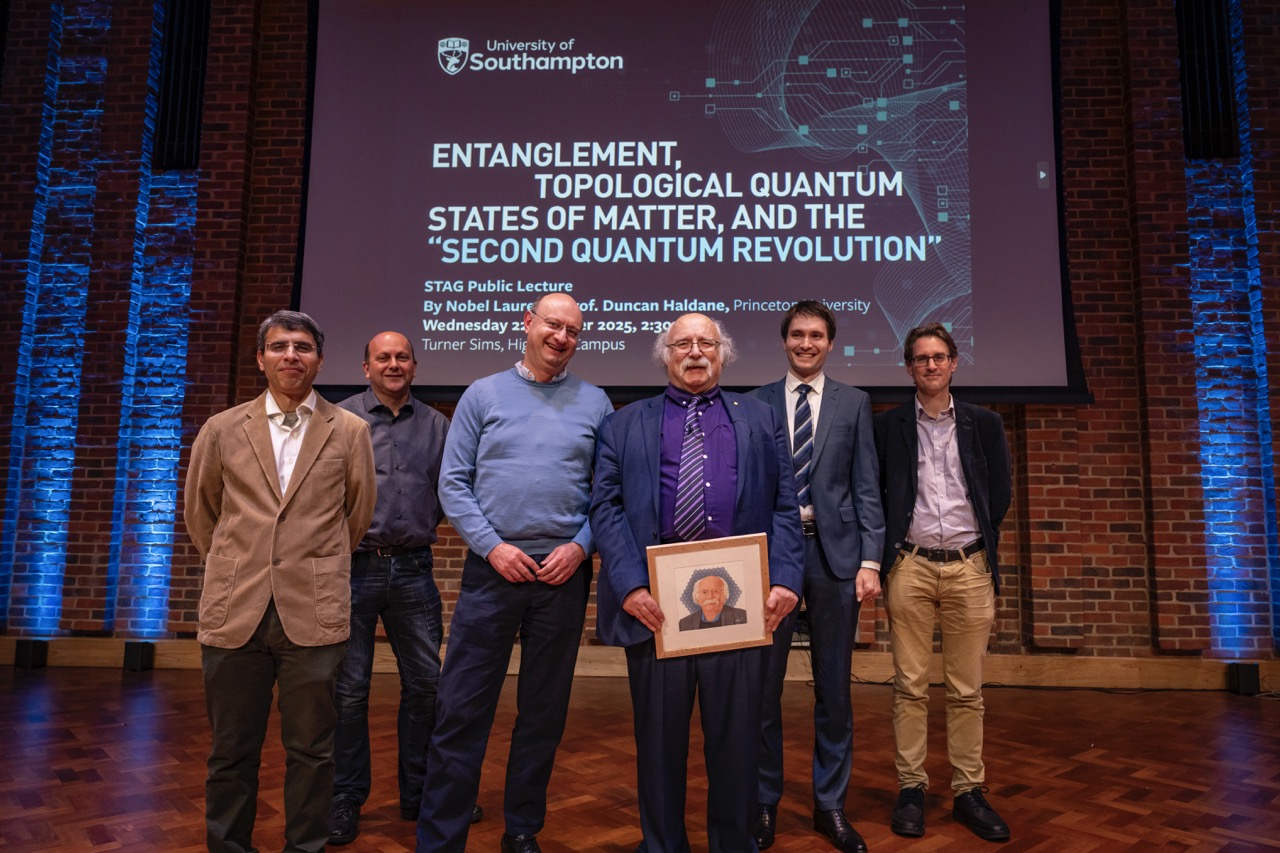
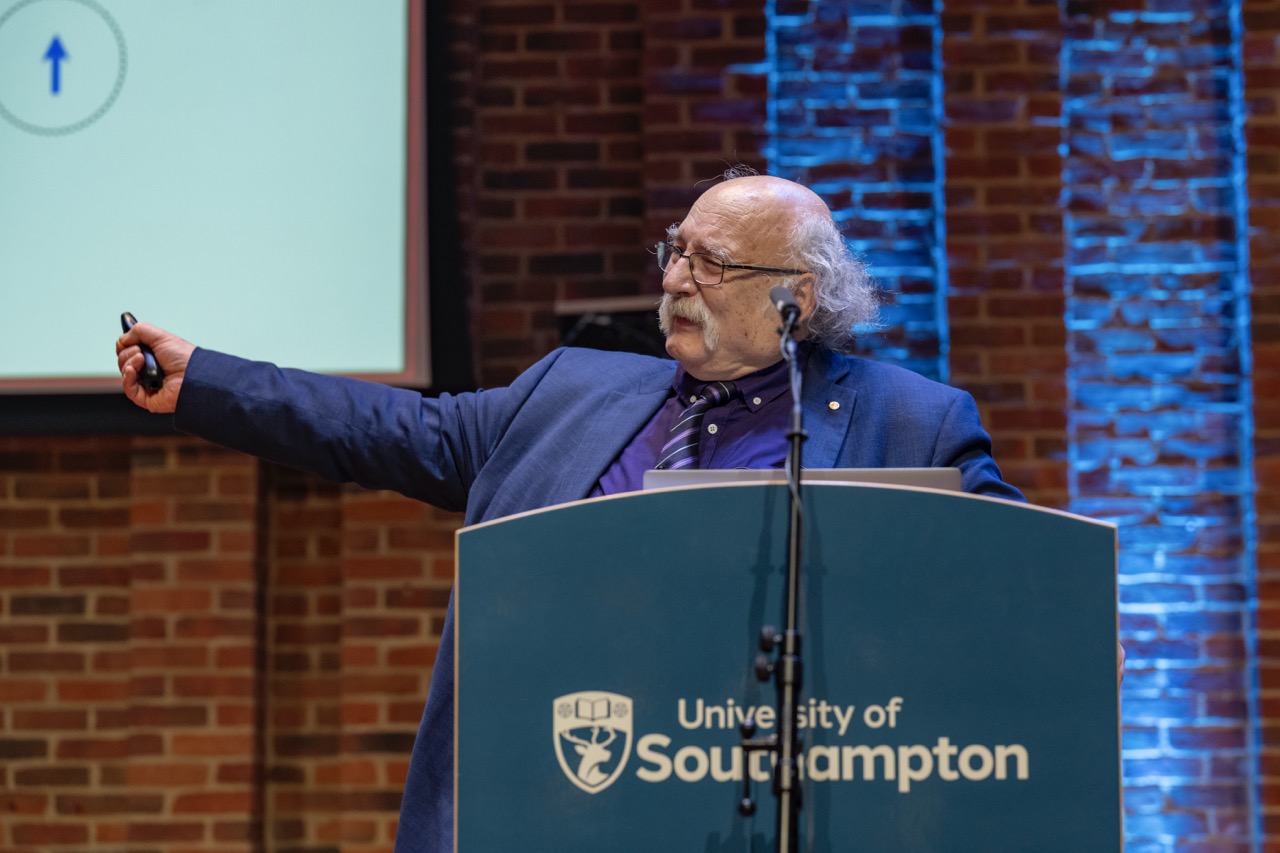
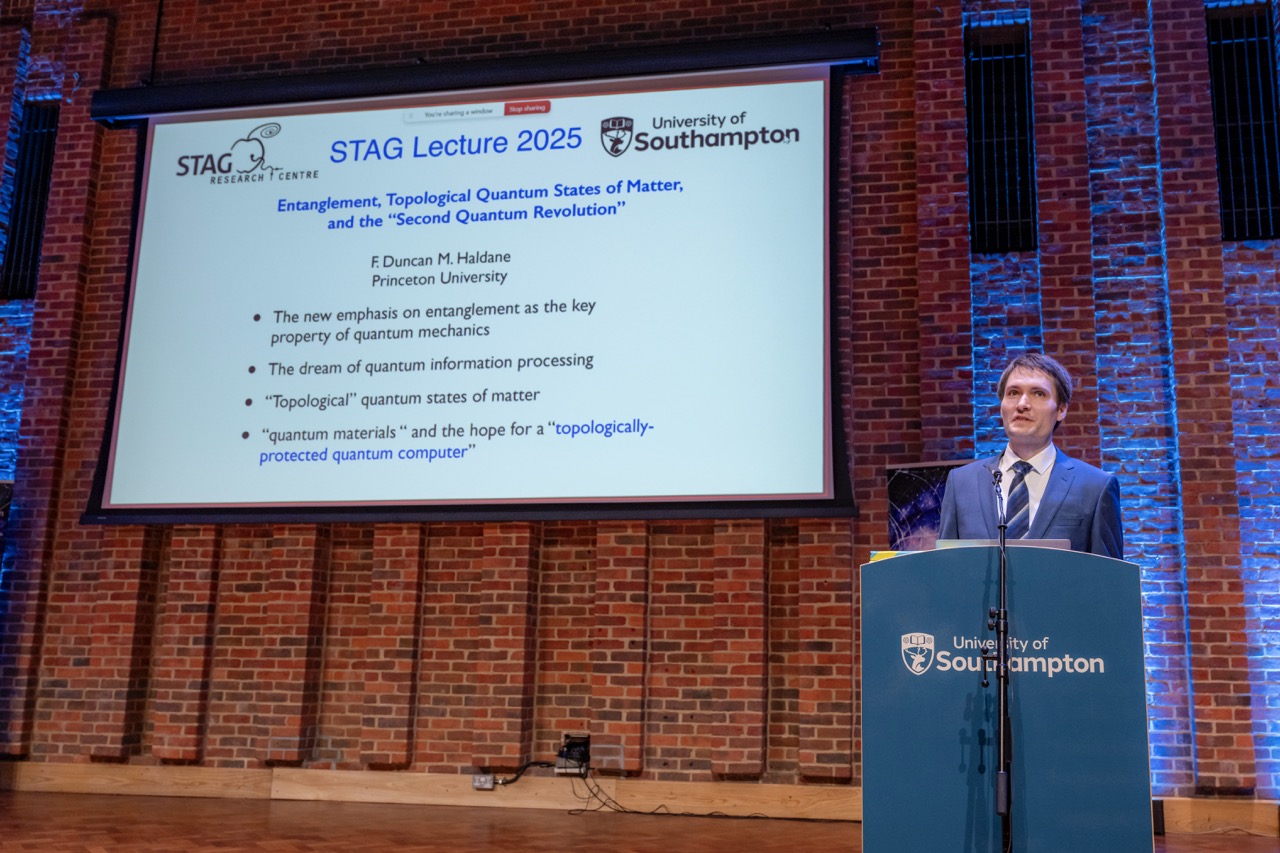
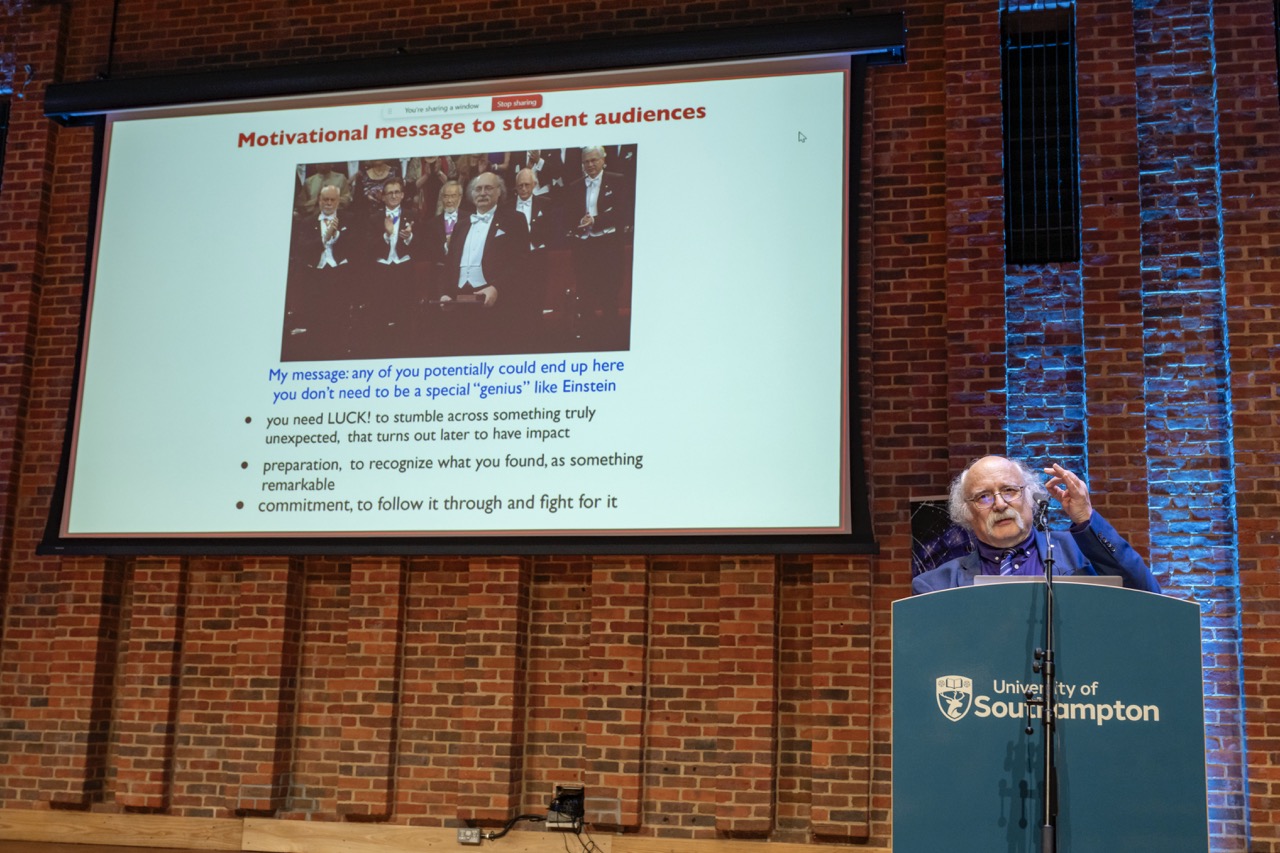
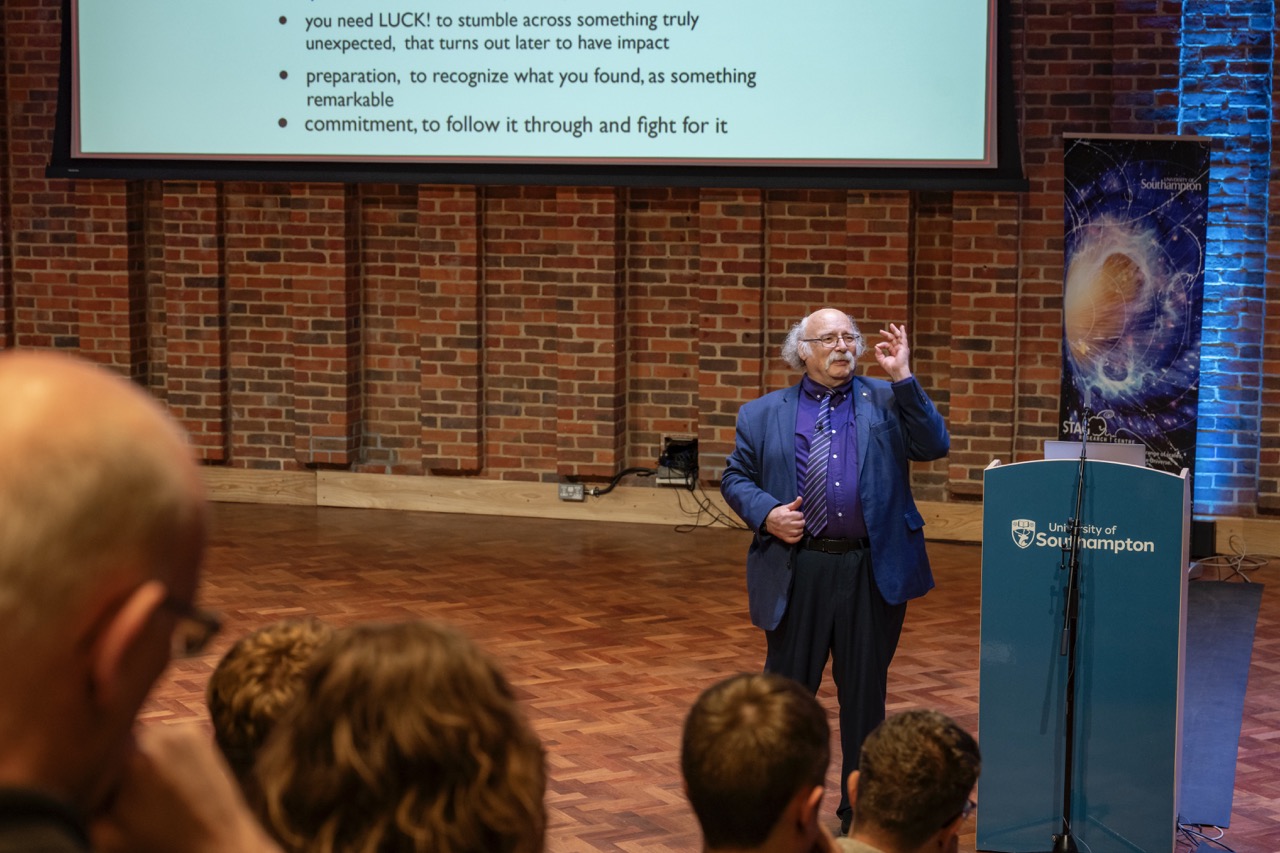
On 22 October 2025, the Southampton Theory, Astrophysics and Gravity (STAG) Research Centre organised its annual Public Lecture. This year’s guest lecturer was highly distinguished theoretical physicist Prof. Duncan Haldane (Princeton University). Haldane gave an engaging and fascinating Lecture about his Nobel Prize-winning contributions to condensed matter physics with applications to topological quantum materials and quantum computers. The title of the Lecture was: Entanglement, Topological Quantum States of Matter, and ’The Second Quantum Revolution’. The Lecture took place in the Turner Sims concert hall and was attended by more than 300 academics, students, members of the public, and visiting high school classes.
Abstract
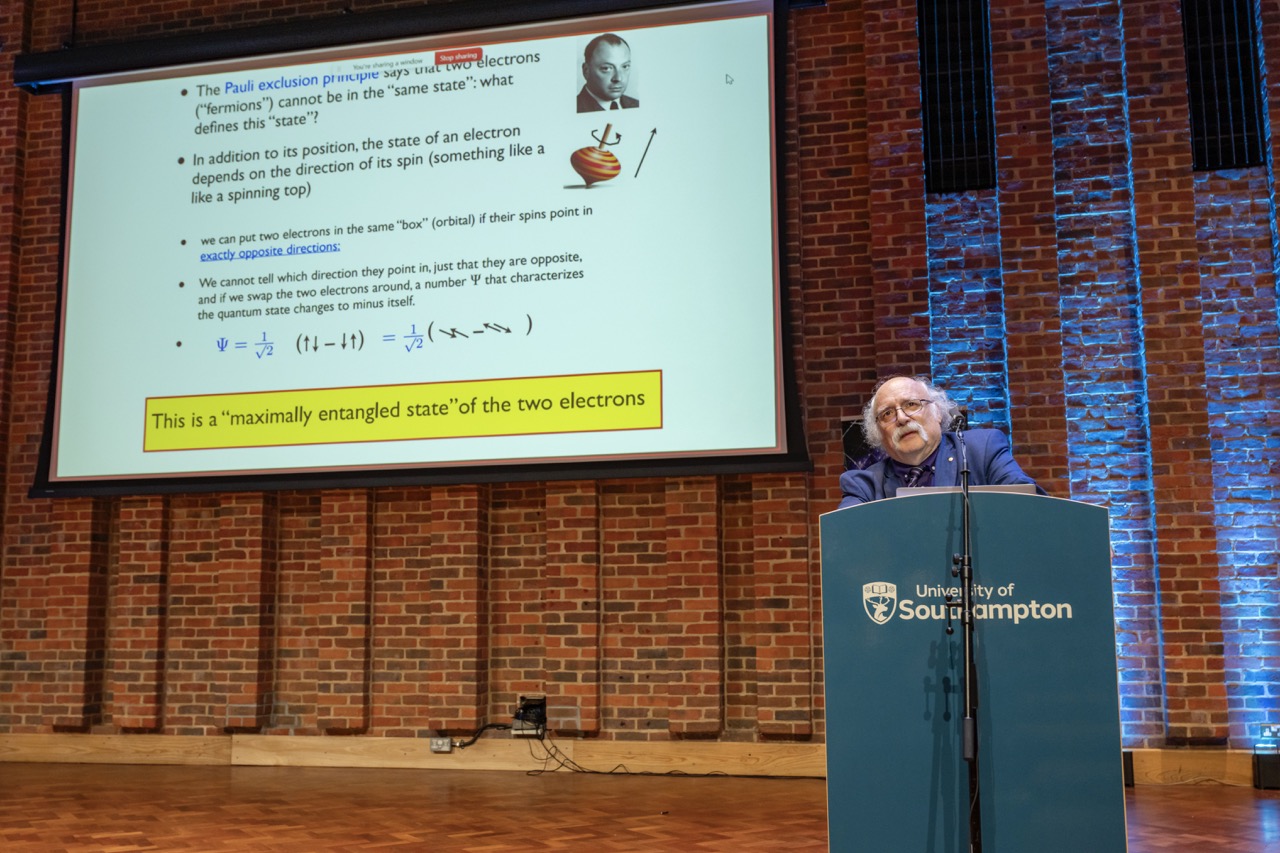
The laws of quantum mechanics were discovered during a brief period starting one hundred years ago, and have survived all challenges, but some of the unexpected things they allow are only now being discovered. In particular, the strange property of “quantum entanglement” (pointed out by Einstein, as a property of quantum mechanics he felt had to be wrong) has been experimentally validated, and is central to current attempts to build powerful “quantum computers”. It is also central to “topological quantum states”, which some believe hold the key to scalable quantum computing.
About the Speaker
Duncan Haldane is the Eugene Higgins Professor of Physics at Princeton University. In 2016 he received the Nobel Prize in Physics for his groundbreaking contributions to condensed matter physics. He obtained his Ph.D. in physics from the University of Cambridge in 1978 and joined the Princeton faculty in 1990. In addition to the Nobel Prize, he has also won several other prestigious prizes such as the Dirac Medal and Prize of the Abdus Salam International Center for Theoretical Physics and the Oliver E. Buckley Condensed Matter Physics Prize from the American Physical Society.