The Power of Serendipity: Guy Osmond’s Journey Through Business, Wellbeing and 51 Years of Opportunity
Featuring: Guy Osmond, Founder of Osmond Ergonomics
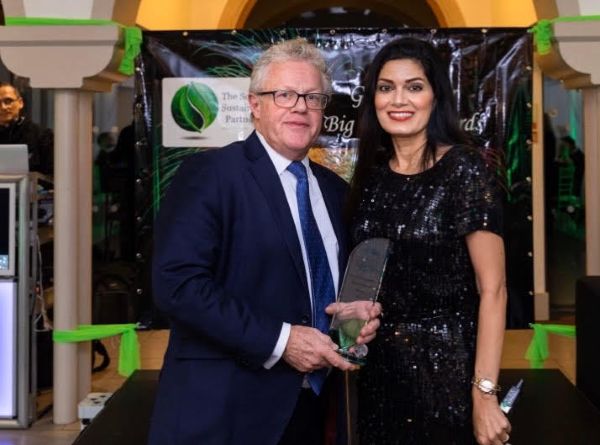
When Guy Osmond reflects on a working life spanning more than five decades, he is quick to dismiss any suggestion that it followed a carefully crafted plan.
“If you're expecting some grand plan of my life, you're going to be bitterly disappointed,” he laughs.
Instead, Guy attributes much of his career to a single word that appears repeatedly throughout our conversation: serendipity.
It is a word that perfectly captures a journey that has taken him from a family amusement business in Salisbury to becoming one of the UK's most respected voices in workplace wellbeing and ergonomics. Along the way, he has built businesses, mentored countless professionals, influenced workplace practice across the country, and developed a reputation for straight talking, integrity, and putting people before profit.
Now, as he prepares for retirement after 51 years in business, Guy looks back on a career defined not by a destination, but by a willingness to embrace opportunity wherever it appeared.
Growing Up Around Business
Entrepreneurship was woven into the fabric of Guy's childhood.
His father ran several family businesses, and conversations around the dinner table often revolved around customers, opportunities, and problem-solving. Business wasn't something distant or abstract. It was simply part of everyday life.
One family story captures this perfectly. In the 1950s, Guy's father was running a wholesale bakery and confectionery business when a customer asked if he could source a jukebox—then a novelty imported from America. Rather than dismiss the request, he saw an opportunity.
That simple question led to a new venture in amusement machines, pool tables and jukeboxes, laying the foundations for the family business that Guy would eventually join.
"I've been brought up in an environment where business was part of the day-to-day conversation."
Although academically gifted—he completed his A-levels at just sixteen—Guy struggled to identify a clear direction for his future. He knew what he didn't want to do, namely more mathematics and physics, but beyond that, the path ahead was uncertain.
He enrolled at the University of Southampton to study Politics and Sociology, but university life never truly captured his attention. Then, during his second year, a family event changed everything.
When his mother was diagnosed with cancer, Guy found himself reassessing his priorities. He wrote a thoughtful letter to his parents explaining that he wanted to leave university and join the family business.
Expecting resistance, he instead received understanding and support. It was a pivotal moment that would shape the rest of his career.
Discovering an Opportunity in Pain
The next major turning point arrived unexpectedly—and painfully.
After the family sold its amusement business in the late 1980s, Guy briefly worked within the acquiring PLC. The experience confirmed something important.
He was not a corporate employee.
"I discovered I was unemployable."
The bureaucracy, politics and lack of agility frustrated him. He soon found himself searching for something different.
That opportunity emerged after a recurring back injury led him to seek medical treatment. During a consultation, he was introduced to an innovative sloping workstation designed to improve posture and reduce discomfort.
Where others saw a medical aid, Guy saw a business opportunity.
Working alongside his brother's manufacturing company in Poole, he began producing and selling ergonomic workplace products just as the UK's Display Screen Equipment Regulations were beginning to transform workplace health and safety.
The timing could not have been better.
What started with a single product quickly expanded into footrests, monitor stands, specialist seating, ergonomic assessments and workplace consultancy.
"We were still trying to figure out what the hell we were doing really," Guy recalls.
But by listening carefully to customers and remaining flexible, the business found its niche.
Building a Reputation Rather Than an Empire
Unlike many entrepreneurs, Guy never set out to build the biggest business in the sector.
Instead, he focused on building the most trusted one. "We always said it's about the outcome, not the sale." That philosophy became embedded in the culture of Osmond Ergonomics.
Customers knew they would receive honest advice rather than aggressive sales tactics. If a product wasn't needed, Guy and his team would say so. If a simpler solution existed, they would recommend it.
In an industry often driven by targets and metrics, that commitment to integrity became a powerful differentiator.
It also shaped Guy's approach to leadership.
Over the years, he assembled a team that shared his values and complemented his own strengths. While he describes himself as intuitive, direct and action-oriented, he deliberately surrounded himself with people who challenged ideas, analysed risks and brought different perspectives.
Looking back, he credits much of the company's success to the people around him.
"My sole skill is picking really good people."
Seeing the Whole Person
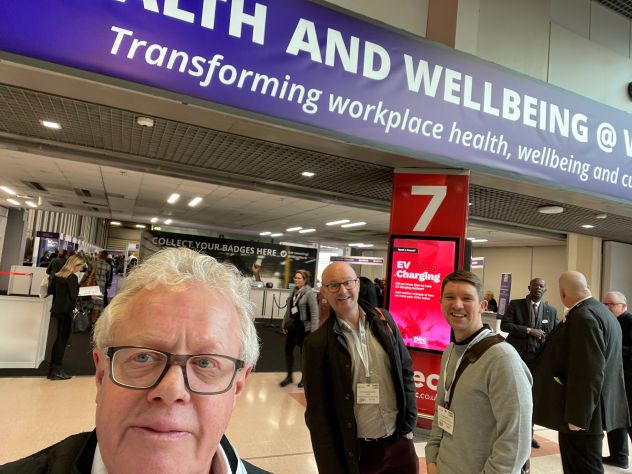
As workplace wellbeing became an increasingly important issue, Guy's thinking evolved.
What began as a business focused on physical ergonomics gradually expanded into broader conversations about mental health, stress, neurodiversity and workplace culture.
A typical workplace assessment might begin with an employee reporting back pain.
Yet, after a conversation, Guy would often discover concerns about redundancy, financial pressure, family stress or organisational uncertainty.
The back pain was real. But it was often just one symptom of a much larger picture.
"We thought we were dealing with backache. Actually, we were dealing with everything else."
This insight led Osmond Ergonomics to adopt a more holistic approach to workplace wellbeing—one that recognised the complex interaction between physical health, mental health and organisational culture.
It also reinforced Guy's belief that meaningful solutions come from bringing people together.
Throughout his career he became known for creating connections between HR professionals, occupational health specialists, facilities managers, academics and business leaders.
While their language and priorities might differ, he observed that most shared a common goal: helping people thrive at work.
The Value of Relationships
One theme runs consistently throughout Guy's story: the importance of relationships.
Over the years, he has built an extensive network across business, healthcare, academia and government. Increasingly, people sought him out not only for his expertise but for his perspective.
Sometimes they wanted career advice. Sometimes they wanted help solving a business problem. Often they simply wanted someone who would tell them the truth.
Guy never considered himself a formal mentor, but his influence has been significant.
As retirement approaches, former colleagues and contacts have reached out to thank him for conversations that shaped important decisions years earlier.
Others have shared how his monthly blogs influenced their thinking. For Guy, these moments are among the most rewarding aspects of his career.
"If I can connect someone with the right person, I get a real buzz from it."
A Different Kind of Legacy
Many entrepreneurs dream of selling their businesses and securing a large exit.
Guy's approach has been characteristically different. After exploring several potential acquisitions, he ultimately chose to wind down the business in a way that protected his employees and customers.
The company itself may be disappearing, but its impact lives on through the people who helped build it.
Several long-serving team members have moved into new opportunities. Others have launched businesses of their own. Former employees now hold senior leadership positions across the industry.
One recently told Guy that many of the management practices he uses today were learned while working at Osmond Ergonomics.
For Guy, that matters more than any balance sheet.
"I don't feel strongly that I have to leave anything behind. But if there are little bits of influence I've had over the years, I'd love to hear about them."
Advice for the Next Generation
When asked what advice he would give to young people starting their careers, Guy returns once again to serendipity.
His message is reassuringly simple. Don't panic if you don't have a master plan. Instead, create opportunities for unexpected opportunities to find you.
Talk to people. Ask questions. Introduce yourself. Be curious.
Put yourself in situations where conversations can happen.
The opportunities may not arrive immediately, but they are far more likely to appear if you're actively engaging with the world around you.
"Don't be worried if you don't know what direction you want yet."
His belief is that confidence often grows through action rather than waiting for certainty.
And sometimes all it takes is the courage to start a conversation.
Looking Ahead
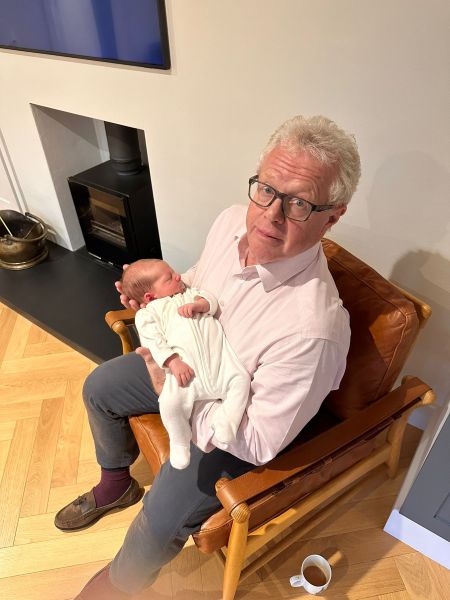
Retirement, for Guy, is less an ending than another transition.
There will be time with grandchildren, road trips, classic cars, long weekends away and perhaps some selective consultancy work.
There will also be new challenges—learning where the vacuum cleaner lives and discovering how the washing machine works, according to his wife.
But after a lifetime spent embracing uncertainty, he seems well prepared for whatever comes next.
Because if Guy Osmond's career teaches us anything, it is that success does not always come from following a carefully mapped route.
Sometimes it comes from saying yes to an unexpected conversation, a chance encounter, or a problem waiting to be solved.
And sometimes, the most remarkable careers are built one serendipitous opportunity at a time.