Choosing Growth Over Comfort: How Emma Deakin Built a Career by Never Standing Still
Featuring: Emma Deakin, Sigvaris Group
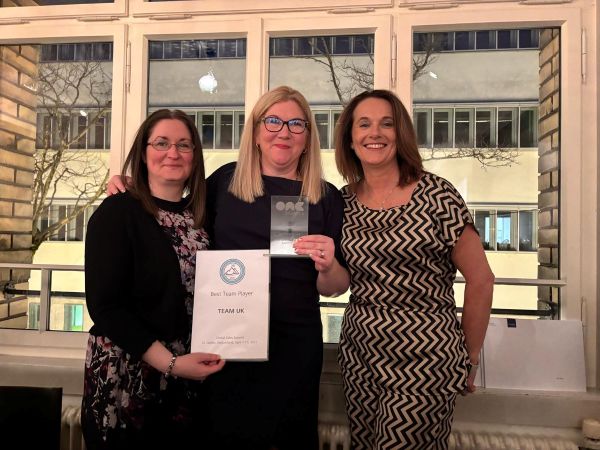
"The buck stops with me."
It's a simple phrase, but it captures exactly how Emma Deakin approaches leadership.
Today, Emma is General Manager of Sigvaris Group Britain, part of a 160-year-old Swiss family-owned healthcare company that is dedicated to helping people feel their best everyday, aiming to improve health and wellbeing through medical compression therapy. Alongside leading the UK business, she also oversees operations in Australia, balancing two markets separated by 10,000 miles and a twelve-hour time difference.
It is a role that demands commercial judgement, strategic thinking, and accountability for everything from people and culture to regulatory compliance and business growth.
Yet Emma's leadership journey began a very long way from board meetings and international strategy. It began at fourteen years old, cycling three miles every Saturday to a nursing home run by nuns.
Her first job was cleaning commodes.
Learning Care Before Learning Business
The work wasn't glamorous. Emma emptied bedpans, polished staircases, cleaned dentures, brushed wigs and helped care for elderly residents recovering from illness. Far from putting her off healthcare, the experience inspired her. "I loved it."
What stayed with her wasn't the hard work—it was the standard of care. Every resident was treated as an individual. Meals were served on bone china. People were encouraged to remain active. Small details mattered.
The discipline was uncompromising, but so was the compassion. Those early lessons would quietly shape every leadership decision Emma has made since. By sixteen, she already knew she wanted to become a nurse.
Seeing the Person, Not the Patient
After training in Liverpool and specialising in Accident & Emergency nursing, Emma found herself facing the reality familiar to many NHS clinicians.
Increasing pressure. Growing waiting times. Less opportunity to provide the kind of care she believed patients deserved. "If I'm unhappy," she says, "I need to do something about it."
Rather than accepting that frustration, she made what many colleagues considered an unusual move. She left the NHS to become a commercial nurse. Some viewed it as "going over to the dark side." Emma never saw it that way.
Working with people living with stomas, chronic wounds and continence conditions, she discovered something that has shaped her career ever since.
"To the NHS it's a prescription. To the patient, it's their life." The products themselves mattered. But what mattered more was what they allowed people to do.
Return to work. Travel. Play sport. Regain confidence. Live independently.
That perspective transformed how she thought about healthcare—and eventually, about business.
Choosing Growth Over Comfort
Looking back across Emma's career, one pattern appears again and again. She rarely stays where she has become comfortable.
When she mastered clinical nursing, she moved into commercial healthcare. When she understood sales, she stepped into leadership. When leadership became familiar, she moved into marketing. Then executive leadership. Then general management.
Each move involved uncertainty. Some came through opportunity. Others followed redundancy, restructuring or organisational change.
Several required leaving businesses she genuinely enjoyed because their culture or values no longer aligned with her own. "If I can't change things," she says, "I'm not going to stay."
It is a remarkably consistent philosophy. Not driven by ambition alone. Driven by the belief that life is too short to spend most of it somewhere that no longer feels right.
"If you don't enjoy your role 70% of the time, something needs to change."
Discovering Leadership Starts With Yourself
Emma describes two leadership development programmes as the turning point in her career. They didn't teach finance or strategy. They taught self-awareness.
For the first time, she was challenged to understand her own strengths, motivations and behaviours—not simply as a manager, but as a person. "They helped me understand my worth."
It was also the first time she openly reflected on her own upbringing alongside colleagues whose backgrounds had often been very different. Rather than seeing those differences as disadvantages, she began recognising them as strengths.
The resilience. The work ethic. The empathy.
Everything she had experienced before entering business had become an advantage rather than something to overcome.
Choosing Sigvaris
When the opportunity arose to lead Sigvaris Group Britain, Emma wasn't simply looking for a bigger title. She was looking for a business where she could make a genuine difference.
Founded in Switzerland more than 160 years ago and still family-owned today, SIGVARIS GROUP combines a global healthcare presence with local decision-making and a strong commitment to improving patients' quality of life, and enhancing clinical practicethrough medical compression solutions.
That combination appealed immediately. Unlike many larger organisations where responsibilities are highly specialised, the UK General Manager role offered something much broader.
Commercial strategy. People. Culture. Regulation. Health and safety. Business growth.
"The buck stops with me."
For Emma, that wasn't intimidating. It was exactly the challenge she had been preparing for throughout her career.
Today, alongside leading the UK business, she also oversees the Australia & New Zealand operation—supporting teams across two continents while developing both businesses to grow faster than their markets.
Success Isn't Just About Growth
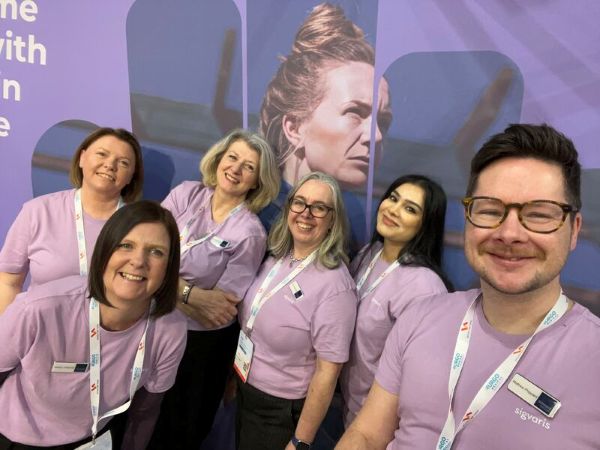
Ask Emma what success looks like and she doesn't immediately talk about revenue. She talks about people. Some of the proudest moments in her career have come when members of her own teams have been promoted—even when that meant losing them to another organisation.
"If you've helped someone get promoted, that's incredibly satisfying." She speaks just as thoughtfully about the more difficult moments. Like every senior leader, she has had to make people redundant.
One piece of feedback has stayed with her. "I've never had such a positive redundancy experience." It is an unusual compliment. But for Emma it mattered enormously.
Leadership isn't measured only by the decisions you make. It's measured by how people feel when they've experienced those decisions. That philosophy mirrors the culture she is building today—one centred on openness, development and meaningful feedback.
Looking Ahead
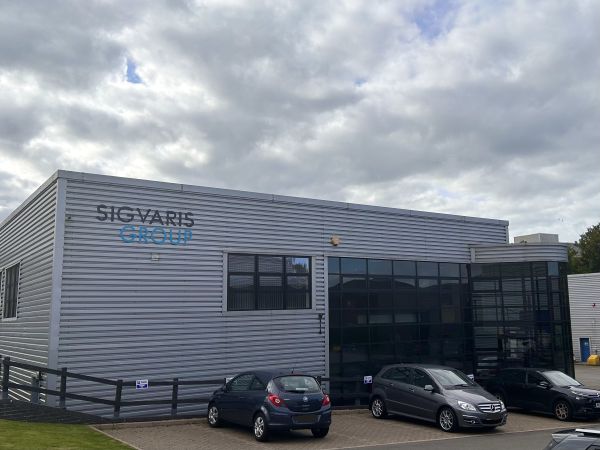
Emma's ambition is clear. She wants both the UK and Australian businesses to become among the strongest-performing operations within the wider SIGVARIS GROUP.
But growth alone isn't the goal. She wants to create organisations where people enjoy coming to work, feel able to develop, and are encouraged to keep learning.
Just as importantly, she wants to continue developing future leaders. Because someone once invested in her. Now it's her turn to do the same.
Advice for the Next Generation
If Emma could speak to the fourteen-year-old girl cycling to that Liverpool nursing home, her advice would be surprisingly simple.
"Believe in yourself much earlier."
Looking back, she realises every significant step in her career began with uncertainty. Every promotion felt slightly too big. Every new role required starting again. Yet each decision expanded what she believed was possible.
Her story is a reminder that careers are rarely linear.
They are built through curiosity, resilience and the courage to keep moving - even when the next step feels uncertain.