Nearly 100 Years in Business: How Solent Plastics Continues to Grow Through Relationships, Innovation and Long-Term Thinking
Featuring: Ben Butcher, Director, Solent Plastics
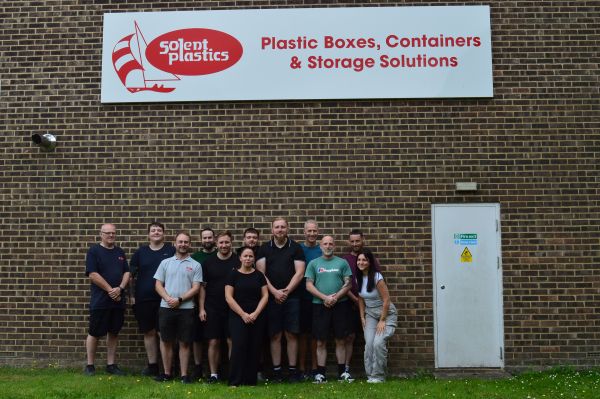
When people hear the words “family business”, they often imagine a small local company passed down through generations. Few would expect a business founded in 1928 to still be thriving nearly a century later, adapting continuously to changing markets, technologies and customer needs.
Yet that is exactly the story of Solent Plastics.
Based in Romsey, the company supplies industrial storage, handling and catering solutions to organisations across the UK, serving everyone from NHS trusts and food manufacturers to motorsport businesses and logistics companies. While the products may seem simple—storage boxes, containers and handling equipment—the story behind the business reveals something far more interesting: how a third-generation family company has remained relevant for almost 100 years by focusing on people, relationships and a willingness to evolve.
For Director Ben Butcher, that journey has also been a lesson in finding his own path before eventually returning to the family business.
Finding Direction Through Experience
Growing up in Hampshire, Ben was never entirely sure where his career would lead.
“I wasn’t hugely academic,” he reflects. “I enjoyed school, but I probably listened too much to what I was good at rather than what I was interested in.”
After studying Geography at Peter Symonds College, he went on to the University of Sussex, graduating with a degree focused on human geography and migration studies. Like many students, however, Ben left university with a qualification but without a clear roadmap.
“You get built up to think that once you graduate, everything will just fall into place. Then suddenly you’re out in the real world and wondering what comes next.”
Before finding a long-term direction, he took on a variety of jobs to support himself, from call centre work to door-to-door sales. None of them felt like a perfect fit, but each provided valuable experience.
Looking back, those early jobs became some of the most important lessons of his career.
“There’s no such thing as a bad job. Every experience goes into your toolbox. You might not need it today, but five years later you’ll find yourself using something you learned.”
Travel, Adventure and a Different Perspective
One defining feature of Ben’s early life was a desire to travel. Before university, he spent time in Central America with Rally International, volunteering on community projects in Costa Rica and Nicaragua. The experience remains one of the most influential periods of his life.
Living in remote communities, helping build infrastructure projects and working alongside people from different backgrounds reinforced values that would later shape his leadership style.
“It was probably still the best ten weeks of my life.”
The experience also deepened an interest in people, communities and international perspectives—interests that had initially drawn him towards geography and charity work.
While his career eventually took a different direction, the importance of understanding people would become a recurring theme throughout his professional life.
A Corporate Detour
After university, Ben joined American Express in Brighton. What began as a temporary role turned into a three-year career within a major global organisation. The experience provided valuable exposure to corporate structures, large-scale operations and professional development opportunities.
It also showed him what he didn’t want. One project he worked on took nearly three years to gain approval, only to be shelved shortly afterwards.
“The speed of decision-making was what I struggled with most.”
When the team was eventually outsourced overseas, Ben volunteered to spend time in India training its replacement. The opportunity combined professional development with another chance to travel and broaden his perspective.
But by this stage, another opportunity was emerging closer to home.
Returning to the Family Business
Solent Plastics had always been part of Ben’s life. Conversations around the dinner table frequently revolved around customers, suppliers and the challenges of running a business. Yet joining the company was never an expectation.
“There was never any pressure to come into the business.”
Founded originally as Stanley Butcher & Sons in 1928, the company began as a supplier of flour and bakery products to independent bakeries across the South Coast. When industry consolidation threatened the business model, Ben’s grandfather adapted, diversifying into bakery equipment and supplies.
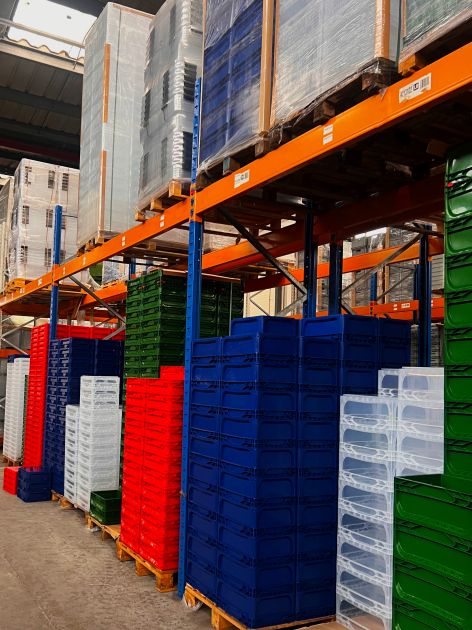
That willingness to evolve would become a defining characteristic of the company. Over subsequent decades, the business shifted increasingly towards plastic handling and storage products, responding to changing customer needs and market opportunities.
By the time Ben joined, the business was already being transformed by a new generation. His cousin had recognised the growing importance of e-commerce long before many competitors and invested heavily in developing the company’s online presence. The timing proved crucial.
“It was one of those situations where everything just aligned.”
Building a Modern Business on Traditional Values
Today, Solent Plastics employs 13 people and ships more than a thousand parcels every week across the UK. Yet despite significant growth, the company has remained committed to the values that helped it survive for nearly a century. Customer service sits at the heart of everything they do.
“We treat someone buying one storage box exactly the same as someone buying ten thousand.”
That philosophy reflects a belief that every customer matters and every interaction contributes to the company’s reputation. It has also helped the business build long-term relationships across sectors including healthcare, manufacturing, catering, logistics and motorsport.
While some competitors focus solely on volume, Solent Plastics positions itself as a problem solver.
“We describe ourselves as storage solution specialists. It’s about finding the right solution, not simply selling the most expensive product.”
Leading Through Change
Few businesses survive for nearly 100 years without encountering significant challenges. Over the past two decades alone, Solent Plastics has navigated the global financial crisis, Brexit, COVID-19, supply chain disruption, raw material shortages and rising inflation.
During the pandemic, the business remained operational, supplying essential organisations while implementing measures to protect staff and maintain continuity. Like many SMEs, they often had to make decisions before clear guidance was available. The experience reinforced the value of strong networks and trusted relationships:
“We were constantly speaking to other businesses and trying to work out together what the next day was going to look like.”
That collaborative approach continues today through relationships with suppliers, customers and fellow SMEs across the UK and Europe.
Sustainability Without Compromise
As a plastics business, sustainability is an issue Ben addresses openly: “It’s a fair question.”
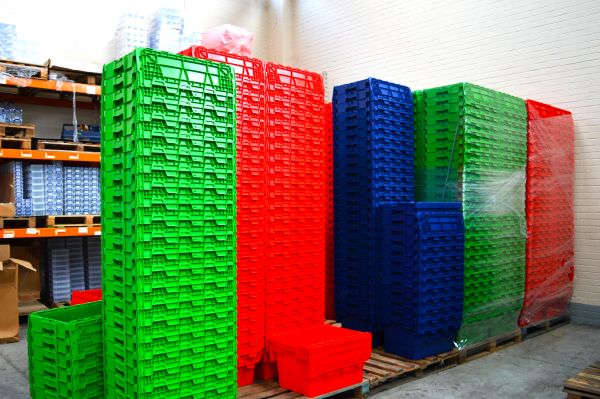
Rather than avoiding the conversation, Solent Plastics has embraced opportunities to improve the environmental credentials of its products. Much of the company’s range is now available using recycled materials, and all products are fully recyclable at the end of their useful life.
Importantly, many products are designed to last for decades rather than months.
Ben points to recently acquired storage boxes manufactured in West Germany—products that remain perfectly usable after several decades of service.
“We’re selling industrial products designed for long-term use.”
The company also operates a growing used-products division, purchasing and reselling containers that still have years of life remaining. It reflects a practical understanding of sustainability that prioritises durability, reuse and circularity.
Looking Towards the Centenary
With its 100th anniversary approaching in 2028, Solent Plastics finds itself in an enviable position.
The business continues to grow, its online platform has become one of the most advanced in its sector, and opportunities remain to expand product ranges and strengthen customer relationships. For Ben, however, growth is not simply about bigger numbers.
The ambition is to build capability within the team, develop future leaders and ensure the business remains strong for future generations.
“We’ve always looked at growth through the lens of sustainability.”
That long-term perspective has helped the company survive economic shocks, changing technologies and shifting customer demands. It may also be the reason why a business founded in 1928 is still thriving today.
Lessons from the Journey
When asked what advice he would give his sixteen-year-old self, Ben’s answer reflects both his personal journey and the company’s enduring philosophy.
“There’s no such thing as a bad experience.”
Challenges, mistakes and setbacks may feel difficult in the moment, but they become part of the toolkit that helps us navigate the future. For a business approaching its centenary, that lesson feels particularly fitting.
After all, nearly one hundred years of success is not built on avoiding difficulties, it is built on learning from them.
Looking Ahead
As Solent Plastics approaches its centenary, the business continues to prove that longevity is not about standing still. It is about adapting without losing sight of your values.
From bakery supplies in the 1920s to sophisticated e-commerce and industrial storage solutions today, the company’s story is one of continuous evolution.
And if the last hundred years are any indication, the next chapter is only just beginning.