More Than Cars: How Mark Baumfield Built on a Family Business by Putting Service First
Featuring: Mark Baumfield, Managing Director, Southern Motor Contracts
At first glance, Mark Baumfield’s career might look like a familiar family-business story: a son joins the company founded by his father and eventually takes the reins.
The reality is rather different.
Mark had no particular ambition to work with cars. In fact, he deliberately built a career elsewhere before joining Southern Motor Contracts (SMC), the Havant-based vehicle leasing and fleet management business his father established in 1988.
What eventually brought him into the business was not a passion for vehicles, but something much simpler: people.
“I knew nothing about cars, I knew nothing about vans. But I could service customers. I could listen to what they wanted and help them.”
That ability to listen has become central to both Mark’s career and the evolution of SMC.
Learning How to Work
At 16, Mark had no carefully mapped-out career plan. After leaving school with what he describes candidly as “average” GCSE results, he went to college, studying business and leisure and tourism while working part-time at Topman.
His first serious step into working life came in estate agency in Worthing.
As an 18-year-old in an office with colleagues considerably older than him, Mark quickly encountered a different set of expectations. His boss taught him the basics that can easily be underestimated: stand up when a customer enters, shake hands, listen properly, answer the telephone professionally and take responsibility when something goes wrong.
The lessons stuck. By 19 or 20, Mark was negotiating property sales and dealing with solicitors and conveyancers. He was subsequently headhunted by a larger town-centre estate agency, began carrying out valuations and felt his career was gathering momentum.
Then came 2008. The financial crisis hit the property market and, as the newest employee, Mark was made redundant. On the same day, his mother suffered a fall resulting in a bleed on the brain.
Suddenly, a young man with a mortgage, bills and a relatively comfortable lifestyle had a very different perspective. “That hurt, being made redundant.” It was an early lesson that careers rarely travel in straight lines.
Learning What Kind of Leader Not to Be
Needing work, Mark joined a commercial laundry owned by a friend of his father. It was an entirely unfamiliar industry, supplying linen to hotels and restaurants, but the role drew upon something Mark was beginning to recognise as one of his strengths: understanding customers and solving their problems.
He stayed for around six years. He is equally candid that he never particularly enjoyed it. Yet those years proved valuable for another reason. Mark began observing management closely and working out not only the kind of leader he admired, but the kind he did not want to become.
That distinction would matter later.
“I learned a lot about how I do not want to run a business and how I don’t want to manage people.” Sometimes, career development comes from positive role models. Sometimes it comes from seeing behaviours you decide not to repeat.
Joining the Family Business
In 2015, the turning point came during a telephone conversation with his father, Andy.
Andy had bought out a business partner, lost two members of staff and, unusually, sounded stressed. Mark, by then a father himself, made an offer: did his dad want him to leave his job and join SMC?
It was not an automatic or comfortable decision simply because they were family. “It was a gamble for both of us.” Mark had to trust that his father would be a good employer. Andy had to trust that his son would become a good employee. And Mark really did start without industry expertise.
He joined in a logistics and maintenance role knowing little about leasing or rental. What he did understand was service. He learned the technical side of the business and then began asking a question that has continued shaping and helping SMC grow ever since:
What problems do our customers have that we could take away from them?
Selling Less Hassle, Not Just Vehicles
That question led to one of the most important developments in the business.
Mark noticed that for many companies, providing vehicles was only part of the problem. Someone also had to deal with breakdowns, maintenance, invoices, fuel cards, insurance administration and the everyday complications of keeping employees mobile.
For an SME with dozens of vehicles, those seemingly small tasks could consume significant amounts of management time. SMC began offering to take them on. One early customer entrusted around 100 vehicles to the service. According to Mark, that fleet management operation has since grown to around 700 vehicles.
The philosophy can occasionally be remarkably hands-on.
If a local customer arrives because a driver needs AdBlue, Mark is quite prepared to go downstairs, pick up a bottle and fill it himself. That might seem a long way from the conventional job description of a managing director. For Mark, that is precisely the point.
“You can lease a vehicle anywhere. You can rent a vehicle anywhere. But if you actually want to talk to a human being and have that service, then that’s our selling point.”
SMC’s own customer testimonials repeatedly emphasise this approach, describing the company’s responsiveness, fleet administration and ability to remove the burden of vehicle management from customers.
Competing by Being Different
SMC operates in an industry containing enormous leasing companies with hundreds of thousands of vehicles. Mark knows an independent business cannot win simply by trying to behave like its largest competitors.
SMC operates around 2,000 vehicles, according to Mark. In some instances that does not give it the purchasing power of the industry giants, so its advantage has to come from somewhere else. For Mark, that advantage is proximity to the customer.
Price still matters. The business has to remain competitive. But its real value is understanding what a customer needs, responding quickly and taking responsibility for problems that larger providers may struggle to handle personally.
It is a useful lesson for SMEs operating in markets dominated by much larger organisations: being smaller does not necessarily mean being weaker. It can mean being closer, faster and more flexible.
Building a Culture, Not Just a Company
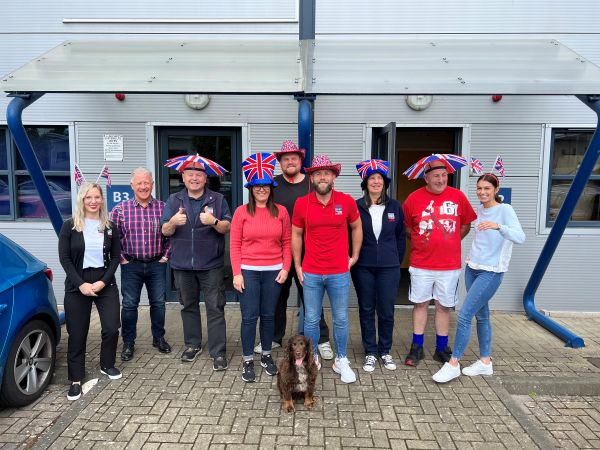
Mark credits his father with another important lesson: how to build a team.
When he joined SMC, he found a culture in which people could express opinions, employees were treated as individuals and job titles did not prevent anyone from doing what needed to be done.
If a vehicle had to leave in 15 minutes and needed cleaning, whoever was available cleaned it. Mark remembers seeing his father downstairs in his shirt and trousers washing cars. That example mattered.
In a small business, hierarchy can become less important than collective responsibility. Mark learned that leadership was not about asking people to do things you would be unwilling to do yourself.
“I learned that it was very important to me to have a good team.”
That emphasis remains visible in the business today. SMC describes itself as having been founded on “friendly, flexible and responsive customer service”, while Mark’s own career has progressed from operations into the Managing Director role. In 2020, the family transition took another significant step when Mark completed a management buyout of Southern Motor Contracts from his father.
The Lessons Between the Jobs
Perhaps the most interesting part of Mark Baumfield’s story is that none of the early stages of his career appeared to be leading towards vehicle leasing.
Topman taught him about earning his own money. Estate agency taught him professionalism and customer service. Redundancy taught him that security can disappear quickly. The commercial laundry showed him both how to solve customer problems and how he did — and did not — want people to be managed.
Then the family business gave those lessons somewhere to come together. For students beginning their careers, that may be the most useful insight of all.
A first job does not need to reveal your lifelong calling. A job you dislike may still teach you something important. A setback can alter your direction. And skills developed in one industry can prove unexpectedly valuable in another.
Mark did not join SMC because he knew everything about cars. He joined knowing almost nothing about them. What he brought instead was an ability to listen, understand what was causing someone a problem and find a way to solve it.
Nearly four decades after SMC was founded, that simple idea continues to underpin the business. The vehicles may be the product, but the real proposition is something else: making life easier for the customer.
And perhaps that is one of the enduring advantages of a successful SME. You do not have to be the biggest business in your market.
You have to understand why your customers choose you — and keep giving them a reason to stay.