From Asking Awkward Questions to Leading a National Survey Business: Ian Worsfold’s Journey with SUMO
Featuring: Ian Worsfold, Deputy Managing Director, SUMO Services
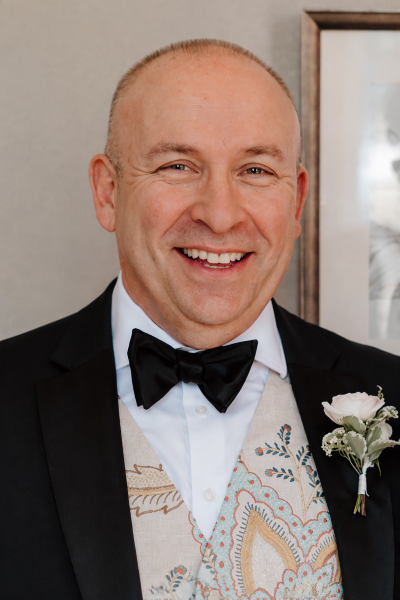
Ian Worsfold’s career began with an ambition to join the Army. Instead, a week of work experience, a willingness to ask “awkward questions” and a succession of opportunities he decided to take led him into engineering, infrastructure and ultimately the leadership of one of the UK’s leading multi-disciplinary survey businesses.
Today, Ian is Deputy Managing Director of SUMO Services, a Hampshire-headquartered surveying group providing services ranging from underground utility detection and topographic surveys to archaeological geophysics, aerial surveying, laser scanning and 3D modelling. The company describes itself as providing nationwide coverage through more than 100 staff and 40-plus survey teams.
But Ian’s route to senior leadership has been anything but linear. It is a career shaped by curiosity, practical experience and one piece of advice that has stayed with him for decades:
“They’ll only offer it once. Take the opportunity.”
A career that nearly began in the Army
Growing up in Guildford, Ian spent much of his teenage years as an Army cadet and with the Territorial Army and its shooting team. His plan was to become an Army officer, and he had interviews with Sandhurst.
Academically, however, things were more difficult. Ian believes he may have some degree of dyslexia – something that was neither identified nor supported when he was at school. He stayed on for sixth form hoping to improve his qualifications and, as part of that period, undertook two very different work-experience placements.
The first was with Surrey Police, accompanying officers on patrol and spending time with traffic units. For a teenager contemplating a military career, it offered another possible direction. The second proved more consequential.
Ian wrote to his local authority's engineering department asking whether he could spend a week learning about engineering and craftsmanship. He expected to encounter drawing and design. Instead, he spent much of the placement with engineers and clerks of works – and asked a lot of questions.
Apparently, enough questions to be remembered. Ian left school on a Tuesday. On Wednesday, the council telephoned to say it had created a technician role and asked whether he would like it. He accepted.
Learning by doing
The local authority subsequently supported Ian through ONC and HNC qualifications in civil engineering and towards an engineering degree. He stayed for 12 years, gaining experience across highways, structures, environmental improvements and wastewater management.
More importantly, he encountered a leadership philosophy that has remained with him.
One of his early managers believed that you could not properly supervise somebody unless you understood what they actually did. So Ian was expected to experience the work himself – whether clearing sewers, working alongside site teams or understanding how construction activities were carried out.
That hands-on approach became part of his own management style. “I've always been quite hands on,” he explains. “I've always liked being able to do a number of things.”
It is a philosophy that fits particularly well within an SME. Ian enjoys following a problem from beginning to end rather than completing one narrow part of a much larger corporate process.
Saying yes to the unexpected
A transfer to Thames Water brought one of the defining moments of Ian’s career.
Only around a month after joining, he was approached to work on a major project examining systems across the organisation – from call centres and contractor management to invoicing and operational processes. He had no experience of many of those areas.
His instinct was to ask a former colleague for advice. The answer was simple: an organisation the size of Thames Water did not often offer opportunities like this. If Ian declined, he might never be asked again.
So he said yes.
Suddenly, an engineer accustomed to sites and contracts was working on change management, policy, IT specification and testing, with exposure to consultants, senior managers and ultimately the main board.
It was a considerable career acceleration, but also the beginning of a pattern. Ian repeatedly sought – and sometimes deliberately engineered – opportunities to understand more than his formal job required.
When career success costs too much
Progress came with a price. By his early thirties, Ian was married with a young son and commuting from Guildford to increasingly distant workplaces. A move into clean-water operations took him into North London and a role with significant responsibility and near-continuous availability.
Then came a severe winter. Ian left home on a Sunday afternoon to deal with widespread burst water mains. The operation expanded from around 80 working gangs to more than 200 in a matter of days. He slept in facilities at the office and did not return home until the following Sunday.
When he arrived, his son – who had been crawling when Ian left – was beginning to walk. That was enough. “I thought, I’m not doing this anymore. This is too much.”
It is an important part of Ian’s story because it challenges a familiar assumption about careers: that moving upwards is always the same thing as moving forwards.
He left Thames Water for a contractor just a mile and a half from home. The contrast was dramatic. He could telephone his wife to say he was leaving the office and arrive home before the kettle had boiled.
The role also returned him to something he enjoyed: sites, people and practical problem-solving.
Building breadth rather than following a ladder
Several moves followed through contractors working across utilities, highways and construction. Ian managed civil engineering operations, CCTV teams, tankers, reinstatement crews and large fleets of vehicles and equipment.
There were long hours again, early-morning telephone calls and plenty of commuting. But each role broadened his understanding of how infrastructure businesses actually worked.
He also became known for helping people beyond the boundaries of a conventional management role. At one employer, site teams nicknamed him “Inspector Gadget” because he carried tools in his vehicle and could repair much of their equipment himself.
That practical credibility mattered.
Ian remembers an emergency road collapse when another manager struggled to persuade teams to come out during the evening. Ian called six gangs. All six agreed to attend.
Why? He believes it was because the relationship had already been established. He helped people when they needed it, avoided making them sit around unnecessarily once the work was completed and understood the realities of their jobs.
“People will then step up when you need them,” he says. “A bit of give and take.”
Finding his place at SUMO
Eventually, another period of long hours prompted Ian and his wife to reconsider the balance again. She spotted an advertisement for a role at SUMO.
Ian joined in a broad service-delivery position covering areas including health and safety, compliance, policy and supervision. But characteristically, he wanted to understand what the surveyors actually did. So, he went out with the teams.
Before long, employees were bringing operational problems to him. Allowing the existing operations manager, whose strengths lay in the technical aspects of the business, concentrate more on technical sales and client advice.
Ian subsequently became General Manager and then Operations Director. As the group expanded, his remit grew across operations, contracts, HR, IT, equipment and compliance.
Ian’s Deputy Managing Director title eventually formalised something that had already happened in practice: he had become one of the people who understood how the different parts of the business fitted together.
From finding pipes to a multi-disciplinary survey business
SUMO itself has followed a similarly evolutionary path. The company's roots lie in underground utility detection. Indeed, Ian explains that SUMO originally stood for Subsurface Utility Mark Out – locating pipes and cables below ground and marking their position at the surface.
Today the proposition is considerably broader. SUMO offers utility, topographic, measured-building, archaeological, engineering-geophysics, aerial and laser-scanning services, among others. Its website describes the group as providing an integrated picture both above and below ground.
The growth has partly been driven by listening to customers.
Clients who initially wanted underground services located began asking for permanent survey records. That created opportunities in land surveying. Other complementary services followed. Archaeological surveying, for example, can bring SUMO into a development project at the planning stage, creating opportunities to provide additional survey services as the project progresses.
The strategic logic is straightforward: understand what else the customer needs and determine whether SUMO can credibly provide it.
Technology changes. Physics doesn’t.
Surveying is also an interesting example of an industry transformed by technology without its fundamental purpose changing.
Ground Penetrating Radar remains an important technique for identifying underground objects and utilities, while SUMO combines it with electromagnetic detection and mapping technologies.
Ian says the biggest changes have been in miniaturisation, software and the cost of equipment. Surveying instruments have become more accessible, GPS has improved, laser scanners have advanced rapidly, and information can move from the site into systems such as AutoCAD far more efficiently.
Yet underneath the technology, he argues, the fundamentals remain familiar. “It's physics in most instances, so that hasn't changed.”
Technology has also lowered barriers to entry, creating many more competitors. For SUMO, scale, capacity, professional standards and long-term client relationships therefore matter alongside the technology itself.
Growth without betting everything on one customer
One of Ian’s clearest strategic lessons comes from businesses he saw earlier in his career.
He witnessed contractors become dangerously dependent on a single large customer. When a major contract disappeared, the consequences could be immediate.
SUMO has deliberately tried to avoid that exposure. Ian says no individual customer currently accounts for more than around 4% of turnover.
That diversification does not mean avoiding major contractors. It means ensuring that no single relationship becomes existential.
For SME leaders, it is a useful distinction. Winning a major customer can feel like success; becoming unable to survive without them can become a vulnerability.
The next chapter
Ian's ambitions for SUMO are not finished.
At the time of the interview, he described a strategic plan to broaden the group further into complementary services, including potential acquisitions. The aim is to move towards an even wider multi-disciplinary consultancy while retaining the surveying expertise at the company's core.
Ian said SUMO was currently turning over around £7 million, with an ambition to reach approximately £10 million over the next few years.
For Ian, stewardship appears to matter alongside growth. Having seen businesses suffer after acquisition, he wants any future acquisitions to be managed by those who understand the business rather than dismantle it.
Key lessons from Ian’s journey
There are several lessons in Ian's career that translate well beyond engineering and surveying. Take opportunities before you feel completely ready: some of his biggest career moves took him into areas where he had little previous experience.
Understand the work before trying to lead it: credibility was built on knowing what people actually faced on site. Listen beyond the hierarchy: useful knowledge can come from a trainee, labourer, receptionist, cleaner or security guard just as readily as from the boardroom.
Protect the business through diversification: growth built too heavily around one customer can create fragility. And recognise when career progression is costing too much: the week Ian missed his son beginning to walk changed his definition of what a good career looked like.
Perhaps his strongest advice, however, is reserved for people at the beginning of their careers. “Listen to everyone. Don't dismiss anyone,” he says. “Take the opportunities where you can.”
And if an opportunity turns out to be wrong? Move on. “If you have 10 jobs before you're 25, does it matter?”
Ian Worsfold’s career demonstrates that progress does not necessarily come from having a perfect plan. Sometimes it comes from asking questions, getting your hands dirty, listening to people who know things you do not – and being prepared to say yes when an unexpected door opens.
For someone who once thought his future lay in the Army, that approach has taken him a long way.