Clienting in Major Projects: Report Launch Event Highlights Event
.jpg)
- Time:
- Date:
- 2025-10-08 12:27:00
- Venue:
Event details
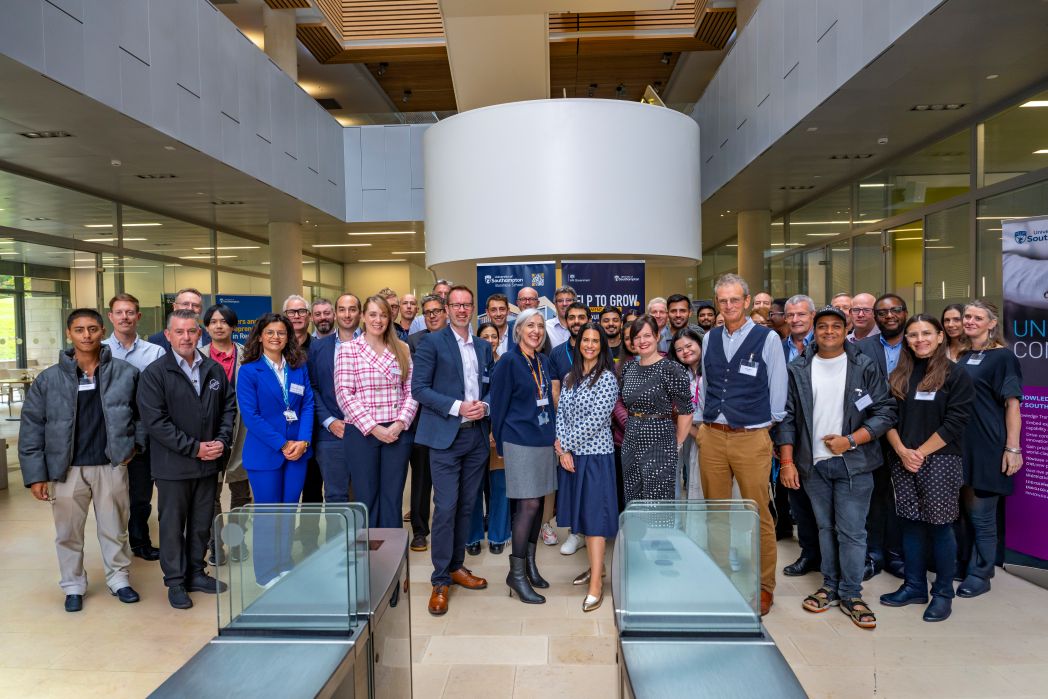
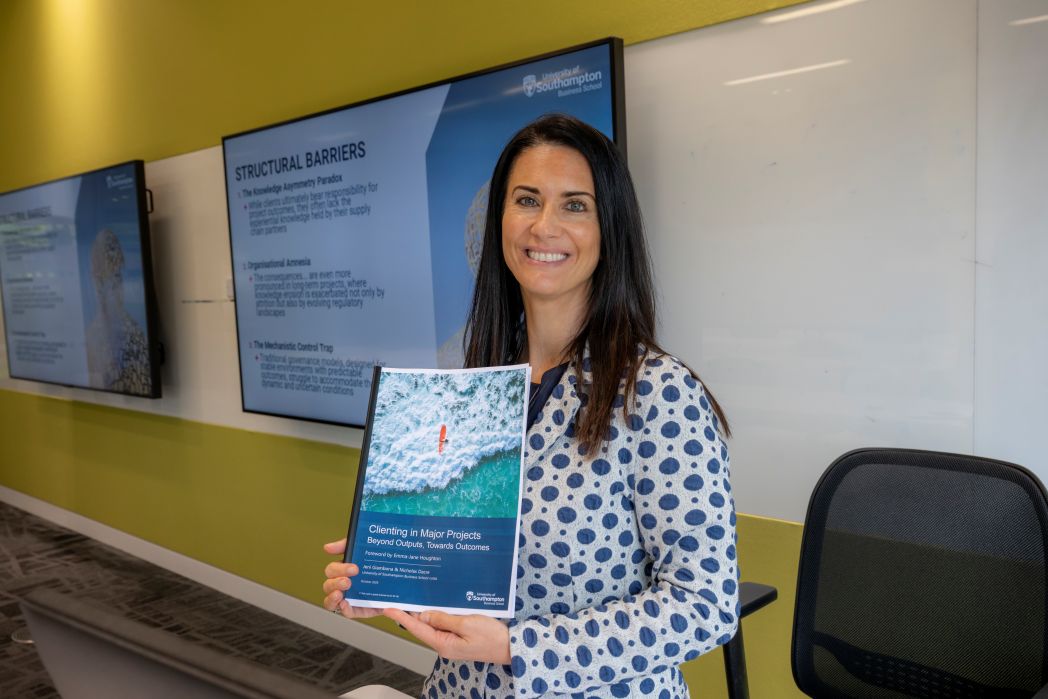
The University of Southampton Business School (USBS) recently welcomed distinguished delegates from both industry and academia to launch a much-anticipated and timely report titled Clienting in Major Projects. Beyond Outputs, Towards Outcomes. The report marks a significant milestone in a project born from a collaborative effort between USBS academics, Prof Jeni Giambona and Dr Nicholas Dacre, who built on Emma-Jane Houghton FICE’s initial idea on how to client differently, and continued to examine how we can client better to ensure a more connected approach to how we deliver major projects.
In major projects, success hinges not just on delivery but on clarity of purpose and outcomes. Too often, programmes default to tracking activities rather than the benefits they are meant to deliver, causing value to fade under pressure. Effective client organisations counter this by continuously reviewing outcomes and aligning procurement strategies to reward progress against those outcomes, not just ticking boxes. This shift discourages adversarial behaviours like lowest-cost tendering and fosters collaboration.
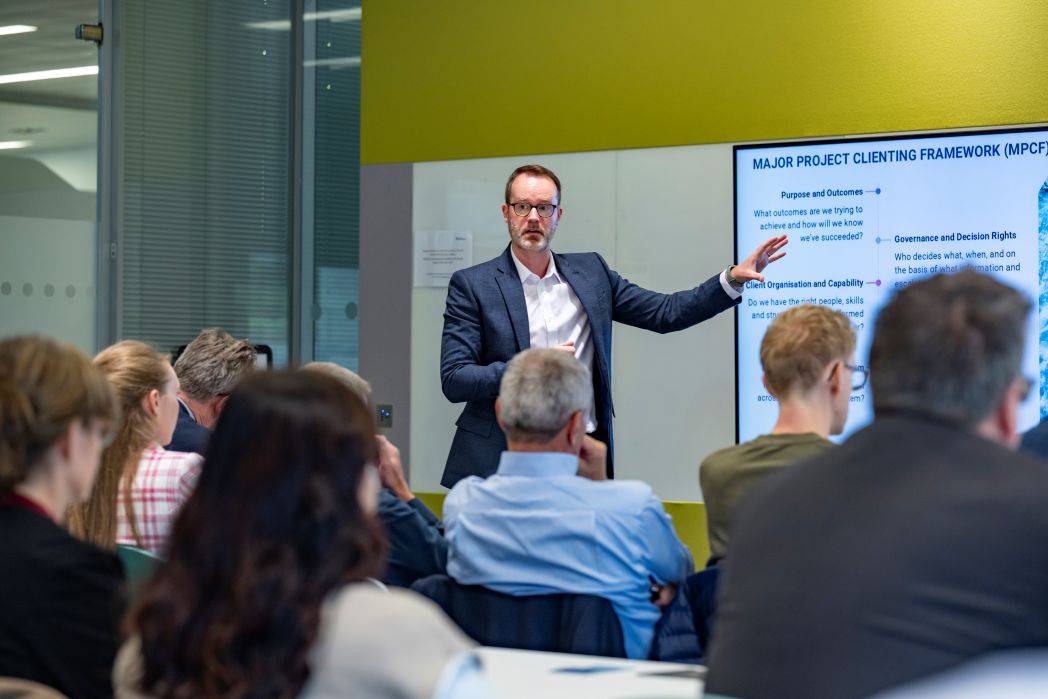
This report presents the Major Projects Clienting Framework (MPCF) designed to help client organisations shift from purchasers of goods and services to orchestrators of delivery ecosystems. The framework is based on research conducted by Prof Jeni Giambona and Dr Nicholas Dacre, USBS, and it incorporates practitioner surveys, senior professional interviews and a workshop with industry leaders.
How can we client better through MPCF ?
The report presents practical ways for client organisations to move away from procuring outputs and start stewarding outcomes in major programmes. The proposed framework includes the following three main insights.
- Client organisations should aim to develop all six dimensions (see Figure 1) simultaneously instead of adopting linear capability building. As an integrated system, the MPCF operates through constant interdependence, meaning that progress in one dimension can either enhance or limit advancement in others.
- The client role should no longer be seen merely as that of a purchaser. Instead, it must evolve into that of a strategic orchestrator, someone who manages a diverse network of stakeholders. This expanded role goes beyond technical expertise, requiring capabilities in ecosystem coordination and outcome stewardship.
- Client organisations are to reconsider how they define success, shape decision-making processes and reward performance across the delivery ecosystem. For sustainable transformation to take root, culture and procedures must change. Organisations need to embrace outcomes, clearly defined and linked to agreed requirements, instead of focusing purely on outputs.
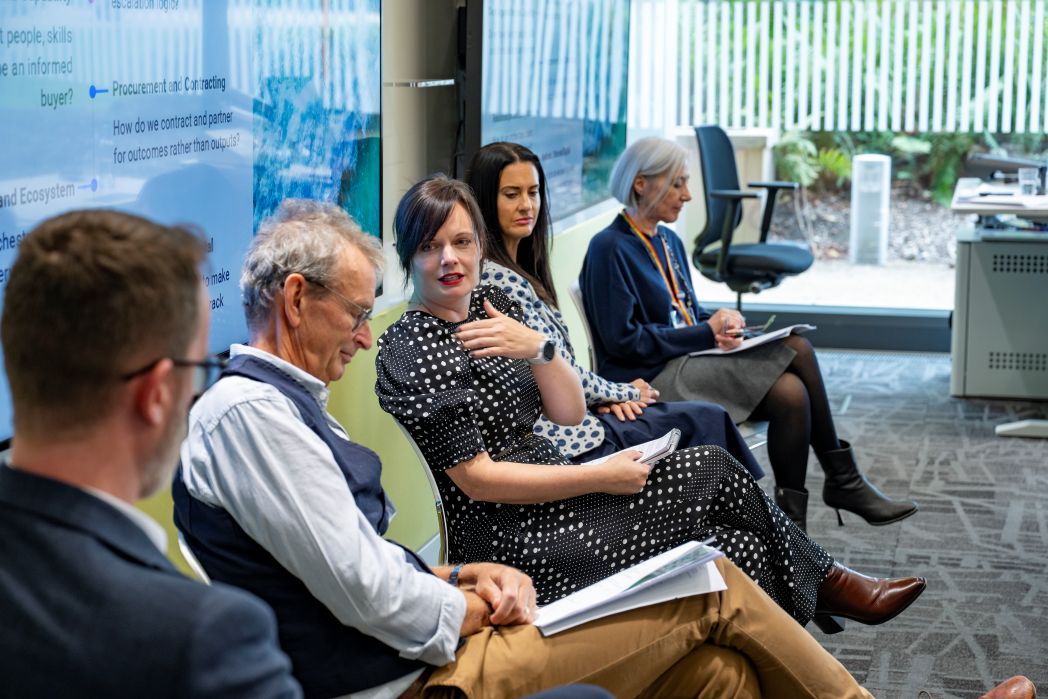
The presentation of the framework was followed by a panel discussion chaired by Hannah Vickers, featuring thoughtful contributions from Martin Buck, Emma-Jane Houghton FICE, Associate Professor Nicholas Dacre and Professor Jeni Giambona. The engaging conversation and insightful comments that followed reaffirmed that the way we approach clienting in major projects is a topic of great importance, and that a shift towards orchestration is both needed and welcomed.
Professor Jeni Giambona, Professor of Systems Thinking & Associate Dean (Knowledge Exchange and Enterprise), USBS
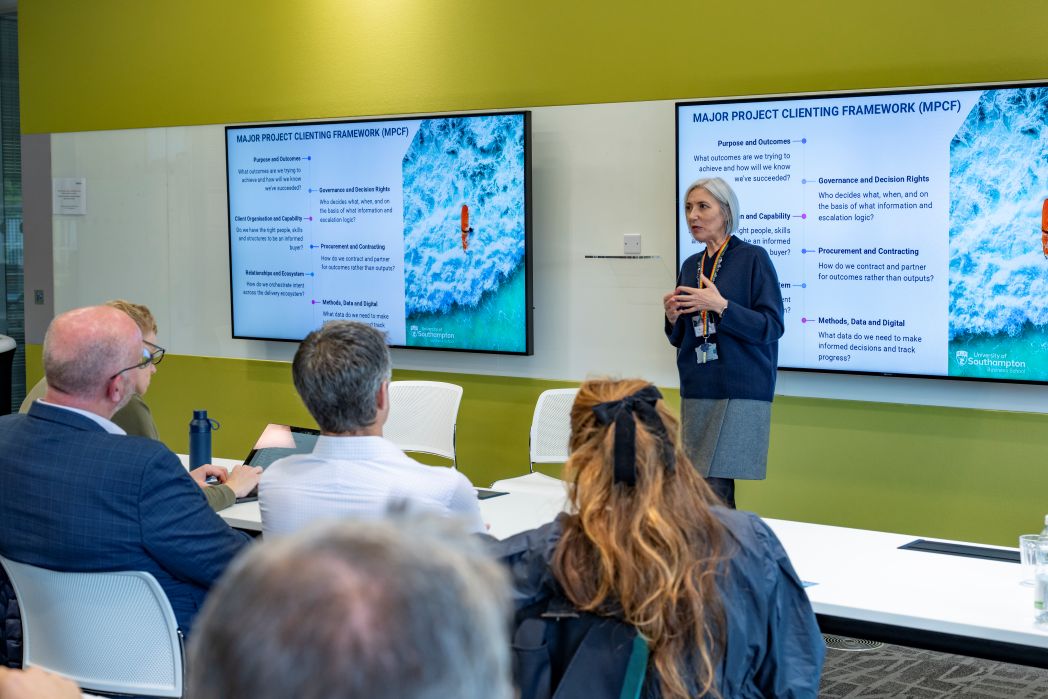
“ In today's world, the challenges we face require a departure from traditional approaches to embrace systems methods that provide holistic solutions to systemic challenges. Clients are in an ideal position to orchestrate ecosystems, providing the leadership that convenes all stakeholder groups involved in infrastructure major projects. Our report presents an innovative framework accompanied by recommendations, diagnostic questions, and illustrative vignettes that demonstrate how orchestration can work in practice .”
Emma-Jane Houghton FICE, AWE
“ Clients do not arrive with all the answers. The complexity, interdependencies and uncertainties inherent in major projects mean that solutions must be co-created across delivery ecosystems. The client's role is therefore not to specify every detail or control every decision, but to orchestrate the collaborative processes through which answers emerge from suppliers, users, regulators and technical experts. This orchestrating role recognises that effective clienting is about convening capability, not commanding it .”
Read the full report and explore the guidelines here .
If you would like to share feedback or collaborate with us to explore how we can drive the shift in major projects towards a more joined-up approach and deliver better outcomes together, we’d be delighted to hear from you. Please contact Professor Jeni Giambona ( j.giambona@soton.ac.uk )