FELS Inaugural Lecture with Professor Jon Copley Event
- Time:
- 3:30pm
- Date:
- 2026-02-25 15:30:00
- Venue:
- National Oceanography Centre, Southampton
Event details
This is the third Faculty of Environmental and Life Sciences Inaugural Lecture in our 2025-26 series that celebrates the careers of our newly appointed Professors. On Wednesday 25th February 2026, Professor Jon Copley from the School of Ocean and Earth Science will present his research.
Watch the lecture video
Watch all the lecture videos from the 2025-26 series here.
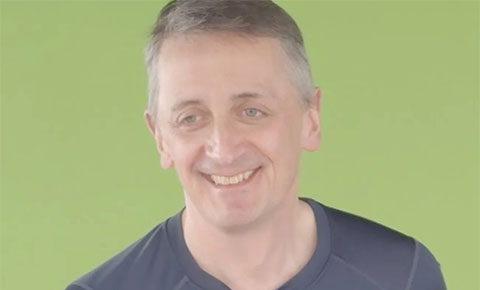
Professor Jon Copley
Beyond the blue planet: exploring life in the deep ocean
Sunlight reflecting from the surface of the ocean gives our planet its "blue marble" appearance. But most of the ocean is deeper than the reach of sunlight, and my research explores life in deep-sea habitats to understand what lives where and why in those dark depths. That work is like a global jigsaw puzzle, exploring new regions and discovering new species of animals, to piece together how deep-sea life varies around the world. Initially this was fundamental research to understand how species disperse and evolve, but now there is an urgent need to understand these patterns of life as they face increasing impacts from climate change, pollution, and extraction of resources. And now we are also exploring what we can learn from deep-sea species, which are inspiring new materials for technology and new medical treatments, so that we understand what's at stake for the future of this deep ocean planet.
Biography
Jon Copley is a Professor of Ocean Exploration and Science Communication in the School of Ocean and Earth Science. His research as a marine ecologist has explored life in the deep ocean that covers most of the world, and his work in science communication brings deep-sea discoveries to global audiences.
Jon's research investigates the patterns of life in island-like habitats on the ocean floor, and he has explored deep-sea life in all five regions of the global ocean, discovering new species of deep-sea animals such as shrimp that farm bacteria on their bodies and worms that secrete acid to digest the bones of dead animals on the seafloor. He took part in the first Human-Occupied Vehicle dive to the world's deepest hydrothermal vents, becoming the first British person to dive more than 5 km deep in the ocean, and the first Human-Occupied Vehicle dives to reach 1 km deep in the Antarctic.
In science communication, Jon works with broadcasters to share the exploration of the deep ocean with people worldwide, for example advising and appearing in documentaries such as BBC Blue Planet II. He has also worked with museums, artists, and musicians on exhibitions and events highlighting connections between the deep ocean and our everyday lives, and he has published two popular-science books.
Jon is currently an Advisory Board member for the global Deep-Ocean Stewardship Initiative, and he was a Co-Chair of the InterRidge initiative for international cooperation in research at mid-ocean ridges. He is also a former Scientific Associate of the Natural History Museum in London and a National Geographic Explorer. He has received awards including the Royal Society of Biology Science Communication Award for Established Researchers and Vice-Chancellor's Awards for teaching and for postgraduate supervision and training.