Ada Lovelace Day: Celebrating our female scientists
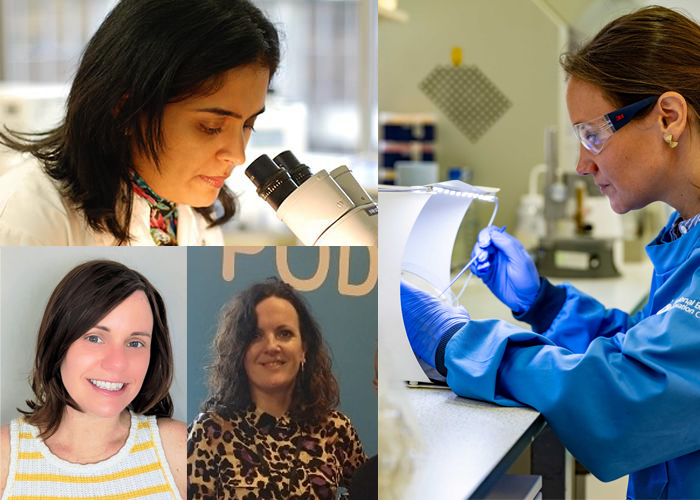
Ada Lovelace Day is an opportunity to celebrate and recognise of the achievements of women in Science, Technology, Engineering and Mathematics (STEM).
It is named after computer pioneer and mathematician Ada Lovelace , and is held annually on the second Tuesday of October.
Across our Faculty and University, women are leading world-changing research and tackling some of society's biggest challenges.
We spoke to some of our researchers from Biological Sciences to find out more about their careers in STEM and what inspires them.
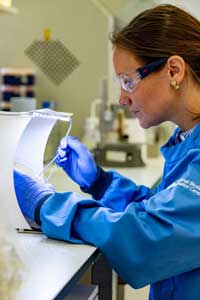
Dr Fatima Pereira, Associate Professor in Molecular & Cell Biology
Fatima's research investigates how gut microbes interact with each other and their host, influencing physiology & health.
What inspired you to pursue a career in STEM?
The turning point came during my Master's project, when I was working in a research institute surrounded by young PIs who had returned to the country after conducting research overseas.
I remember seeing them sitting in the lobby, discussing science and papers with genuine excitement; it was like they were breathing science - their passion was infectious.
I realised that I wanted a career where I could keep asking questions, doing experiments and discovering things that nobody knew about before.
Who was your role model?
Ruth E. Ley, a pioneering microbial ecologist in the study of human microbiome ecology and evolution.
What advice would you give to your younger self?
I would tell myself to seek more advice from people with experience and really listen to what they have learned along the way.
I used to worry a lot about the uncertainty of a career in science and about not knowing exactly where I was going. I would tell my younger self that it’s okay not to have everything mapped out from the beginning.
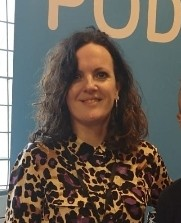
Professor Claire Clarkin, Professor of Developmental & Skeletal Biology
Claire's research is exploring how biological sex influences bone development and health, with the aim of improving skeletal health equity.
What inspired you to pursue a career in STEM?
My PhD supervisor Professor Andrew Pitsillides - he is always inclusive, makes research a lot of fun and is a brilliant scientist too. I feel really lucky to have met him. We still work closely today and he has been my mentor for 20+ years.
Who was your role model?
I didn't really have a single role model who was a woman going into my scientific career - I guess because there weren't many of them around!
Today, it's great to be surrounded and inspired by so many amazing women - from PhD students in the lab to senior research leaders across the globe and community partners here in Southampton.
What advice would you give to your younger self?
Don’t be afraid to ask questions everywhere and to everyone - no one has ever laughed at a question (yet)!
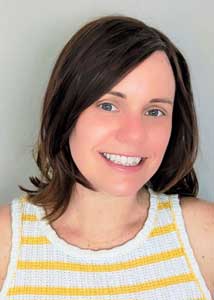
Dr Jessica Nelson, Lecturer and Principal Investigator in Advanced Cell Models
Jessica's research is investigating the interplay between tissue regeneration and cancer stem cells .
What inspired you to pursue a career in STEM?
I've always been drawn to understanding how things go wrong in the body, and why.
Pancreatic cancer is one of the hardest cancers to detect and treat, and seeing how little progress there had been for patients made me want to work on it. Now my lab grows 'mini tumours' from patients' own cells to find ways of catching the disease earlier.
Who was your role model?
My grandmother. She was really ahead of her time: stylish, liberal and open-minded.
She was an independent woman, and built a successful career in finance when very few women did. She showed me that you can be both ambitious and kind.
What advice would you give to your younger self?
Don't wait until you feel 'ready'. Confidence comes after you do the thing, not before.
Failed experiments aren't failures. They're how science actually works, and some of your best papers will come from results you didn't expect
Find your people. Good friends and mentors make all the difference.
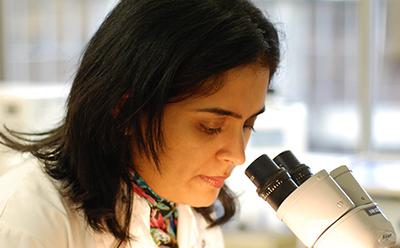
Professor Amritpal Mudher, Professor of Neurosciences
Amrit's research is exploring how the tau protein causes brain cell damage and degeneration in conditions such as dementia .
What inspired you to pursue a career in STEM?
Curiosity. I was and still am fascinated by the complexity of our brain and how the wiring of circuits in some brain regions can be responsible for both mundane physiological functions as well as complex ones like our personality.
Who was your role model?
Marie Curie.
What advice would you give to your younger self?
Don’t be afraid of taking risks.