Lunchtime seminar with Sam Stacey
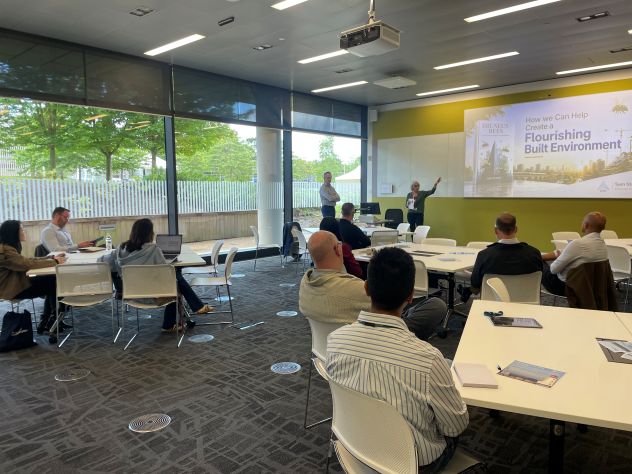
At a recent lunchtime seminar at the University of Southampton Business School, Sam Stacey (Co‑Founder and Director, A7C Limited) delivered a thought‑provoking exploration of the future of the built environment and the systemic changes required to ensure it truly delivers for society.
Sam opened by highlighting highlighted how, unlike many industries that have transformed significantly over recent decades, the construction sector has remained relatively stagnant. What are the consequences of this lack of progress? Rising costs, environmental pressures, and, most critically, declining public trust.
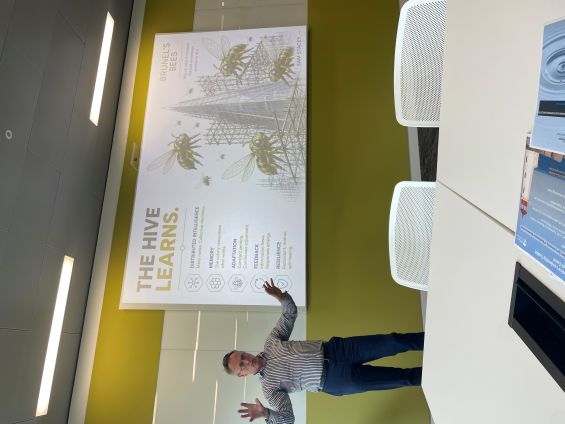
Drawing from his book, Brunel's Bees, Sam set out a compelling vision for a new era, one in which stronger, more integrated systems underpin the delivery of infrastructure. A key theme throughout the session was interdependence. Successful infrastructure delivery does not rely on isolated excellence, but on the integration of ideas, people, and capabilities. He further argued that only through coordinated, system‑wide thinking can we achieve meaningful and lasting impact.
Moving from fragmented practices to a fully connected ecosystem, however, requires stronger integration across systems, capabilities, and decision‑making. At the heart of this transformation is the need to align decision-making with long‑term human outcomes, ensuring that the built environment does more than delivering assets, and rather enables people and communities to flourish.
Challenging conventional thinking further, he invited the audience to rethink the role of beauty in the built environment. Rather than being seen as a superficial or decorative feature, beauty should be understood as the outcome of deliberate, well‑coordinated decisions, which are a reflection of systems working in harmony. A more thoughtful approach to design and integration, could help rebuild both public confidence and pride in our infrastructure.
The seminar also explored the transformative potential of artificial intelligence for the sector. Far from being just a tool for efficiency, AI represents a fundamental shift in how decisions are made, opening up new possibilities for innovation and problem‑solving in project delivery and leadership. Yet, as access to data and tools continues to expand, a critical question emerges: what is the human role? Sam emphasised that, rather than diminishing, the latter becomes even more vital, guiding judgment and purpose in an increasingly data‑driven world.
Finally, Sam highlighted a significant opportunity for the UK. With the right approach, the country could position itself as an exporter of knowledge, systems, and intelligence for the built environment globally.
The session left attendees with a clear message: meaningful change will require bold thinking, and system‑wide integration, and a renewed focus on long‑term value.