Trial aims to improve treatment for patients with a rare abdominal cancer

A trial for people with a rare type of cancer of the abdomen is aiming to reduce the side effects of treatment for patients.
The HIPEC-PMP trial, led by surgeon Mr Faheez Mohamed at the Hampshire Hospitals NHS Foundation Trust and run by the Cancer Research UK Southampton Clinical Trials Unit, is comparing how well different doses of chemotherapy treat the cancer and affect patients’ quality of life.
The trial is being funded and delivered by The Peritoneal Malignancy Institute (located at Basingstoke and North Hampshire Hospital), one of only two specialist centres in the UK that treat this type of cancer.
A rare cancer to treat
Pseudomyxoma peritonei (PMP) is a cancer that usually starts in the appendix but is often diagnosed at a late stage after it has already spread into the abdomen.
“PMP develops very slowly meaning it can often be several years before the cancer is detected,” says Mr Faheez Mohamed, Consultant Surgeon at Hampshire Hospitals NHS Foundation Trust and Chief Investigator of the trial. “The spread of the cancer can lead to a build-up of jelly like fluid in the abdomen which, if left untreated, can begin to affect the other organs and cause serious health problems.”
The usual treatment for patients with PMP is surgery to remove the cancer followed by heated chemotherapy delivered directly into the abdomen during the operation to kill any remaining cancer cells.
Mr Mohamed continues: “Although this type of treatment combining surgery with Hyperthermic Intraperitoneal Chemotherapy, or HIPEC, is used in specialist centres globally and is known to be effective, the dose given to patients can vary between a low- or high-dose which are given for different durations. This is the first trial to undertake a head-to-head comparison to identify which dose may delay recurrence and may be better for patients, and that’s what our trial aims to find out.”
Louise Holmes was diagnosed with PMP in 2014 after years of suspected IBS.
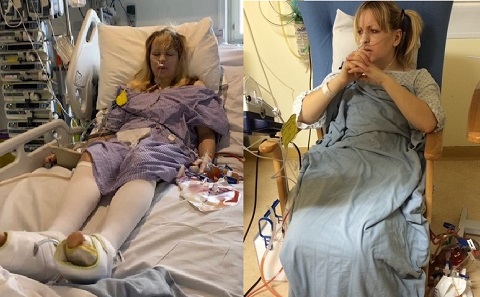
“Even though I knew that something wasn’t right, it still blind-sided me,” says Louise. “Certainly the rarity of it and the lack of awareness and knowledge, not only from my friends and family and myself, but also my medical teams. Even my GP had never heard of it.”
Louise was referred to the specialist peritoneal malignancy unit at Basingstoke and North Hampshire Hospital and underwent surgery and the HIPEC procedure.
"It’s so discombobulating and so isolating being diagnosed and then having to go through the treatment, nothing can ever prepare you fully for the experience of going through it. I’d never had any kind of operation before in my life."
Now well, Louise has become a patient advocate for the HIPEC-PMP trial, using her experiences to help researchers run the trial in the best possible way for patients.
“To know that there is a team who are actually researching and trialling these things, it does make you feel less alone because you know there is this really amazing team who are working alongside you. I think it’s absolutely fundamental in treating future patients, and also learning from past techniques, past ways of doing the surgery as well. And not just the actual surgery itself but the outcome for the patient.
“I really hope that there are some positive findings from the trial. I really hope that going forward it benefits other patients.”
Finding the evidence
The trial is being carried out at the Peritoneal Malignancy Institute at Basingstoke & North Hampshire Hospital and will compare the two different doses of in-surgery chemotherapy.
“Patients with PMP who have not previously been treated with surgery and HIPEC who agree to take part in the trial will be randomly put into one of two groups,” says Chris Wignall, Trial Manager at the Southampton Clinical Trials Unit. “Patients in one group will receive the low dose treatment, and the other group the high dose. They will be followed-up for two years so we can compare the two groups to see if there are any differences in how the cancer responds as well as monitoring patients’ quality of life and any side-effects from the treatment.”
“Being a specialist centre for the treatment of this rare cancer means that patients from across the UK and Ireland who are diagnosed with PMP are sent to Basingstoke Hospital”, says Professor Gareth Griffiths, Director of the Southampton Clinical trials Unit and co-Investigator of the trial. “Our unit has a huge expertise in running large clinical trials in rare cancer types, and we are delighted to be partnering with Hampshire Hospitals NHS Foundation Trust to help increase our research knowledge of this disease and hopefully improve outcomes for patients.”
Mr Mohamed concludes: “This is the first trial to compare the effectiveness of the two different treatment doses for PMP and should give us a much better understanding of the best dose for treating patients and preventing the cancer from coming back.”
HIPEC-PMP will recruit 176 patients at Basingstoke and North Hampshire Hospital over two years. The trial is sponsored by the University of Southampton.
Watch Consultant Surgeon, Faheez Mohamed, talking about the HIPEC-PMP trial