Families trial new digital support to help children with ADHD sleep better

Families of children with a diagnosis of attention deficit hyperactivity disorder (ADHD) who struggle with sleep problems are being invited to take part in a study testing a new digital support website.
‘Sleep Buddy’ has been developed by Southampton researchers in partnership with parents and carers of children with ADHD.
It gives information and advice about tried and tested ways to help sleep from both sleep experts and parents.
The website is now being evaluated in a nationwide study run by researchers at the University of Southampton, the Southampton Clinical Trials Unit and University Hospital Southampton NHS Foundation Trust and is part of a £2.2m DISCA project funded by the National Institute for Health and Care Research.
Struggling to sleep
ADHD causes children to be restless, impulsive and struggle to concentrate. In the UK, 3-6% of school-age children are estimated to have ADHD.
Almost two thirds of children with ADHD experience sleep problems such as finding it hard to get to sleep at bedtime, waking in the night or waking up early in the morning. This can make the symptoms of ADHD worse, affecting children’s behaviour and schoolwork, and impacting on the quality of life of the whole family.
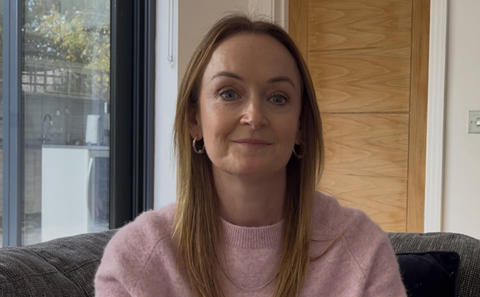
Winchester mum, Claire Quigley Ward, knows only too well the effect sleep problems can have. Her son, now 14, was diagnosed when he was six years old while her 10-year-old daughter was diagnosed last year.
“ Sleep problems have impacted our lives in so many ways,” says Claire. “Whether that’s the getting to sleep, staying asleep, getting adequate amounts of sleep. It has been very difficult, and I think it’s something we still experience challenges with now.
Claire now hosts the podcast ‘All Aboard ADHD’* where she talks about the issues affecting families of children with ADHD. “It’s hard because if you don’t get enough sleep then everything is impacted, your mood your ability to focus and concentrate. All the things we know are very, very difficult with ADHD, suddenly with a lack of sleep those are compounded and it’s much, much harder. I always think it’s a cruel twist of nature that this neurodiversity which really needs sleep almost prevents it in some ways or makes it much harder to come by.”
Professor Samuele Cortese, Professor of Child and Adolescent Psychiatry and co-lead of the Sleep Buddy study, said: “Knowledge about how to effectively treat these problems is limited. Children are often prescribed melatonin to regulate sleep patterns, but this does not work for everyone and does not always address the underlying causes. We are therefore looking at more comprehensive ways to address this problem by supporting parents in the management of their children’s sleep problems.”
Testing new digital support
Over the past two years, researchers have been working with parents and carers of children with ADHD to develop Sleep Buddy.
“The Sleep Buddy website has been designed in a way that meets their needs, addresses their concerns and is practical to use,” says Professor Cathy Hill, Honorary Consultant in Paediatric Sleep Medicine. “ It has advice for families on how to manage sleep problems, top tips from other parents, and will help parents to create a sleep plan for their child, all with the support and guidance of sleep experts and the research team.”
Families are now being invited to help researchers test to how well this new digital sleep intervention works in a large trial, run by the Southampton Clinical Trials Unit.
“The study aims to recruit around 350 children aged 6-12 years with a diagnosis ADHD from across the UK,” says Alannah Morgan, Trial Manager for the Sleep Buddy study at the Southampton Clinical Trials Unit. “This will include children sometimes left out of research, such as those living with foster carers.
“Those who take part will complete online questionnaires and have video calls with researchers, while the children involved will be invited to complete some computer-based attention and memory tasks, which are like games, with the support of researchers.”
Researchers will follow up at three and six months to see if there are lasting improvements to the child’s sleep, behaviour and ability to concentrate. They will also investigate the wider effects of better sleep on families, for example by allowing a parent to return to work.
And Claire, who also found out she herself has ADHD following her son’s diagnosis, feels this could be a vital resource for families: “It's a universal issue. I don’t think I’ve ever met anybody where sleep hasn’t been an issue when you’ve got a child with ADHD. I think that parents don’t know what to do, and a dedicated platform that offers this help and support and guidance, specifically for children with ADHD would be so powerful and so valuable.
“It's so important to have the perspective of parents in this because we’re the ones living and breathing these challenges and we’re the ones that need the help. It’s how you bridge that gap between clinical evidence and creating a tool that’s actually useful and that is specific for ADHD. Because there may be a lot of amazing resources out there about how to help sleep, but if we’re not tailoring those to the needs of a neurodivergent brain, specifically ADHD, then we’re perhaps not putting supports and interventions in place that are going to be successful longer term.”
Professor Hill continues: “We hope this new website can greatly improve the lives of children with ADHD and their families. The Sleep Buddy study will give us evidence to know whether this digital tool can give families with the support they need to help their children sleep better and reduce the harm that ADHD-related sleep problems can cause to children and their families.”
Watch a video of Claire talking about her family's experiences with ADHD and sleep problems
Engaging the ADHD community
As part of the wider study, the research team are also looking at ways to educate healthcare professionals about sleep problems experienced by children with ADHD. They are creating an online screening tool and training programme to help them diagnose sleep problems and identify the most effective way to treat them.
The team includes researchers in the Southampton Primary Care Research Centre with expertise in digital health interventions and is working closely with colleagues at King’s College London, Newcastle University, Nottingham Trent University, the University of Nottingham, as well as national ADHD and foster care charities.
Parents and carers who are interested in finding out more about the study can visit the website - https://www.discasleep.org.uk/get-involved
* All Aboard ADHD podcast and coaching platform
The Southampton Clinical Trials Unit (SCTU) is a National institute for Health and Care Research (NIHR) supported and Cancer Research UK (CRUK) core-funded CTU with expertise in the design, conduct and analysis of interventional, multi-centre clinical trials. The CTU is based within the University of Southampton with offices at the University Hospital Southampton NHS Foundation Trust Southampton General Hospital site. For more information, visit the SCTU website .
University Hospital Southampton NHS Foundation Trust i s one of the largest acute teaching trusts in England with a turnover of more than £1 billion in 2020/21. UHS provides hospital services for 1.9 million people living in southern Hampshire and specialist services – including neurosciences, respiratory medicine, cancer, cardiovascular, obstetrics and specialist children’s services – to more than 3.7 million people in central southern England and the Channel Islands. UHS is consistently one of the UK's highest recruiting trusts of patients to clinical trials and in the top ten nationally for research study volume as ranked by the NIHR Clinical Research Network. In partnership with the University of Southampton, UHS has £27 million of NIHR infrastructure dedicated to bringing the latest treatments to patients . Visit the UHSFT website .
The University of Southampton (UoS) drives original thinking, turns knowledge into action and impact, and creates solutions to the world’s challenges. We are among the top 100 institutions globally (QS World University Rankings 2023). Our academics are leaders in their fields, forging links with high-profile international businesses and organisations, and inspiring a 22,000-strong community of exceptional students, from over 135 countries worldwide. Through our high-quality education, the University helps students on a journey of discovery to realise their potential and join our global network of over 200,000 alumni. www.southampton.ac.uk
About the National Institute for Health and Care Research
The mission of the National Institute for Health and Care Research (NIHR) is to improve the health and wealth of the nation through research. We do this by:
- Funding high quality, timely research that benefits the NHS, public health and social care;
- Investing in world-class expertise, facilities and a skilled delivery workforce to translate discoveries into improved treatments and services;
- Partnering with patients, service users, carers and communities, improving the relevance, quality and impact of our research;
- Attracting, training and supporting the best researchers to tackle complex health and social care challenges;
- Collaborating with other public funders, charities and industry to help shape a cohesive and globally competitive research system;
- Funding applied global health research and training to meet the needs of the poorest people in low and middle income countries.
NIHR is funded by the Department of Health and Social Care. Its work in low and middle income countries is principally funded through UK international development funding from the UK government.