New trial aims to improve treatment for advanced prostate cancer

A new trial will look at whether selecting patients who may require more intensive treatment can improve outcomes for advanced prostate cancer.
The aim is to improve survival by delaying the progression of cancer that has spread to other parts of the body (metastatic cancer).
The INTENSIFY trial is led by researchers at the Southampton Clinical Trials Unit, University Hospital Southampton, UCL and the University of Glasgow, and is funded by a £1.9m grant from Prostate Cancer UK.
Improving outcomes
Prostate cancer is the most common cancer in men in the UK, with 1 in 8 men likely to be diagnosed with the disease during their lifetime*. Prognosis for the disease, especially when diagnosed in its early stages, is generally good, with 8 in 10 patients surviving over 10 years.
But when the cancer spreads to other parts of the body, called metastatic prostate cancer, it becomes incurable and there are still around 12,000 prostate cancer deaths in the UK every year.
For patients with metastatic prostate cancer, the initial treatment for most men is a doublet therapy of two different hormone treatments. These reduce the amount of testosterone produced by the body, and also block its effects, thereby helping slow the growth of the cancer.
Patients are monitored using a PSA (prostate specific antigen) blood test to see whether the cancer is responding to treatment.
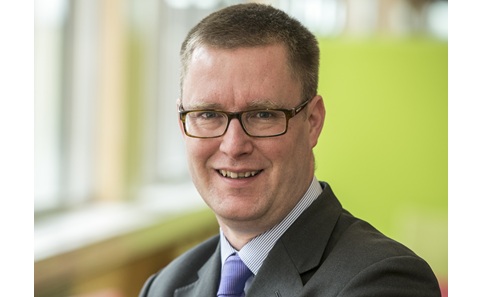
“Most patients will see a reduction in their PSA after starting hormone therapy,” says Simon Crabb, Professor of Experimental Cancer Therapeutics at the University of Southampton and Honorary Consultant of Medical Oncology at University Hospital Southampton. “But if the PSA remains at a higher level after 6 months of treatment, this indicates poorer long-term outcomes, including survival.”
“There is evidence that adding chemotherapy early on could prevent further cancer growth. However, chemotherapy will mean more, potentially unpleasant, side effects for patients which can affect their quality of life.”
Professor Crabb, who is also an Associate Clinical Director at the Southampton Clinical Trials Unit, is now leading a trial called INTENSIFY to try and establish the optimum timing for these treatments in patients with high-risk metastatic prostate cancer.
Finding the evidence for a “triple therapy”
The INTENSIFY trial will recruit patients whose PSA levels indicate that their cancer may not be responding as well to doublet hormone treatment.
“Patients will be randomly assigned to either a control arm, where they will continue with hormone treatment alone, which is the standard treatment, or an intervention arm where they will have a chemotherapy drug called docetaxel added to their treatment straight away,” says Denise Dunkley, Portfolio Lead for Urology Trials at the Southampton Clinical Trials Unit. “Every patient will be closely monitored to see how their cancer responds and the side effects they experience. All patients may be offered other standard treatments if their cancer gets worse, but they will continue to be in the trial and followed up until the end of the trial.”
Making treatment more personalised
The trial also aims to build on novel insights, made by Prof Gert Attard at UCL. These suggest we may be able to select which prostate cancers are sensitive to chemotherapy based on patterns in the genes that they express. The team are collaborating with a global diagnostics company called Veracyte, which will analyse tumour samples taken from the INTENSIFY participants using the Decipher Prostate Genomic Classifier to test these gene expression patterns.
Professor Attard said: “Prostate Cancer UK had funded discovery of novel molecular biomarkers, or genetic clues, that predict when chemotherapy will work. A really exciting part of this trial, also funded by Prostate Cancer UK, is that we will formally test whether patients identified by these biomarkers live significantly longer when given chemotherapy. These could then become established for use for all patients.”
The trial is being funded by Prostate Cancer UK as part of its Transformational Impact Awards.
Simon Grieveson, Assistant Director of Research at Prostate Cancer UK, said: “We’re thrilled to be funding this groundbreaking trial, building on our history of supporting cutting-edge research to improve and personalise men’s prostate cancer treatment. For men with metastatic prostate cancer, it’s hard to predict who will respond well to hormone therapy and who may need additional treatment, such as chemotherapy. INTENSIFY will show us whether we can reserve this more intensive treatment combination for those who are most likely to benefit, whilst delaying the use of chemotherapy in others who are responding well to their hormone therapy. Central to all of this is our aim to reduce harmful side-effects and improve men’s quality of life and the time they can spend with family and friends.
"At Prostate Cancer UK, we’ve invested over £120 million into research into the most common cancer in men, particularly towards developing more personalised treatment approaches tailored to every man and their prostate cancer. INTENSIFY is the next step on this journey, and we’re really looking forward to seeing the results of the trial.”
INTENSIFY will recruit 518 patients at around 20 hospital sites across the UK. The trial, which is sponsored by University Hospital Southampton, is currently in set-up and is due to open to patients in the new year.
*Figures from Prostate Cancer UK - https://prostatecanceruk.org/prostate-information-and-support/risk-and-symptoms/about-prostate-cancer/
The Southampton Clinical Trials Unit (SCTU) is a National institute for Health and Care Research (NIHR) supported and Cancer Research UK (CRUK) core-funded CTU with expertise in the design, conduct and analysis of interventional, multi-centre clinical trials. The CTU is based within the University of Southampton with offices at the University Hospital Southampton NHS Foundation Trust Southampton General Hospital site. For more information, visit the SCTU website .
About Prostate Cancer UK
Prostate Cancer UK is the UK’s biggest public funder of prostate cancer research, and delivers support services and award-winning health information trusted by doctors and the NHS to help men navigate the disease.
Our mission is a future where no man dies of prostate cancer – and the next leap forward will be a national screening program.
Over the last 16 years we've led key scientific advances that have brought us closer to screening than ever before, by developing more accurate tests and treatments that are kinder to men, and campaigning for their adoption across the UK. Our £42 million TRANSFORM trial is testing four of the most promising screening protocols to find the best way to test men across the country. And our 30-second Risk Checker has reached more than 4 million men, boosted early diagnosis and shown that mass awareness saves lives.
Everything we do is powered by donations from our supporters and developed in collaboration with men with prostate cancer.
University Hospital Southampton NHS Foundation Trust i s one of the largest acute teaching trusts in England with a turnover of more than £1 billion in 2020/21. UHS provides hospital services for 1.9 million people living in southern Hampshire and specialist services – including neurosciences, respiratory medicine, cancer, cardiovascular, obstetrics and specialist children’s services – to more than 3.7 million people in central southern England and the Channel Islands. UHS is consistently one of the UK's highest recruiting trusts of patients to clinical trials and in the top ten nationally for research study volume as ranked by the NIHR Clinical Research Network. In partnership with the University of Southampton, UHS has £27 million of NIHR infrastructure dedicated to bringing the latest treatments to patients . Visit the UHSFT website .
The University of Southampton drives original thinking, turns knowledge into action and impact, and creates solutions to the world’s challenges. We are among the top 100 institutions globally (QS World University Rankings 2025). Our academics are leaders in their fields, forging links with high-profile international businesses and organisations, and inspiring a 22,000-strong community of exceptional students, from more than135 countries worldwide. Through our high-quality education, we help students on a journey of discovery to realise their potential and join our global network of around 200,000 alumni. Visit www.southampton.ac.uk | Contact us here | Follow us on X