The National Cancer Plan – What it means for research

Today (Wednesday 4th February), the Government set out its National Cancer Plan, a 10-year strategy to shape cancer care and drive innovative research for the benefit of patients.
The plan promises faster diagnosis, quicker treatment, the use of new technologies, and a commitment that three in four cancer patients diagnosed with cancer from 2035 will be cancer-free or living well after five years.
In the announcement from the Department of Health and Social Care, Health and Social Care Secretary Wes Streeting said:
“Thanks to the revolution in medical science and technology, we have the opportunity to transform the life chances of cancer patients. Our cancer plan will invest in and modernise the NHS, so that opportunity can be seized and our ambitions realised.”
At the heart of the plan is promised record investment in the NHS, reduced waiting times, and a real focus on how research is the backbone that will mean many of the priorities set out in the strategy can be achieved and delivered.
What does it mean for our research?
Research at the Cancer Research UK Southampton Clinical Trials Unit (SCTU) focuses on finding better ways to diagnose cancer in its earliest stages, and developing new, better treatments for cancer patients.
Today’s plan covers many of the areas where we are already working and where our clinical trials are providing the evidence to change practice within the NHS.
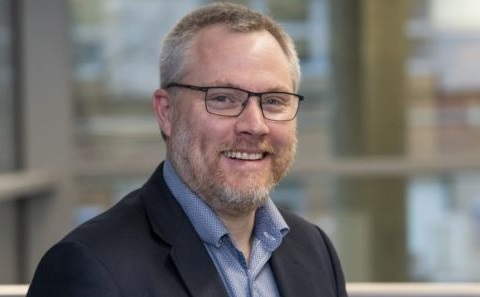
"In this plan, the Government has pledged to work closely with academic researchers and the life sciences industry to drive innovation and expand access to clinical trials,” says Professor Gareth Griffiths, Director of the SCTU. “An exemplar case study appearing in the plan is the NHS Cancer Vaccine Launch Pad , which our unit is currently running on behalf of NHS England, and which is accelerating patient access to trials of new cancer vaccines and novel immunotherapy treatments.
“We hope to see more investment in these sorts of programmes which can make a real difference to our cancer patients and provide evidence for new treatments for the NHS.”
Another cornerstone of the plan is early diagnosis, with a £2.3 billion investment to deliver 9.5 million additional tests by 2029, investing in more scanners, digital technology and automated testing.
Professor Griffiths continues: "We are particularly pleased to see an increased focus on the early diagnosis of cancer in the national plan. We know that if cancer is caught in its earliest stages, then the chances of successful treatment and survival for patients are hugely increased.
“At the Southampton Clinical Trials Unit, we run a portfolio of research trials looking at new and better ways to improve the early detection of cancer. An example is our SAFE-D study, which aims to use a simple blood test to diagnose pancreatic cancer in the diabetic community who are at higher risk, one of the most difficult cancers to catch early and treat successfully. Other studies are looking at improving rates of early diagnosis in lung cancer and developing multi-cancer early detection tests using AI which can pick up the signs of up to 12 different cancers from one blood sample.
“Our hope is we can create the evidence for new early diagnosis tests that can be rolled out by the NHS"
The Government has also pledged to provide more access to Community Diagnostic Centres, bringing testing closer to where people live.

Dr Victoria Goss is Associate Professor of the Early Diagnosis and Translational Research at the SCTU and the Head of our Early Diagnosis Group. She said: "One of the most important aspects of this national cancer plan is shifting the emphasis to how we can provide more screening and early diagnosis tests away from hospitals and take them out into the community, and even into people's homes, to increase accessibility.
“Making it easier for people to take part in screening programmes is key to improving early cancer detection rates and subsequent cure rates and ensures that everyone is included equally.
“We are running trials looking at other ways we can encourage people to take up screening opportunities, be this a blood sample taken in your local GP surgery or pharmacy, a nasal swab that can be sent in the post, or a urine collection kit sent to your home."
The plan recognises the transformational progress that has been made in the understanding and treatment of cancer over the last 100 years and how world-class research here in the UK means cancer survival has improved significantly. But it recognises that there is still much work to be done and that supporting the life sciences industry and our wealth of academic research expertise here in the UK is a priority if the plan is to be achieved.
Professor Griffiths concludes: "This plan sets out ambitious and welcome promises for cancer research and treatment that will benefit our cancer patients, and the next steps will be seeing how the Government delivers these."
Read the Department of Health and Social Care's news story on the National Cancer Plan here .