From insight to impact: Clean Water South explores how we can inspire water-wise behaviour
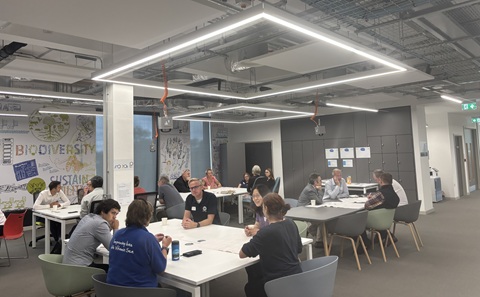
The fifth Clean Water South (CWS) event brought partners together on 7 September 2026 to explore one of the water sector’s biggest challenges: how we turn awareness of water scarcity into meaningful and lasting action. Under the theme “Water Wise: From Insight to Impact”, the event focused on water awareness, household behaviour and the practical steps that individuals, communities and organisations can take to reduce demand.
Building action through collaboration
Since its launch in June 2024, Clean Water South has brought together research, industry, regulators and communities to explore water quality, citizen science, pollution, catchment management, climate-related demand and road runoff. The fifth event marked a shift towards understanding how greater awareness can lead to positive behavioural change.
Darren Paffey, MP for Southampton Itchen, reflected on the six Clean Water South policy briefings developed from the network’s earlier discussions. He highlighted the ambition to build specific projects from these briefings and create a shared roadmap for future collaboration and really welcomed Clean Water South to feed into the Clean Water Bill.
Understanding how customers use water
Andy Clowes from Portsmouth Water shared insights into customer attitudes, water consumption and the future of water efficiency, highlight the potential of smart metering, personalised information and targeted engagement to help households better understand and reduce their water use.
Early findings showed that smart-meter customers were using around 24 litres less water per person per day than the company-wide average. However, Andy noted that this remains an indicative comparison because the smart-meter group is still relatively small and many meters have been installed for less than 12 months.
Customer research also revealed an important challenge. Although many people are concerned about balancing supply and demand and know how to save water, fewer feel a personal need to reduce their own use. Around three quarters believe they are already doing everything they can, suggesting that generic “save water” messages may be less effective than personalised information showing customers their actual consumption.
Responding to water scarcity
Sam Underwood and Kimberley Turnbull of Southern Water explored the scale of water scarcity in the South East and the need to protect internationally important chalk streams, including the Rivers Test and Itchen. The discussion covered water efficiency, leakage reduction, new infrastructure and water recycling as part of the long-term response.
Water recycling uses advanced treatment processes, including ultra-filtration and reverse osmosis, to turn treated wastewater into purified water that can support drinking-water supplies. Similar technology has been used internationally for more than 40 years.
The event also showcased practical programmes already supporting change. Since April 2024, water-efficiency audits have helped schools and businesses identify leaks, install water-saving devices and explore improvements such as rainwater harvesting. The Business Partnership Fund has also supported collaborative water-saving projects, while home audits, water-saving kits and education initiatives are helping households and young people take practical action.
From awareness to action
Dave Rumble of Wessex Rivers Trust explored the relationship between awareness, appreciation and action. His contribution highlighted the value of hyper-local engagement and the importance of connecting water behaviour with personal motivations, community priorities and healthy rivers.
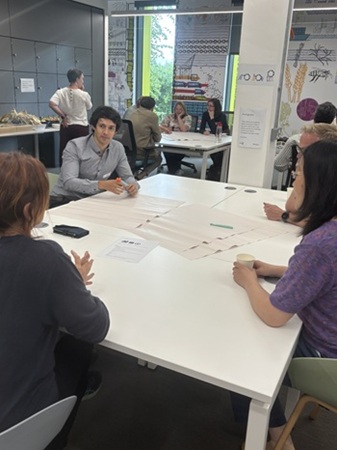
Dr Julia Brown from the University of Portsmouth then led an interactive session examining how different households respond to water-saving messages. Participants considered whether cost, competition, environmental connections, positive nudges or more direct language would be most effective for different audiences. Groups also explored the communication channels and approaches most likely to reach households with very different circumstances and motivations.
The event concluded with attendees being invited to make a personal water-reduction pledge for the coming 12 months, considering both the action they could take and how they would remain accountable.
A huge thank you to all the speakers and participants who contributed their knowledge, ideas and enthusiasm, to Portsmouth Water for sponsoring the event, and to Southern Water for volunteering to sponsor the next gathering. Together, the network is helping turn shared insight into practical action for more resilient water supplies and healthier rivers.