Dr Carlos Español-Espinel presents Southampton research at the 4th TAILWIND General Assembly
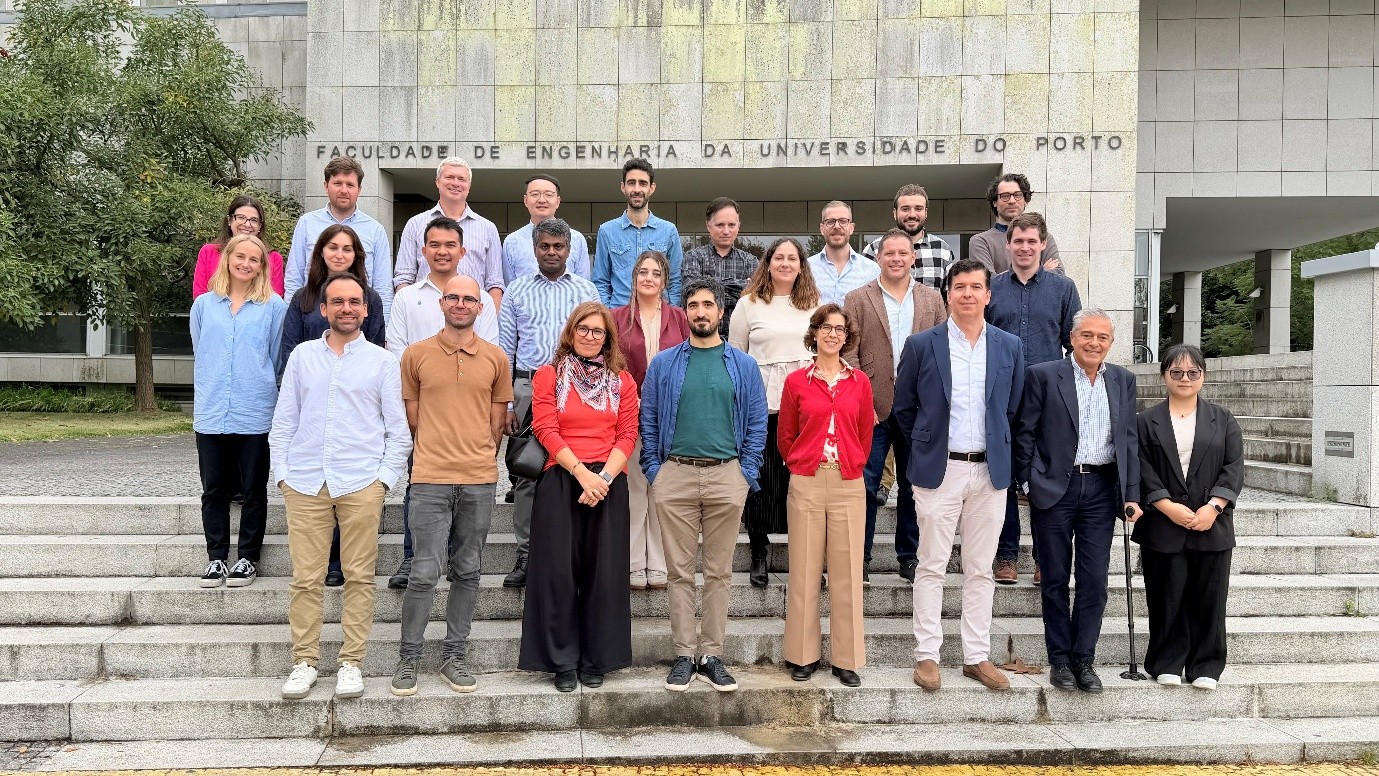
Professor David White and Dr Carlos Español-Espinel recently attended the fourth General Assembly and Review Meeting of the TAILWIND project for floating offshore wind (FOW) on behalf of the University of Southampton. Held on 27 and 28 October at the University of Porto, the meeting brought together 33 members from different institutions involved in the project.
Unlocking wind energy in deeper waters requires floating wind turbines to be securely moored to the seabed. TAILWIND is an EU-UKRI-funded initiative addressing this challenge by reducing the manufacturing and installation costs associated with mooring and anchoring systems. With sustainability as a key driver, TAILWIND focuses on developing advanced station-keeping systems, synthetic mooring lines and shared-anchor configurations.
TAILWIND is organised into a series of Work Packages (WPs), each led by a consortium partner, which collectively aim to provide the first sustainability-based approach for the integrated design of FOW turbines with shared anchors. As part of WP3, which focuses on the development and validation of novel anchoring concepts, Carlos presented an innovative methodology to support suction caisson anchor design. The proposed approach introduces an internal-work-weighted method for selecting representative undrained shear strength, with two main objectives: balancing the allocation of laboratory testing across different types of shear strength measurement; and weighting the shear strengths obtained from triaxial compression (TXC), direct simple shear (DSS) and triaxial extension (TXE) tests to determine a representative value for anchor design.
With TAILWIND entering its fourth and final year, the General Assembly provided an opportunity to review progress and discuss the project's remaining technical challenges. The programme included presentations and technical breakout sessions on the first day, followed by the formal project review with the European Commission Project Officer on the second day.
The event concluded with a guided tour of the University of Porto's research facilities, including the geotechnical laboratories and the wave-generation facility within the Hydraulics Laboratory. The two-day meeting highlighted the value of international collaboration between academia and industry in developing sustainable solutions for the next generation of floating offshore wind.