University of Southampton appointed Vice-Chair for Research in United Nations SDG Hub 3
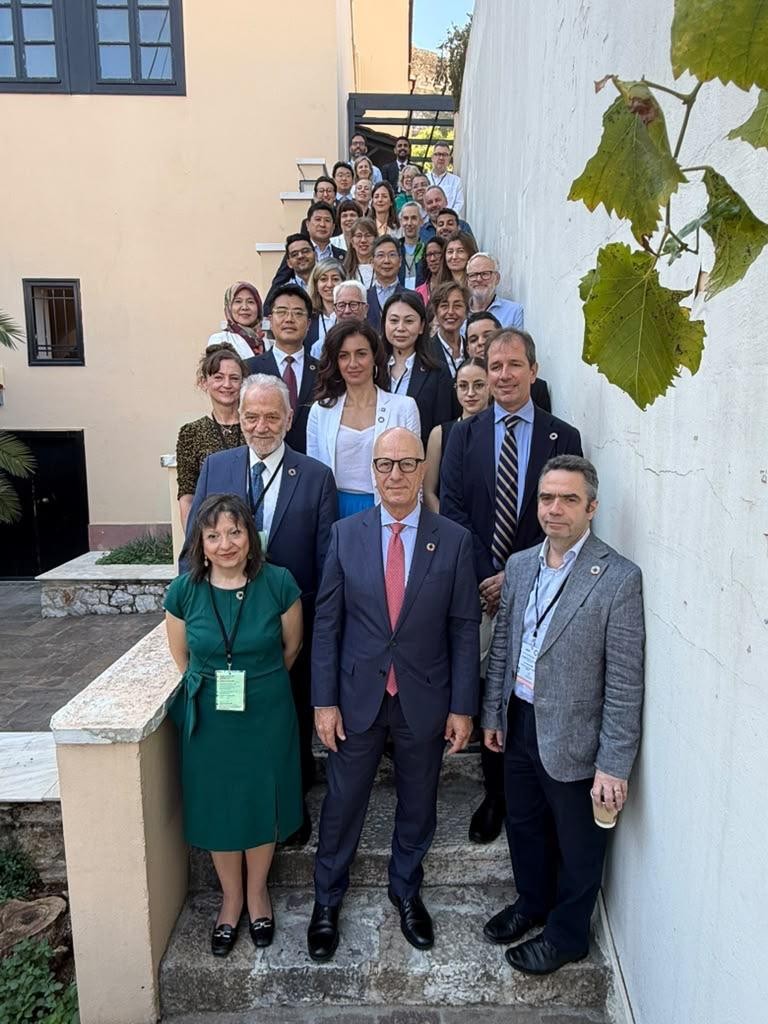
The University of Southampton has been appointed Vice-Chair for Research for the United Nations Academic Impact (UNAI) Hub focused on Sustainable Development Goal (SDG) 3: Good Health and Wellbeing.
The appointment recognises Southampton's international reputation in health, wellbeing and sustainable development. A joint bid led by the University's Sustainability and Resilience Institute, Institute for Life Sciences and Public Policy|Southampton was selected from more than 140 candidate universities worldwide.
The United Nations Academic Impact (UNAI) is an initiative that engages institutions of higher education with the United Nations in supporting and contributing to realisation of UN’s purposes and principles. UNAI SDG Hubs are designated institutions within the United Nations Academic Impact network that advance the Sustainable Development Goals through research, education and global collaboration. Established in 2018, each Hub focuses on a specific SDG while recognising the interconnected nature of all 17 goals and supporting the UN's 2030 Agenda for Sustainable Development.
The SDG Hub 3 is chaired by the University of Pretoria supported by three international Vice-Chairs: University of Southampton, Vice-Chair for Research; Florida State University, Vice-Chair for Teaching and Education; and University of Natural Resources and Life Sciences (BOKU), Vice-Chair for Outreach and Partnerships.
As Vice Chair for Research, Southampton will act as a global coordinator and champion for academic research on health and wellbeing, helping to ensure research activities are collaborative, impactful and contribute directly to achieving the Sustainable Development Goals.
A key focus of Southampton's work will be the use of data science and artificial intelligence to better understand how global health research supports SDG3 targets. Working across public health, clinical science, policy and data science, researchers will develop new methods to map and analyse research activity, identify evidence gaps and assess how effectively research informs policy and practice.
The University will combine established data science techniques with emerging artificial intelligence tools to create a comprehensive picture of the SDG3 research and policy landscape. This approach will help identify where evidence is lacking, where research may not reflect the needs of the most affected populations, and where existing knowledge has yet to be translated into action.
Working with the Web Science Institute, Southampton will initially pilot the methodology using SDG3 target 3.4, which focuses on non-communicable diseases and mental health. The project will combine large-scale computational analysis with targeted policy case studies to understand how health evidence is used in decision-making and what barriers may prevent its adoption.
The pilot will create a replicable framework that can be applied across other SDG3 targets and indicators, generating practical recommendations for researchers, policymakers and international partners. The University also plans to work with partners across other Sustainable Development Goals to explore how health evidence connects with wider social, economic and environmental priorities, helping to shape both the current SDG agenda and the framework that succeeds it beyond 2030.
This appointment creates significant opportunities for Southampton's health and wellbeing research community to help shape global agendas, establish long-term international collaborations and contribute to the future development of the SDGs beyond 2030.
Professor Craig Hutton, Director of the Sustainability and Resilience Institute, said: "This is an important opportunity for the University of Southampton to showcase its expertise and impact in the rapidly growing field of climate change, health and wellbeing."
Professor Mary Barker, Deputy Director of the Institute for Life Sciences, said: "The University of Southampton has internationally recognised expertise in global health research. Our appointment as Vice-Chair for Research in the SDG3 Hub acknowledges this expertise and gives the University an opportunity to make an important contribution to global health and wellbeing for years to come."
Professor Thomas Irvine, Deputy Director of the Web Science Institute, said: "The Web Science Institute is delighted to contribute to the University’s work on SDG3, by coordinating expertise in health, policy, data science and artificial intelligence.
"Through innovative analytical approaches, we will develop new ways of understanding how health research is evolving globally and where greater attention is needed. This work will help ensure that evidence is better connected to real-world decision-making and impact."
Yaryna Basystyuk, Head of Public Policy|Southampton, said:
"The Sustainable Development Goals can only be achieved when robust evidence is translated into effective policy and action. Through this role, Southampton has an opportunity not only to support the generation of new knowledge, but also to strengthen the connections between research, policy and practice.
"We look forward to working with international partners across the UNAI network to ensure that research helps inform decisions that improve health and wellbeing around the world."
The Sustainability and Resilience Institute will provide travel and participation opportunities for academics interested in contributing to the activities of the UNAI SDG3 Hub.
Visit the UNAI SDG Hub Network website for more information.