NIHR Challenge: Tackling Maternity Disparities Launches with Networking Event
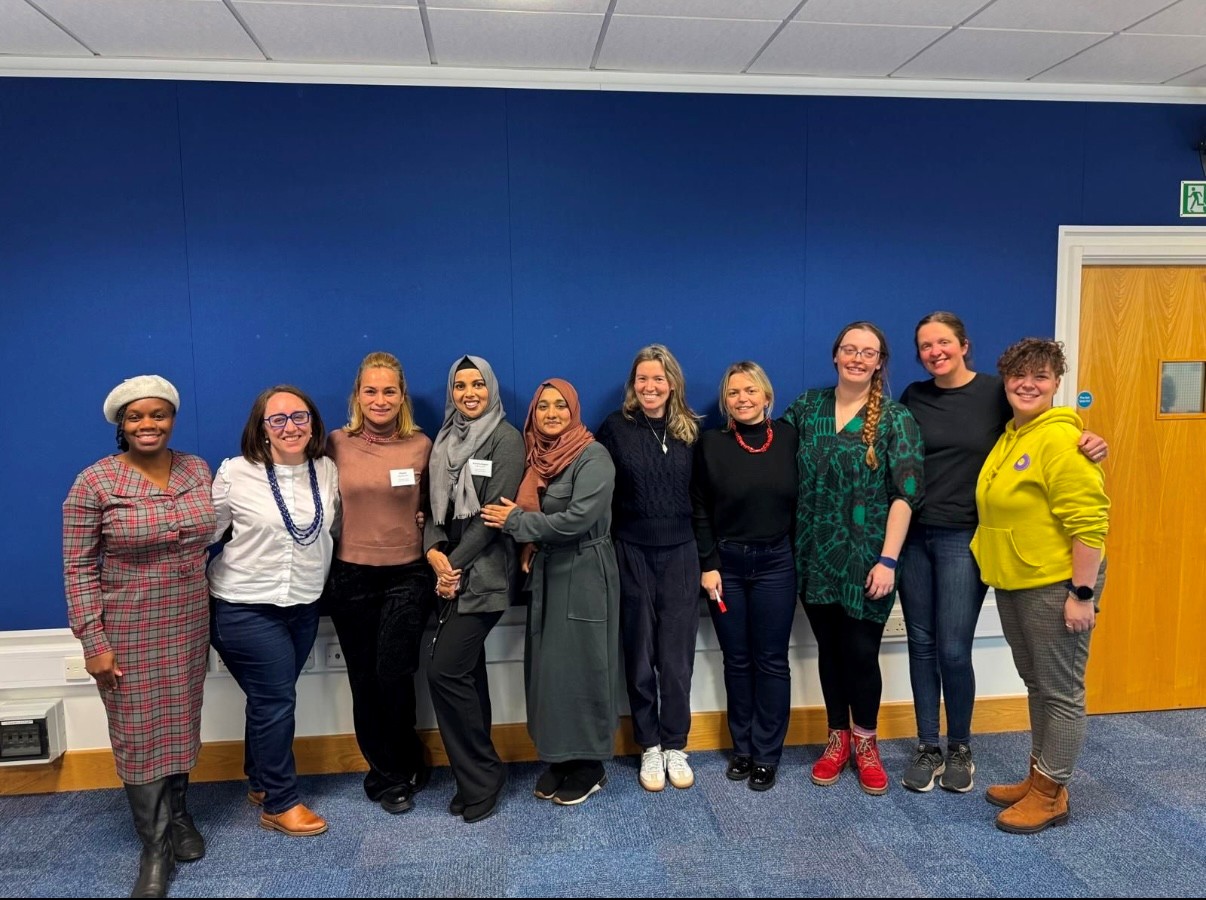
In December, the Faculty of Medicine at the University of Southampton hosted an NIHR Challenge: Maternity Disparities Networking Event.
The National Institute for Health and Care Research (NIHR) Challenge: Maternity Disparities consortium brings together nine collaborations across the UK. The collaboration led by Southampton is focused on improving care and support for women before and between pregnancies to reduce maternity disparities.
Why this matters
Maternal mortality rates in the UK have risen since 2000, with a disproportionate impact on women from minoritised groups and those living in disadvantaged areas.
Recent data shows that black women in the UK are nearly three times more likely to die during pregnancy or up to six weeks postpartum compared to white women, while Asian women face double the risk.
These disparities are exacerbated by factors such as preexisting physical and mental health conditions, lack of access to care, and social determinants of health.
The NIHR Challenge consortium aims to create an equitable care system that meets the needs of all women and their partners, ensuring healthier outcomes for mothers and their families.
Joht Chandan, the consortium’s co-lead, explained: “Our approach to tackling maternity disparities places women and families at the heart of our work. By prioritising equitable access to care and addressing the underlying social determinants of health, we are building a future where every pregnancy has the best chance of success. The dedication and expertise across this consortium inspire confidence that meaningful, measurable change is within reach."
A collaborative start
Co-chaired by Professor Keith Godfrey from the University of Southampton and the NIHR Southampton Biomedical Research Centre and public contributor Ngawai Moss, the networking event marked the initiation of consortium-wide priority setting particularly around preconception and interconception care.
Keith Godfrey, the pre- and interconception collaboration lead, said: “People who are healthier before they get pregnant have better outcomes for themselves and their babies. It is often too late to fix health problems once a woman is already pregnant. This means we need to focus on improving health before pregnancy (preconception) and between pregnancies (interconception).”
Over 65 in-person and 25 online attendees from across the UK—including academic, healthcare, and community leaders—came together to discuss the challenges faced by women in maternity care and explore potential solutions. Breakout sessions focused on:
- Supporting care and health before and between pregnancies.
- Best practices for high-quality, consistent care.
- Addressing cultural and social determinants of health.
- Leveraging data to refine and evaluate interventions.
- Tailoring support for marginalised and minoritised groups.
These discussions aimed to build relationships and create a roadmap for co-designing and implementing scalable interventions to reduce maternity disparities across the UK.
Ilda Sinani, Public Contributor and Mum, who arrived in the UK, became pregnant, did not speak English or understand the system and subsequently founded the charity “Welcome 2 the UK” said: " Through my personal experience and my work with the charity Welcome to the UK, I’ve seen firsthand how vital it is to empower families with knowledge, resources, and a sense of community. Many of the families we support are navigating new systems while facing language and cultural barriers, and access to better maternal care could make a huge difference in their lives. Improving care before and between pregnancies is incredibly important because it lays the foundation for healthier mothers, children, and families. By addressing disparities and providing tailored support early on, we can help create opportunities for every family to thrive; regardless of their background or circumstances."
Looking ahead
This launch event for the Southampton-led collaboration serves as a critical step in addressing the root causes of maternity disparities, ensuring that care and support before and between pregnancies are accessible, effective, and equitable.
Keith explained: “Our research has provided deep insight into the healthcare, educational, cultural and societal influences before and between pregnancy that underlie disparities in outcomes for women and their children. Learning from those with lived experiences and those at the forefront of service development and delivery, it is truly inspiring to see the collective determination to “move the dial” and make a real difference to reducing these disparities.”