“It takes a village”: the importance of multidisciplinary teams in diabetes care
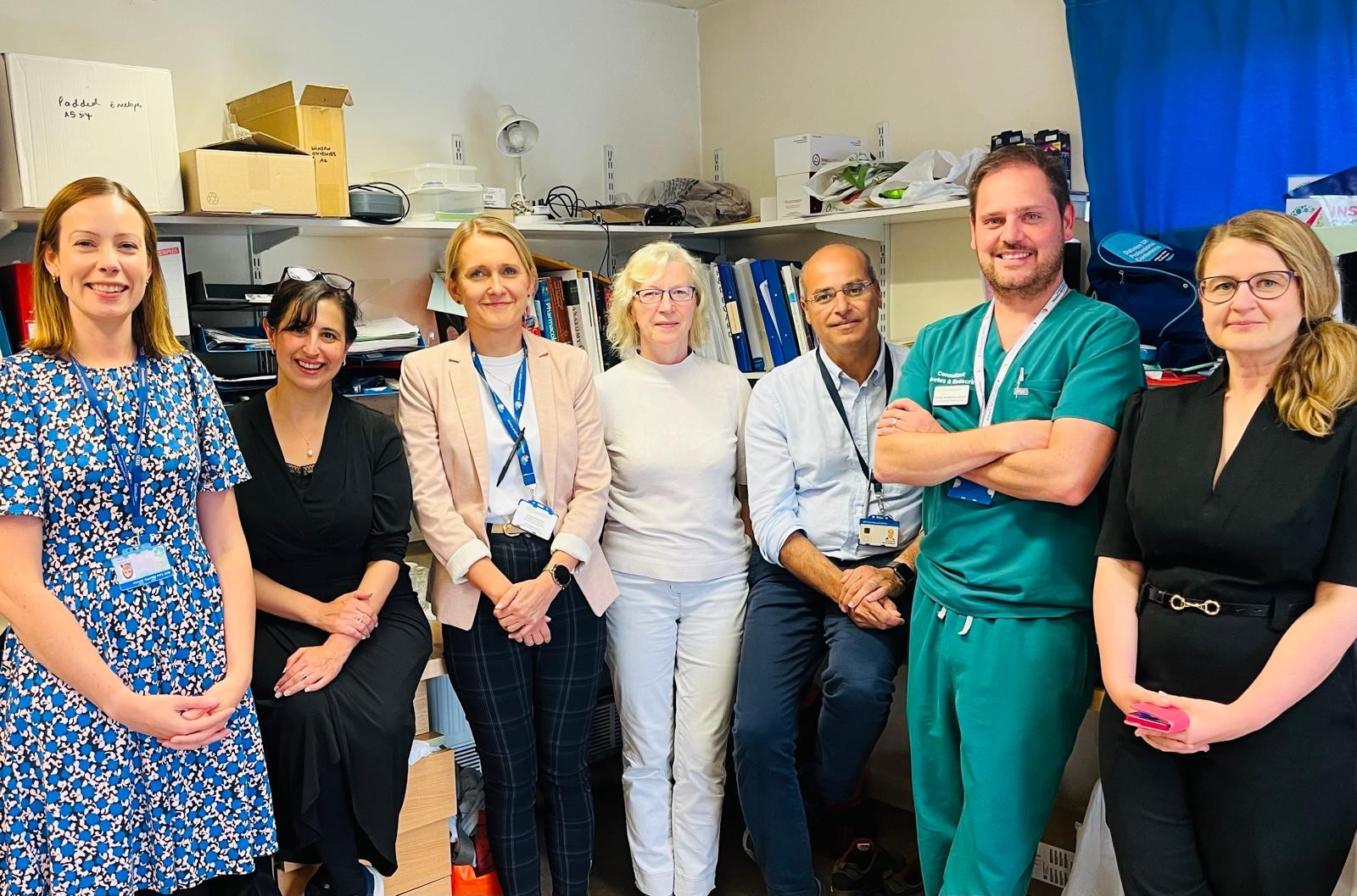
For Philip Newland-Jones, Consultant Pharmacist in Diabetes and Endocrinology and Honorary Associate Professor at the University of Southampton, the guiding principle of his work is clear: diabetes care takes a village.
“At Southampton Medical School, our students are taught by pharmacologists, dieticians, pharmacists, nurses and doctors, precisely because each of those areas has a unique specialty within diabetes care,” explains Philip.
From clinical pharmacist to consultant pharmacist
Philip began his career as a ward pharmacist for general and acute medicine, but in 2010 he was asked to support a small pilot project aimed at improving diabetes outcomes in hospital. With just 90 minutes a day allocated, he worked alongside Dr Mayank Patel and diabetes nurse Rita Trodden to test whether reviewing people with diabetes after surgery could improve recovery.
“Within three months we showed there was a benefit,” says Philip. “We applied for more permanent funding as a result, and I was able to split my time between diabetes and general acute medicine.”
“I told my colleagues that I wanted to develop my skills and become a practitioner,” he continues. “This didn’t really exist back then, but I was very lucky to have an open-minded team that supported my development alongside extra university modules in prescribing and physical assessment.”
During this time, Philip developed a portfolio of evidence showcasing his clinical expertise, alongside national competency and recognition in leadership, management, education and research.
Then, in 2017, he became the UK’s first Consultant Pharmacist in Diabetes and Endocrinology, a nationally recognised and accredited position. Since then, he has helped create two further consultant pharmacist roles in London and Leeds.
“Part of my remit is to work regionally and nationally to improve diabetes outcomes across the UK, not just locally,” he says.
Back in 2010, the diabetes team at Southampton consisted of just five people. Today, it has grown into a service of eight consultants, two dieticians, seven nurses and three endocrine nurses.
“We’re a phenomenally large team in comparison,” says Philip, “and that reflects the growing prevalence of diabetes.”
Enhancing understanding of diabetes
Diabetes is becoming more common. At University Hospital Southampton today, one in five inpatients has diabetes, meaning at any given time, 200–250 people in the hospital are living with the condition.
People with diabetes are more likely to be hospitalised due to cardiac disease, strokes, infections and other comorbidities. As a result, every clinician, regardless of specialty, must understand the fundamentals of diabetes.
Complicating matters further is the rapid pace of technological change. Continuous glucose monitoring is now standard. “Almost everyone with Type 1 and 50–60% of those with Type 2 on insulin now use a sensor,” Philip explains.
The NHS is also rolling out hybrid closed-loop insulin delivery systems which are devices that talk to glucose sensors and automatically adjust insulin delivery. The NHS drive in the next few years is to try to move to 60-75% of those living with type 1 diabetes to receive treatment with hybrid closed-loop insulin delivery.
“These developments are game-changing for people living with diabetes,” says Philip. “But it also means we have to think about the trajectory of diabetes care when teaching our students.”
“It’s essential that our students have an increased awareness of diabetes,” adds Philip, “because they will come across the condition whether they specialise in paediatrics, critical care, or anything in between. It feeds into all specialisms.”
At Southampton, diabetes teaching is woven in throughout the undergraduate medical curriculum, from foundational science in the early years to hands-on clinical placements in years three and five.
“As we look to prepare our students for the future, we’re focusing much more on applying knowledge rather than simply learning it,” Philip explains. “In diabetes, the theory matters, but our students also need to be able to apply it to an individual patient.”
Philip currently leads the diabetes and endocrine service at University Hospital Southampton, and has recently taken the role of diabetes lead for the Bachelor of Medicine degree at the University of Southampton along with an active role in diabetes and endocrine research within the University.
“Diabetes care isn’t purely medicine-centred. It’s a specialty that requires a multidisciplinary team for both education and care,” he says. “We need pharmacologists, pharmacists, nurses, dieticians, podiatrists, doctors, as well as people with lived experience.”