Southampton x-ray scanning helps preserve important archaeological hoard
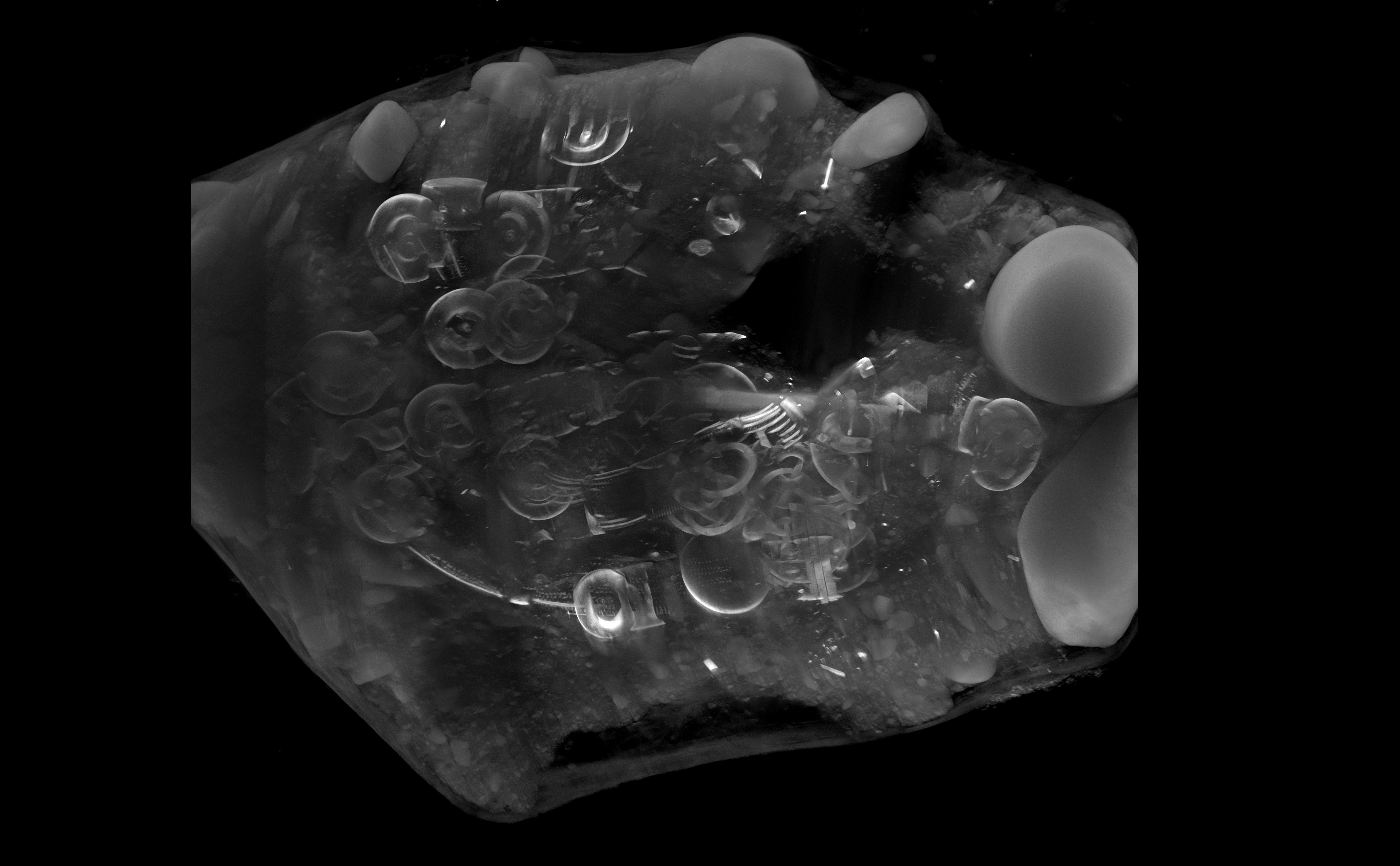
One of the most significant hoards ever found in Scotland has been acquired by National Museums Scotland and saved for the nation.
CT scanning at the University of Southampton helped archaeologists to identify crucial details about the approximately 3,000 year old Peebles Hoard, comprising of over 500 unusual bronze and organic pieces and components.
The hoard has been allocated to National Museums Scotland under the Treasure Trove process, with an ex-gratia payment made to the detectorist who found it.
The Peebles Hoard was discovered in 2020 near Peebles, a town in the Scottish Borders. Following examination on-site, the decision was made to remove the find from the ground in a single block of earth and continue its excavation and analysis under laboratory conditions. It has since been painstakingly excavated, analysed and catalogued, revealing dozens of rare objects.
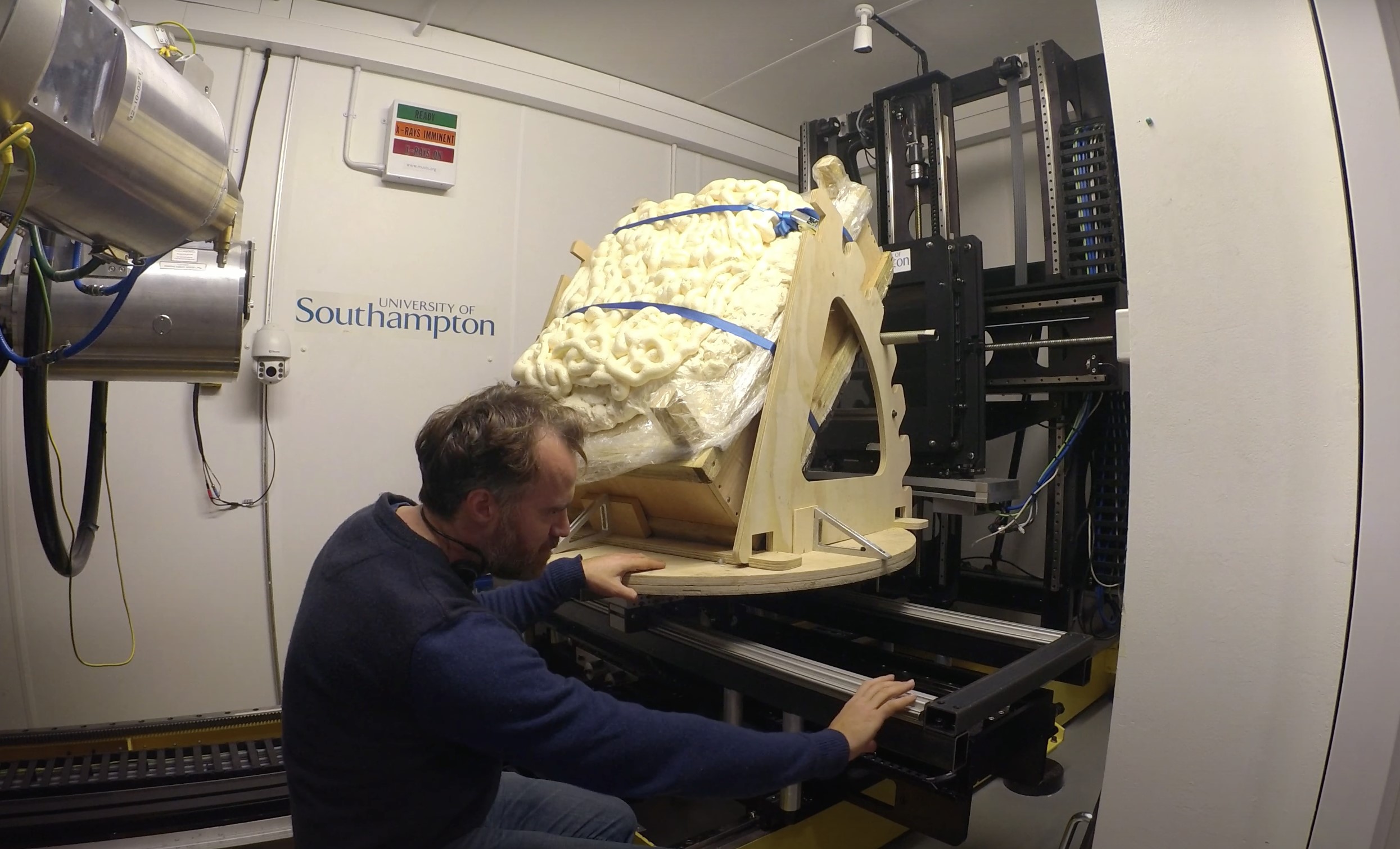
The entire block was CT scanned by the µ-VIS X-ray Imaging Centre at the University of Southampton, a partner institution of the National Research Facility for Lab-based X-ray Computed Tomography (NXCT)*. The scan was a complex process which required much ingenuity on the part of the engineers involved due to the size and weight of the earth block.
The Hoard represents a complex set of material, some of which has no archaeological parallel anywhere in western Europe. This includes many unique artefacts, the use of which is currently under investigation.
Larger and more recognisable objects within the hoard highlight Bronze Age Scotland’s position as part of an international network of communities across the North Sea. Two rattle pendants, the first ever found in Scotland, are more commonly found in Denmark, northern Germany and northern Poland. These remarkable objects are created from interlinked bronze rings and pendant plates that would have hung from a horse or wooden vehicle and rattled as they moved.
Other exceptional survivals include a sword still in its wooden scabbard, as well as an array of small bronze buttons looped onto cord. The Hoard also contains rare survivals of minute bronze pins, studs and bosses embedded in wood or leather. The remains of complex decorative straps, the purpose of which remains to be investigated, are preserved still mostly articulated after more than three millennia in the ground.. This is a level of detail and insight not usually glimpsed for the Bronze Age.
The CT scanning at Southampton captured crucial details of the internal structure and relationships between materials in their original context. It also revealed that some of these objects were produced using lost-wax casting, a rare technique in Bronze Age Britain. This represents some of the earliest evidence of its use in Scotland.
Professor Ian Sinclair , founder of the University of Southampton’s µ-VIS X-ray Imaging Centre, commented: “We are pleased and excited to have worked as part of this multidisciplinary project. CT scanning the hoard was certainly a big challenge due to the scale of the hoard block, but we relished in the opportunity to bring our engineering skills to successfully support this research on such an exceptional historical find.”
Dr Mark Mavrogordato , Director of Operations at the centre added: “The team from National Museums Scotland drove hundreds of miles down to us with the great big block that was the hoard and just the faintest glimmer of hope that we could CT scan it. Working with people who are prepared to do that is hugely rewarding, and we did everything we could to take the ‘t’ out of ‘can’t’ and turn it into ‘can’.”
Following the scanning, a meticulous excavation by archaeologists and conservators was undertaken at the National Museums Collection Centre in Edinburgh, finally unearthing the fragile components of the hoard after more than 3,000 years hidden underground.
Dr Matthew Knight, Senior Curator of Prehistory at National Museums Scotland, said: “I am delighted that the internationally significant Peebles Hoard has been saved for the nation and allocated to National Museums Scotland. The Hoard is exceptional, an utterly unique discovery that rewrites our understanding of both Bronze Age communities in Scotland and our prehistoric international connections.
“Thanks to the diligence of the finder, expertise of colleagues at the Treasure Trove Unit and National Museums Scotland, and the generosity of the team at the µ-VIS X-ray Imaging Centre, University of Southampton , we have made significant progress. However, more funding is critical to continue our conservation and research, to preserve the Hoard for future generations and uncover the stories of Scotland’s ancient past.”
National Museums Scotland is launching a fundraising campaign to support the urgent costs of conserving the Hoard and unlocking its enormous research potential.