New exhibition to unearth 200 million years of history in the South
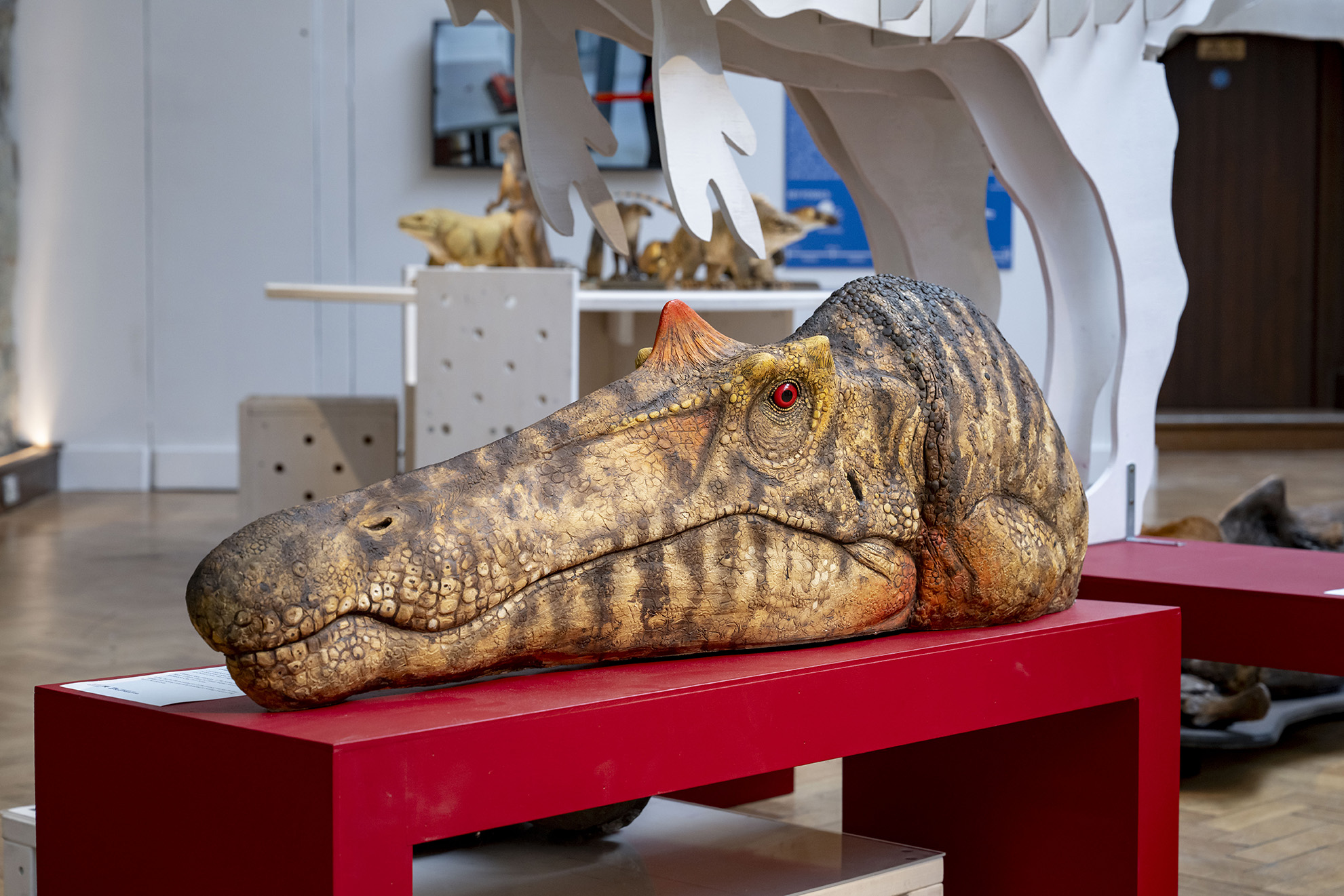
A new University of Southampton exhibition unearthing the last 200 million years of history in the South is opening today in the centre of Southampton.
Hidden in Stone tells the story of the South of England from Jurassic dinosaurs through to early humans using fossils, artefacts, life-size models, replicas and life reconstructions.
It’s opening today [4 April] at God’s House Tower in Southampton for eight weeks and is free to visit.
Told in five stories - Jurassic Seas, Dinosaurs Roam, Chalk Seas, Tropical Hampshire and Frozen Britain, the exhibition features dozens of specimens from Lyme Regis in the west, across the Isle of Wight to Hastings in the east, and north into Hampshire.
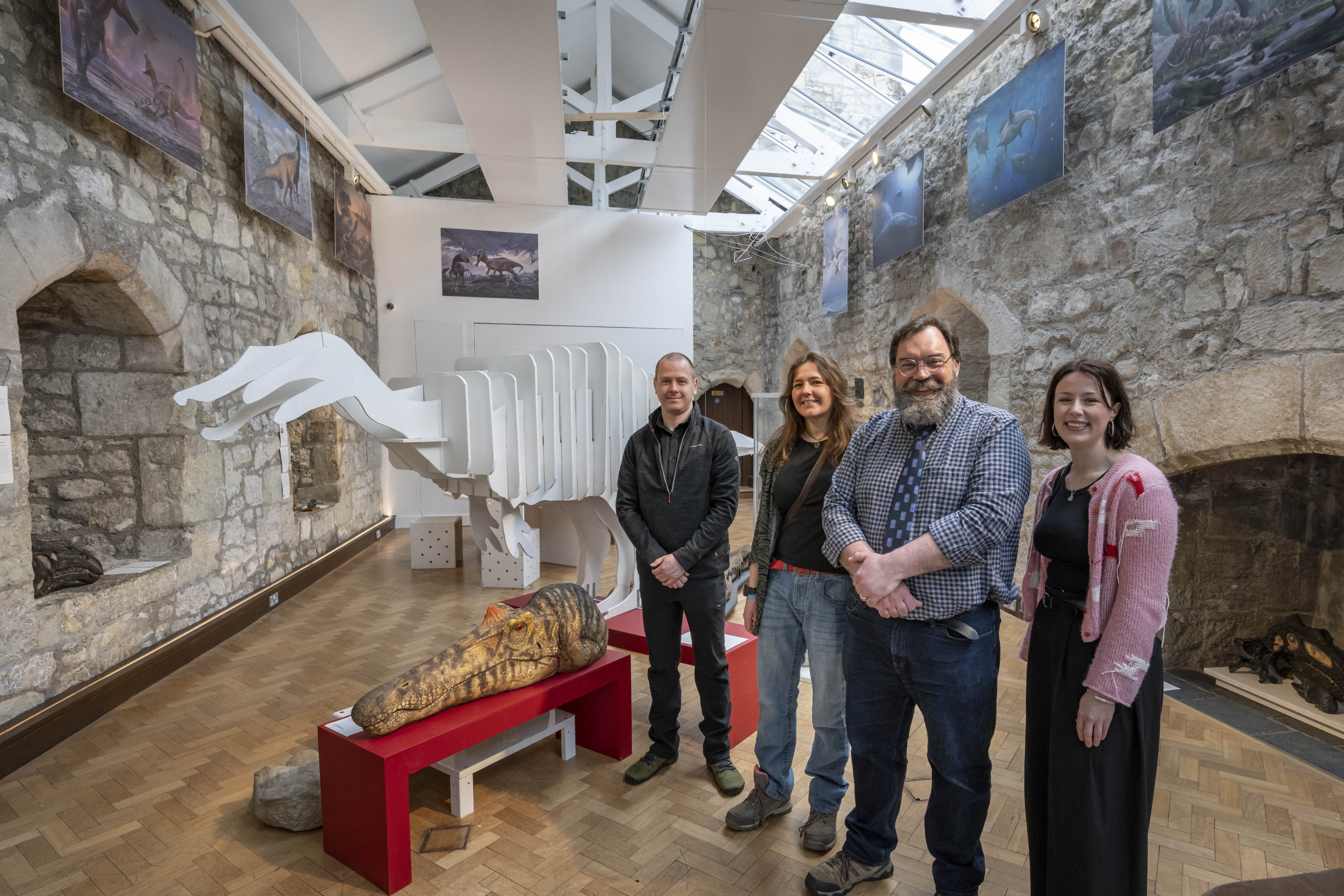
Dr Neil Gostling , Associate Professor in Evolution and Palaeobiology at the University of Southampton, is leading the exhibition. He says: “Over the last 200 million years, what is now Southern England has witnessed inundations by the sea, tropical forests, ice and snow.
“Across this seemingly vast expanse of time, we see some of the most impressive creatures ever to walk, swim or crawl across the face of the planet; Jurassic marine reptiles like pliosaurs cruising the waters over what is now Dorset, or Cretaceous spinosaurs prowling the river margins of a vast flood plain.
“In more recent times, we see near tropical temperatures, with turtles and crocodiles in the water, large flightless birds, ancestors of horses, and hippo-like animals.
“In the last half a million years, another more familiar type of animal arrived - humans, and prehistory starts to become history, our own story.”
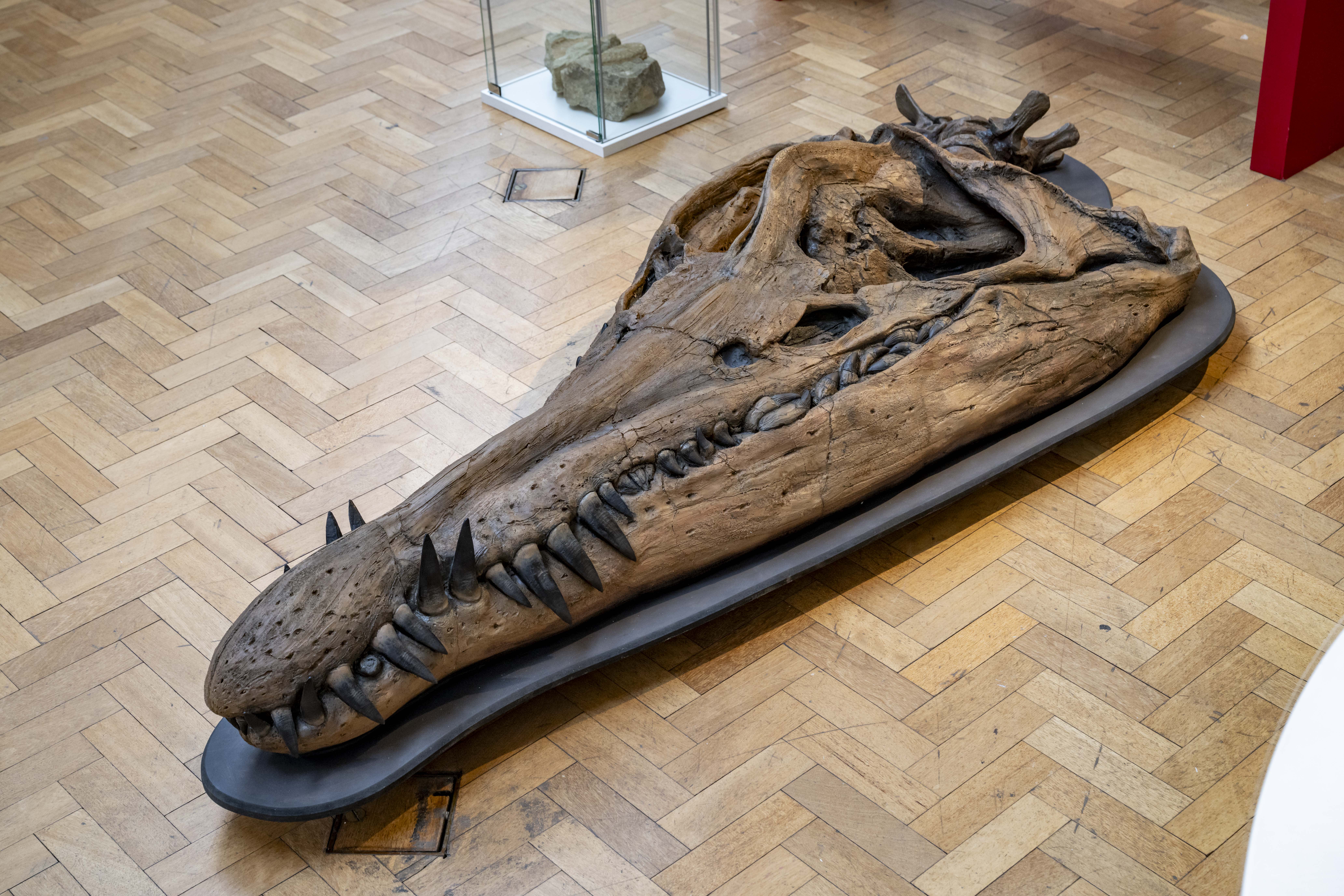
A full-size replica of the Kimmeridge Pliosaur skull – which featured along with Dr Gostling in the BBC special Attenborough and the Giant Sea Monster - will be seen for the first time outside The Etches Collection of Jurassic Marine Life.
Skulls of herbivorous iguanodontids, and carnivorous spinosaurs, alongside casts of ichthyosaurs and Mary Anning’s Plesiosaurus will join the skull of a Woolley rhino and early human artefacts such as flints and worked bone, along with dozens of other pieces including shark teeth, dinosaur footprints and ammonites.
Rebecca Ferreira , a Postgraduate researcher in Archaeology said: "The exhibition takes you through different snapshots of the human past in the south from the Pleistocene through to the Holocene. Both were periods of great environmental changes that would have impacted the lives of our ancestors on the south coast in terms of the land available for occupation, the types of plant and animal species available, and their material culture.
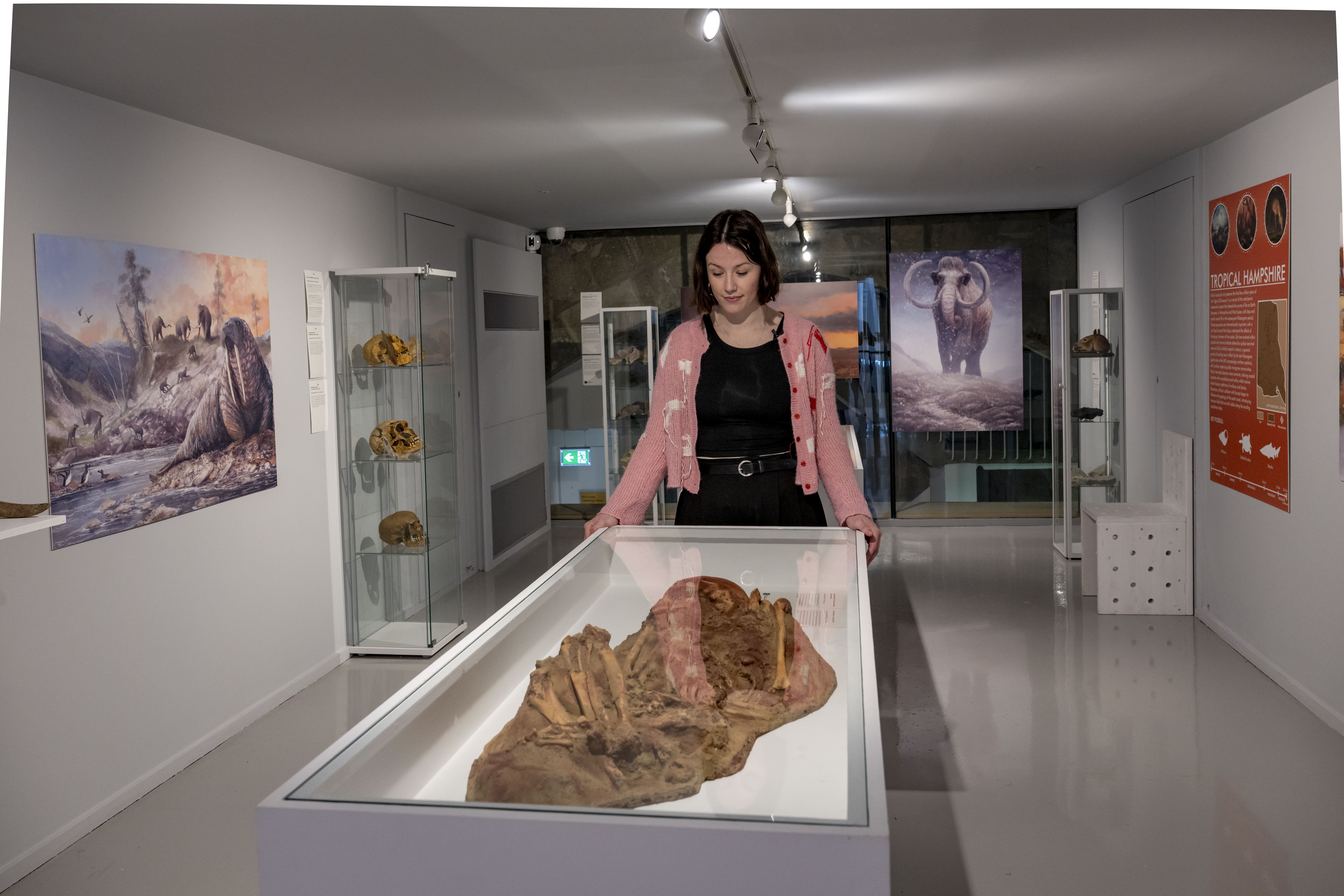
“Hopefully the exhibition will invigorate the residents of Southampton with a curiosity for the remains of the past on their doorstep, from Neanderthal stone tools found in Bournemouth to the bone tools of Mesolithic hunter-gatherers that lived on the banks of the Itchen and Test rivers."
University of Southampton paleobiologists and archaeologists have been working with artists including Anthony Hutchings, Mark Witton, and students from Winchester School of Art, to bring these amazing creatures to life and transport visitors back across the last 200 million years of life, normally hidden in stone.
Karen Fawcett, a wildlife and paleo artist, has created several bespoke sculptures for the exhibition. She says: “Over the last 25 years of studying living birds, reptiles and mammals, I have amalgamated lots of knowledge about their forms. For this exhibition, I’ve had to extend this information to recreate extinct creatures which I have never seen, using what we know from research to capture the essence of the real thing.”
Dr Gostling hopes the exhibition will help to inspire the next generation of scientists. He says: “We know that children love dinosaurs, so it is really exciting to help them imagine what their local area would have been like millions of years ago and hopefully spark their curiosity to engage with science at school and beyond.”