Placing fruit and veg near store entrances can improve sales and diet quality
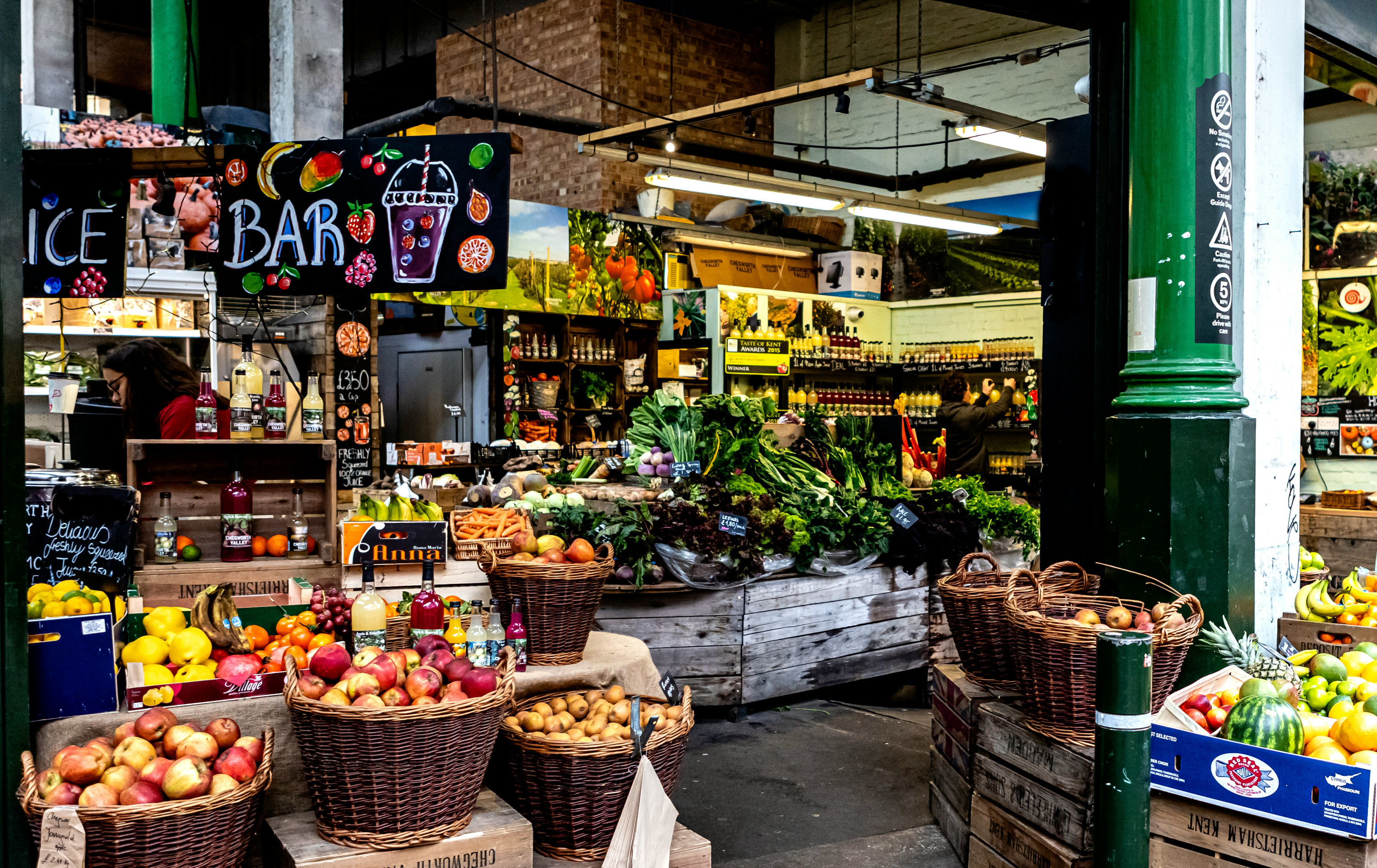
Placing fruit and vegetable sections near supermarket entrances increases the amount purchased and may improve the quality of women’s diets, a new study has found.
The results showed that the placement of the produce led to around 2,525 extra portions of fruit and vegetables being purchased per store, per week.
This contrasted with substantial declines in population-level fruit and vegetable purchasing and intake over the study period, which coincided with Covid-19 and the cost-of-living crisis.
The experts behind the paper, funded by the National Institute for Health and Care Research (NIHR), said government regulations to curb the promotion of unhealthy food should consider requiring the placement of a fruit and veg section at store entrances.
It also suggests limiting the placement of unhealthy foods in locations such as checkouts, aisle-ends and store entrances to maximise their health benefit.
The study, published in the journal PLOS Medicine, was led by researchers from the MRC Lifecourse Epidemiology Centre at the University of Southampton with the Centre for Food Policy at City St George’s, University of London, alongside others.
Lead author Professor Christina Vogel , an Adjunct Professor at the University of Southampton and Director of the Centre for Food Policy at City St George’s, said: “The food industry and the public are trapped in a ‘junk food cycle’, where unhealthy foods are cheap to make, profitable to market, appealing to eat and affordable to buy.
“To counter this, our study shows that placing fruit and vegetables at the entrances of discount supermarkets increased fresh fruit and vegetable sales. These results are important given population-level declines in fruit and vegetable sales and intake in the UK over the period of the study, due to COVID-19 and other issues.
“During the same period, UK household purchasing of fruit fell 7.2 per cent and 5.3 per cent for vegetables. On average, households are purchasing fewer than four portions of fruit and vegetables per day for the entire family.”
Previous research studies have shown that less than 1 per cent of retailer placement promotions are for fruit and vegetables.
Behind the study carried out the trial in 36 stores - 18 intervention and 18 control - of a discount supermarket chain in England, between March 2018 and May 2022.
The differences in the intervention group compared to the predicted store-level sales of fruit and vegetables were equivalent to around 2,525 extra portions per store, per week.
Prof Vogel added: “Given our findings, the Government should consider expanding the UK Food (Promotions and Placement) regulations in England to require the positioning of fresh produce sections near store entrances in all large food stores to boost fruit and vegetable sales and improve the nation’s diet.”
Professor Adam Briggs, Director of NIHR's Public Health Research (PHR) Programme, said: “Poor diet remains a leading cause of ill health and inequalities in the UK and tackling this requires action across a range of policy areas.
“WRAPPED's promising results show how small changes in our supermarket layouts can impact our shopping habits and encourage healthier diets that can help prevent obesity and diet-related disease.
“It’s a great example of how carefully involving retailers in research can help deliver practical real-world insights.”
Read more at journals.plos.org/plosmedicine/article?id=10.1371/journal.pmed.1004575