New study reveals best dosage for ADHD medications
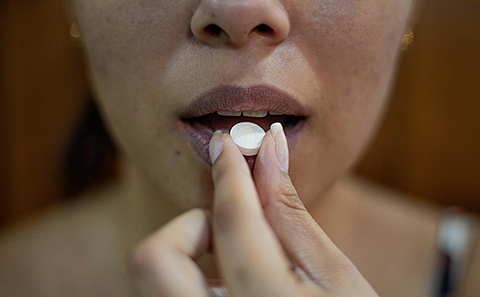
Researchers have identified the best dosage for each ADHD medication using data from thousands of people with the condition.
A new study published today [14 May] in the Lancet Psychiatry provides the most comprehensive view of dosage effects for five commonly used medications for ADHD.
To help patients and clinicians choose the right dosage, the international research team led by Professor Samuele Cortese from the University of Southampton has also developed a free online tool based on the findings.
The research was funded by the National Institute for Health and Care Research (NIHR).
Attention Deficit Hyperactivity Disorder (ADHD) is one of the most common neurodevelopmental conditions, affecting about five per cent of school-age children and two to three per cent of adults.
Medication is a key part of treatment, and prescriptions have increased substantially in recent years. However, most clinical guidelines provide limited guidance on the most effective dosages.
Finding the right dose is important to avoid dosages that are too low to be effective or too high, causing unwanted side effects. To identify this dosage ‘sweet spot’, the research team analysed data from 113 clinical trials, including more than 25,000 participants.
They used an advanced method called dose–effects network meta-analysis, which allowed them to estimate how different doses of each medication affect both effectiveness and side effects.
The results show that patterns differ between medications and age groups.
Dr Mikail Nourredine from the University of Lyon, first author of the study, said: “Overall, our findings suggest that clinicians should avoid using doses that are too low to be effective. If symptoms are not well controlled, the dosage may need to be increased.
“We also found no evidence that going beyond the licensed maximum doses improves average effectiveness, and higher doses are usually linked to more side effects. However, our results derive from group averages. Specific individuals with ADHD may benefit from and tolerate well unlicensed doses.”
Evidence from other studies shows that a substantial proportion of children and adolescents are prescribed low dosages without appropriate increases. That’s despite timely and adequate dose adjustments being associated with better adherence to treatment.
Professor Cortese, an NIHR Research Professor at the University of Southampton, commented: “Our study and the tool have the potential to support shared decision-making between clinicians, patients, and families when choosing the best dose. It is not only a clinician’s decision - patients and caregivers should be involved.
“The tool helps show what can be expected from each dose so that the patient knows why that particular dose has been chosen. We are continuing research to further personalise these recommendations based on individual patient characteristics.”
The study Pharmacological interventions for ADHD: a systematic review and dose-effect network meta-analysis is published in The Lancet Psychiatry and is available online.