Conflict increases food prices in far-flung locations, study finds
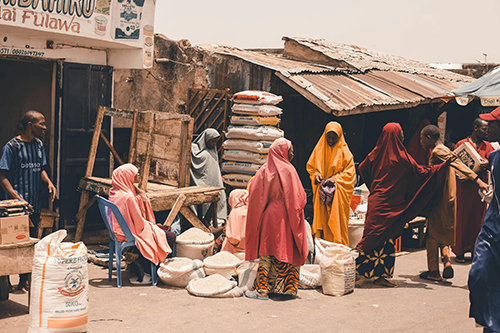
Fighting along key transport routes pushes up food prices in areas far away from the conflict itself, according to a new study.
Researchers examined the price of maize and other staples during the war in Somalia between government forces and Al-Shabaab, an Islamist terrorist group.
They found that despite the fighting being concentrated in the Southwest of the country, the impact of price rises was felt 900 kilometres away – equivalent to the length of the UK.
The findings, due to be published in the American Economic Review, suggest aid organisations may need to expand the focus of their efforts to address the ripple effects on households beyond conflict zones.
“The research tells us that the spillover effects of conflict are perhaps worse than previously thought,” says Dr Marco Alfano, Associate Professor of Economics at the University of Southampton, who coauthored the study.
“We’ve seen in Iran how key transportation routes affect prices at a global scale, but this is felt even more acutely within countries experiencing conflict.
“When there is a lack of alternative routes, the security of key transportation nodes such as Lower Shebelle in Somalia or the Strait of Hormuz in Iran is crucial to stemming price rises further afield.”
The team from the University of Southampton and University of Essex combined data on maize prices, transit routes and incidents of conflict.
Each attack along a transportation route increased the price in maize markets by around 0.4 per cent, with prices fluctuating strongly in response to battles or ceasefires. The effects could be seen 14 hours’ drive away.
During the height of the insurgency between 2016 and 2018, violent incidents close to transportation roads increased maize prices by around 11 per cent over a sustained period – equivalent to around half the impact of rainfall on maize prices.
Further analysis revealed the attacks over the past 20 years have lowered market access in Somalia by close to 70 per cent - pushing up prices across a wide range of goods by six to 11 per cent.
Prof Thomas Cornelissen from the University of Essex, coauthor of the study, commented: “In response to these terrorist attacks and resulting price increases, households in far-flung areas adjusted their eating patterns. Households also reduced their non-food spending, primarily on health and education.
“The incidence of diseases linked to malnutrition, such as gastroenteritis, malaria and typhoid in children also increased.”
Simulations by the team suggest that providing alternative routes could reduce prices by between 5 and 20 per cent if their safety could be upheld. Similar reductions could be achieved by securing existing routes in the Lower Shebelle region of the country.
The paper Spatial Spillovers of Conflict in Somalia is due to be published in the American Economic Review and is available online to American Economic Association members.