New report outlines path to clean energy for the South
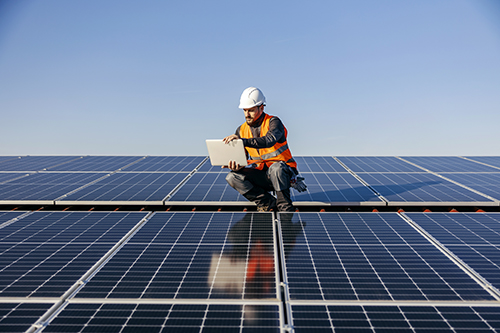
A new report outlines the challenges and opportunities in turning Hampshire and the Solent region into a renewable energy powerhouse.
Currently, the region is a net energy importer, with just 8% of renewable energy demand produced locally. That means around 92p in every £1 spent on electricity leaves the local economy to pay for power generated elsewhere.
The Clean Energy South report from the University of Southampton and Business South says making the area a green energy exporter could reduce energy bills for residents and local businesses, increase investment, and bring skilled jobs to the region.
It’s being launched today [6 October] at St Mary’s stadium at a meeting of businesses, local authorities and energy experts.
“We’ve seen how global events are creating price shocks in fossil fuel markets and how this is impacting energy costs for residents and businesses right here in the South,” says Sue Littlemore, Director of Civic University at the University of Southampton, who commissioned the report.
“Delivering the green energy transition isn’t without challenges, but our report suggests that the South can support energy autonomy, economic resilience and better health for our communities by taking a leading role.”
Solar energy currently accounts for 88% of all local renewable energy generation in the ‘sunny South’.
The report says national grid bottlenecks pose a significant hurdle to increasing renewable energy generation further. Changing grid use and upgrading all 149 substations in the region would allow 2280 MW of capacity – enough to meet current demand.
But with demand for electricity set to increase between 93% and 144% by 2050, the region will undoubtedly have to build and upgrade infrastructure or face continued reliance on fossil fuel imports.
Samantha Clough, Co-Chair of Business South’s Energy and Utilities South Action Group, said: “Energy is increasingly constraining growth in the South. High prices are putting pressure on costs and competitiveness, while limited network capacity is holding back businesses looking to expand and delaying the new homes and communities our region needs. Put simply, growth depends on having the energy infrastructure to power it.”
Modelling by the University of Southampton suggests that a £12bn investment in offshore wind, solar farms, rooftop solar and onshore wind could generate more than 940% of demand, exporting the excess to other parts of the country.
A Climate Change Committee analysis states that for every £1 spent on the energy transition, the UK economy can expect between £2.20 and £4.10 in benefits.
Other challenges identified in the report include a skills shortage in the workforce, a lack of trust in energy companies and local opposition to green energy projects.
Darren Paffey, MP for Southampton Itchen, said: “This is a really welcome and insightful report that further underlines the huge potential for Southampton and the wider region to be a renewable energy powerhouse. Clean, green energy is the future, leading to wider health and economic benefits for Southampton, and I’ll be using this report to continue to make the case to ministers for investment and infrastructure improvements in our region.”
The report also lays out a series of proposals which could support the green energy transition, such as upgrading the 20 most constrained substations to unlock 1 GW of trapped green energy potential; designating priority areas for onshore wind; and making rooftop solar mandatory for all new builds.