Users engage with online health platforms despite privacy concerns
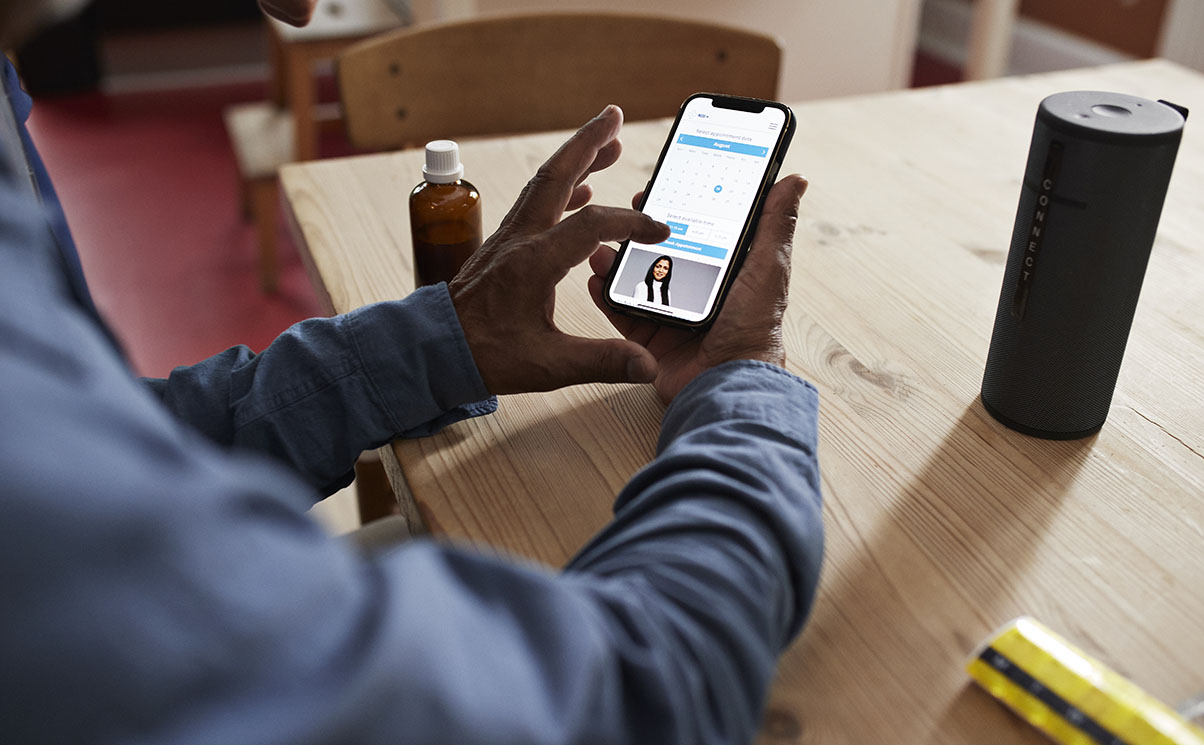
People accessing health advice online can feel they have no choice but to put their trust in websites they visit despite having misgivings, suggests a University of Southampton study.
Researchers found users felt that convenience, ease of use, and crucially a lack of alternatives, outweigh their concerns about privacy and data security.
The team explored the feelings of people, both with and without lived experience of a mental health condition, towards internet-based technologies (IBTs) and sites that make use of artificial intelligence (AI), particularly in e-Health applications.
They found there was no clear difference in levels of trust between the two mental health status groups. However they revealed concern across both groups about trustworthiness and feelings of ‘digital resignation’ to features such as cookies.
Findings are published in the journal Behavioral Sciences.
Lead author and psychologist Dr Emma Palmer-Cooper explains: “Our original concern was that people with serious mental health conditions, who can sometimes display more mistrust of others and of ‘cyber’ technologies, may be more likely to avoid IBTs designed to help them due to a level of paranoia or fear.
“We set up our study to explore this possibility, but our results showed this as less of an issue and that more general concerns about trust in digital technologies – common to both participant groups – were more prevalent.”
The researchers conducted qualitative semi-structured interviews over an eight month period in 2023 with 22 UK-based adult participants: eight with lived experience of a mental health condition and 14 without.
There was an overall consensus among participants that there is an imbalance between large companies and end-users, leading to trust issues. They linked trust in technology to trust in organisations, and had concerns about possible commercial influence.
Twelve out of the 22 declared a lack of trust in the internet generally, but continued to use IBTs and to abide by cookie settings they weren’t comfortable with. They justified this by citing convenience and time-saving benefits, along with acknowledging the trade-off between privacy and trust, versus user experience and greater functionality.
Some felt they had little choice but to accept cookies. As one participant put it: “If you don’t accept, you can’t use the majority of online services.”. Another stated: “And I don’t trust it but as I said before, I have to in a way trust it in order to get to do what I want to do.”. One described cookies as being designed to “wear you down”.
Throughout the interviews people spoke of wanting a balance between AI and human contact. They expressed anxiety about AI’s capabilities, in particular fear of its misuse and the prospect of AI replacing human employees. Two participants raised the issue of a need for greater regulation.
Professor Mark Weal of the School of Electronics and Computer Science at the University of Southampton says: “Our study shows there are clear ethical considerations for developers of online technologies and for the prescribers of eHealth interventions. It’s important online systems are developed responsibly to provide trust and genuine user autonomy.”
The researchers call on health professionals to understand data usage and privacy in the systems they recommend to patients and to balance support between human and eHealth provision.