Author: Dr Wassim Dbouk
The Annual COP Circus
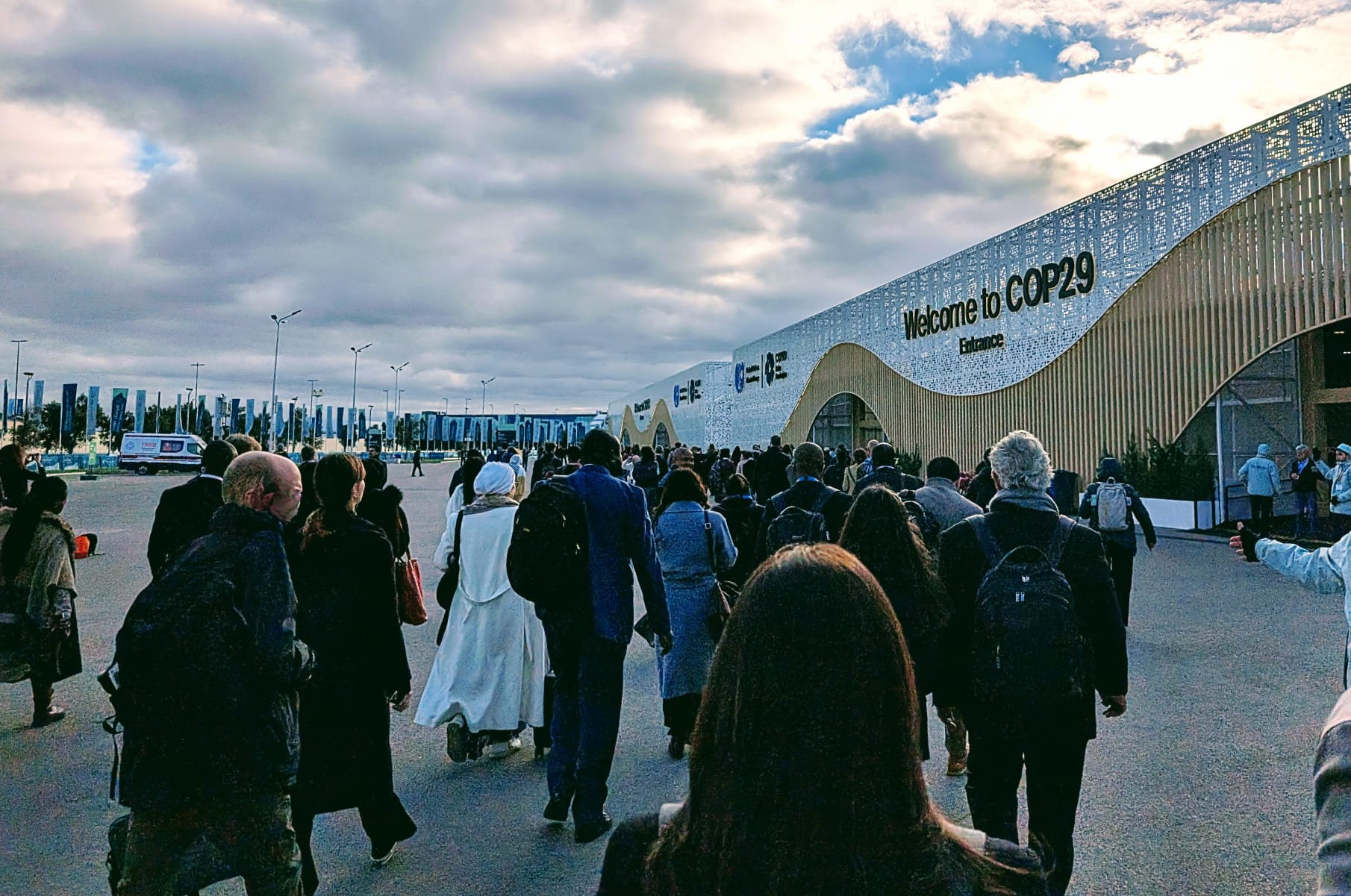
Who even cares about COPs anymore? These gigantic, well-rehearsed circuses roll into a new city every year, bringing with them hordes of delegates, activists, media, and lobbyists—all eager to waste time, pump up their carbon footprints with international flights, and test the limits of local infrastructure. They clog hotels, jam traffic, and fill restaurants, leaving host cities overwhelmed, all while claiming to "save the planet."
And what do we get for it? Hardly any tangible progress on climate action. It’s more like a theatrical performance where lofty speeches are made, but meaningful outcomes are as scarce as snow in July, especially when they are held in oil-producing countries (right?).
So, why do we keep showing up? COP29, let’s face it, was no exception. This much-anticipated "Finance COP" fell far short of its promises. But has it failed so spectacularly that it might finally spark the change we desperately need?
From Glasgow to COP29: My Journey to the Negotiation Table
My journey at COPs has been an unexpected evolution since attending COP26 in Glasgow. Back then, I was a Specialist Policy Officer for the Southampton Marine and Maritime Institute and Public Policy|Southampton, exploring how academia could effectively engage with policy, particularly within the UNFCCC framework. Fast forward to today, that curiosity has led me to wear multiple hats: policy officer, researcher, and negotiator representing Lebanon on the global stage.
Over time, I built a network of peers and mentors from diverse fields—academia, ocean governance, shipping, and negotiators. Through sustained effort, I developed a nuanced understanding of how the University of Southampton could meaningfully contribute to climate discussions. My nomination to Lebanon’s delegation marked a turning point, deepened further by the Youth Negotiators Academy’s Climate Youth Negotiators Programme, which equipped me with critical negotiation skills.
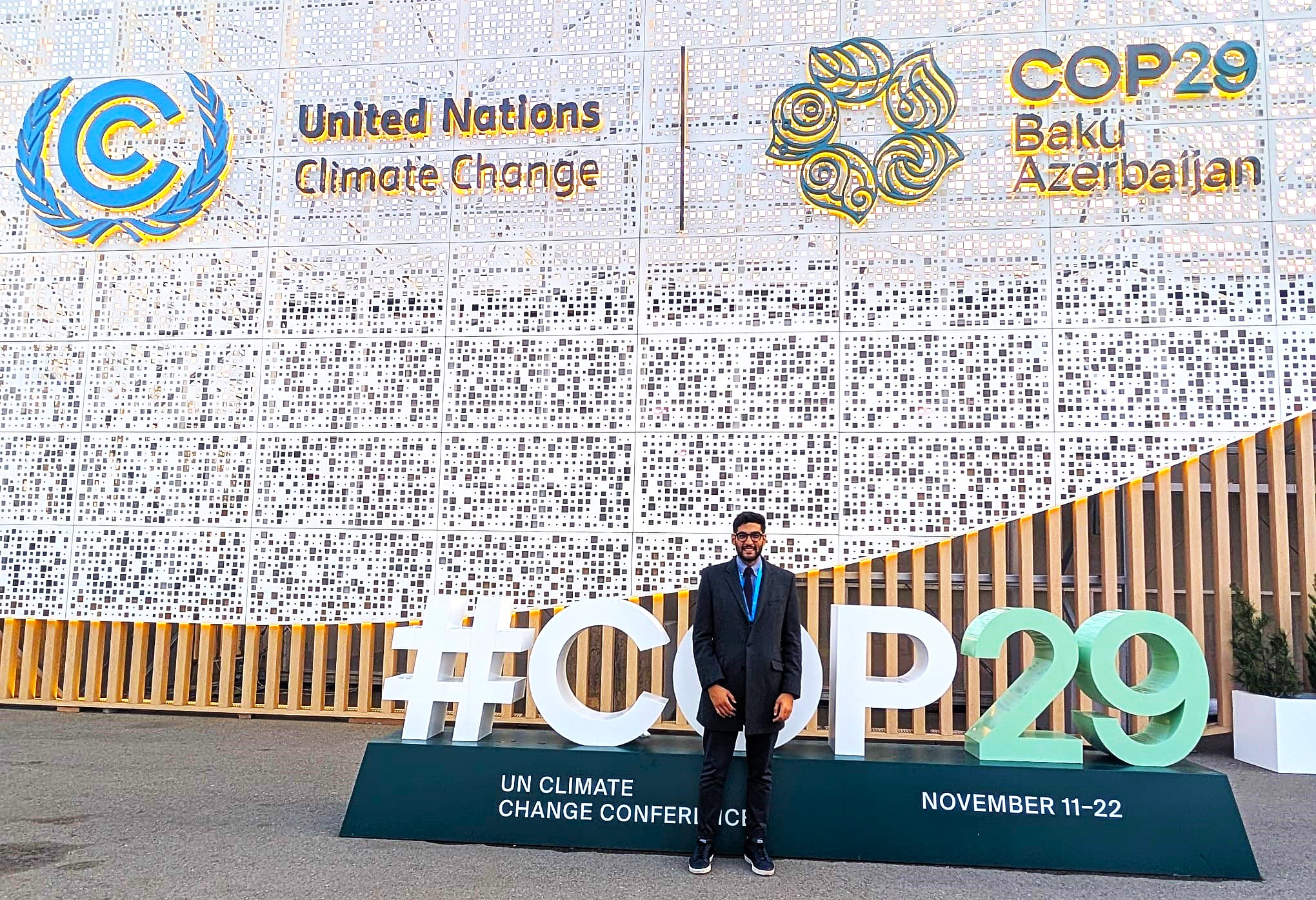
At COP29, I had the heavy responsibility of leading Lebanon’s negotiations on the UAE Just Transition Work Programme in Baku. The physical and mental challenges of this role were great, but so were the lessons learned, which I am eager to integrate into my research and future activities.
The Reality of COP Negotiations
Averaging over 21,000 steps and surviving on three to four hours of sleep per day, I lost 6kg in just eleven days. Physically, it was gruelling, but the real challenges were mental. Negotiating at a COP demands an entirely different skill set than my roles as a researcher or policy officer. Meetings stretched into the night, often six to seven hours long, in windowless rooms where progress was painstakingly slow.
The constant recalibration of strategies was exhausting. Hard-earned progress was often rendered obsolete by sudden developments in other negotiation tracks. Navigating this environment required resilience, adaptability, and an acute understanding of diplomatic dynamics. Managing relationships was equally critical. Balancing coordination with Party delegates, UNFCCC constituencies, youth networks, and researchers wasn’t just diplomacy—it was planting seeds for sustained collaboration and impact.
However, the stark reality of COP29 was this: many countries can afford slow progress in these negotiations. It’s a sobering thought, one I couldn’t shake as I observed the pace of discussions. During the Climate Youth Negotiators Programme, I learned a term that kept coming back to me throughout the conference: BATNA—the Best Alternative To a Negotiated Agreement. For many countries, their BATNA isn’t dire enough to compel urgency. Their fallback options, while imperfect, don’t demand the same level of immediacy as those of more vulnerable nations. This disparity creates a frustrating inertia—one that risks undermining the very essence of these talks.
For countries whose BATNA is far worse—those faced with existential threats from rising sea levels, extreme weather, and resource scarcity—every delay comes at an unbearable cost. Yet, in Baku, it felt like these voices were once again struggling to rise above the diplomatic noise.
So, as I reflect on my experience at COP29, I’m left grappling with this paradox: the process is undeniably flawed, but it remains one of the only platforms where these critical conversations can happen. Is it perfect? Absolutely not. But is it necessary? Unequivocally yes.
The Just Transition Work Programme: A Microcosm of Dysfunction
The deadlock in the negotiations on the Just Transition Work Programme (JTWP) at COP29 is emblematic of the broader dysfunctions that characterise today’s global climate negotiations. Designed to facilitate a shift to low-carbon economies in a way that is fair and inclusive, the JTWP failed to deliver even the most rudimentary outcome: an agreement from all Parties on a draft text to serve as the basis for their negotiations. After two exhausting weeks, stark divisions between Parties left the process at a standstill. Stark divisions between Parties proved insurmountable, with one bloc’s position often being another’s red line.
At the heart of the impasse was a fundamental clash over the interpretation of the principles of “equity” and Common But Differentiated Responsibility and Respective Capabilities (CBDR-RC). Developed countries framed these principles within the domestic context of national policies, while developing countries, particularly the Like-Minded Developing Countries (LMDCs) viewed them as having an international dimension tied to historical responsibility.
This divergence shaped two irreconcilable narratives in the negotiation rooms. Developed countries pushed to centre the JTWP around mitigation, emphasising the potential opportunities of a just energy transition—like job creation and economic growth—while stressing the need for safeguards for workers affected by these changes. Emerging economies, by contrast, called for greater emphasis on historical accountability and unmet commitments, and sought to resist being drawn into a renegotiation of the PA that might shift the commitments originally imposed on developed countries onto them. For them, operationalising the JTWP meant first to ensure that developed countries provide climate finance as outlined in Article 9 of the PA and take the lead in fulfilling mitigation obligations having exhausted their carbon budgets. Finance was a red line, integral to ensuring that the "just" in "just transition" extends beyond domestic workforce considerations to include the global disparities that define the climate crisis itself.
Fragmentation in the G77&China Bloc
The G77&China faced significant challenges in presenting a unified front at COP29. Comprising 134 countries and several sub-groups—including the LMDCs, Least Developed Countries (LDCs), and the Alliance of Small Island States (AOSIS)—their positions often diverged sharply. AOSIS prioritised urgent adaptation and loss & damage measures in the face of rising sea levels. LDCs focused on securing financial and technical support to address vulnerabilities. Meanwhile, the LMDCs pushed for equity and historical accountability, resisting obligations that might undermine emerging economies’ development. These differences fragmented their collective voice, weakening their position in negotiations.
Structural Inequalities: Who Pays the Price?
While developed countries and the LMDCs engaged in blame-shifting like a game of “scapegoat tennis,” it was the poorest nations that bore the heaviest burden. Inequalities within the negotiation process itself were stark. Many of climate-vulnerable countries struggled to send delegates or sustain effective representation, while wealthier nations had large, specialised teams dominating the room.
This disparity was amplified by the UNFCCC’s consensus-based decision-making process, where consensus is achieved not through unanimous agreement but through the absence of active opposition. As a result, those unable to be present during critical decision-making moments are effectively excluded from having their voices heard.
Structural issues like these must be addressed if we are to achieve true equity in climate negotiations. Boycotting COPs because of disagreements over host nations’ policies only deepens the problem. Instead, we must embrace constructive engagement, no matter the venue, to drive systemic change.
COP29: A Missed Opportunity for a Strong Signal
COP29 was supposed to send a clear message ahead of the 2025 submission of updated Nationally Determined Contributions (NDCs). It should have demonstrated an unwavering political will to prioritise climate action rather than pumping trillions of dollars on wars that do nothing but cause further division, emissions, and destruction for people and the planet.
Instead, COP29 sent the opposite signal. The walk-out by AOSIS and the LDCs during one of the final plenaries highlighted their frustration with the lack of progress. The fear now is that this failure will lower ambitions in the 2025 NDCs, many of which are likely to be conditional on financial support that remains uncertain. The momentum built by the Global Stocktake decision at COP28 risks being lost as countries retreat into old patterns of mistrust and division.
A Glimmer of Hope
Despite the disappointments, there is hope in the resolve shown by AOSIS and the LDCs. Their "no deal is better than a bad deal" stance sends a powerful message: it’s time to stop settling for empty promises and half-measures. This pressure could yet force the system to confront its flaws and reignite meaningful action. After all, we all live on one planet. COP29 may have deepened the cracks in an already fragile system, but perhaps those same cracks will let the light of true urgency and ambition shine through. Only time will tell if we seize this moment or let it slip further away.