University of Southampton brings maritime decarbonisation to Parliament
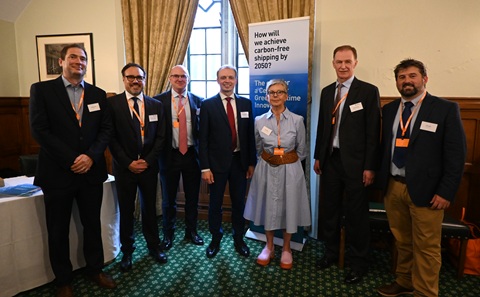
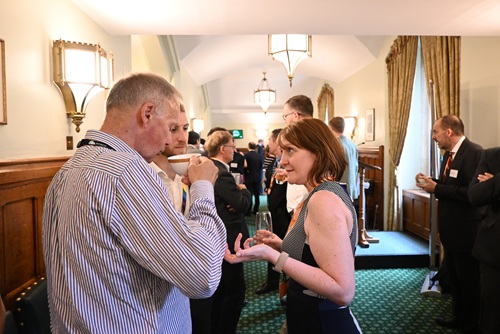
On Wednesday 25 June, the University of Southampton held a high-level event at the House of Commons to explore UK leadership of the gnarly challenge of decarbonising shipping, a major source of global greenhouse gas emissions, by 2050.
The session was convened by the Centre for Green Maritime Innovation (cGMI)—a major industry-backed initiative led by the University aiming to address the UK’s urgent need for maritime decarbonisation through collaboration, innovation, technical de-risking and skills development.
Bringing together leaders from government, small and large industry, and researchers, the event highlighted the need to prioritise maritime decarbonisation in discussions around the UK’s transport and net zero priorities. It introduced the cGMI as a proposed national centre to unite and promote the maritime sector, accelerate the development and integration of clean technologies, and deliver the jobs, skills and growth needed across the UK.
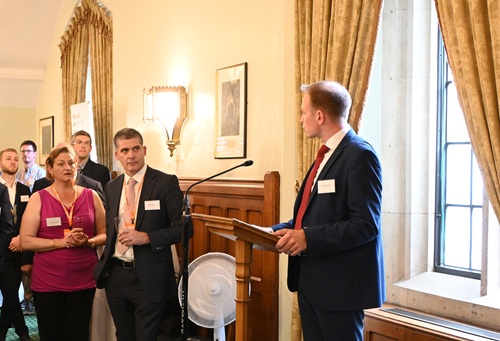
Hosted by Darren Paffey (Labour MP for Southampton Itchen) the event featured a wide range of perspectives from national policymakers, major operators, academic experts and SME innovators, who together set out the challenges and opportunities facing maritime decarbonisation in the UK—and the role the cGMI could play in enabling long-term change.
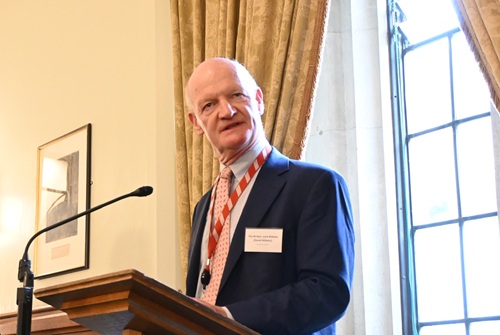
The Rt Hon. Lord Willetts (President of the Resolution Foundation, Chair of the new Regulatory Innovation Office, and former Minister for Universities and Science) opened the discussion by underscoring the UK’s opportunity to lead in green maritime innovation. He described the cGMI as “absolutely the right kind of project for Southampton,” aligning with the University’s strengths in research and business collaboration. He noted the growing attention within government to regulatory barriers that can slow progress in emerging sectors—including autonomy and clean shipping—and positioned the cGMI as a timely and practical response to those challenges.
Charles Haskell (Carnival UK) outlined their company’s commitment to decarbonisation and the challenges of delivering rapid innovation at scale across a global fleet. He shared how Carnival UK has already reduced total emissions by 10% while increasing capacity by 30%—an achievement driven by investments in fleet and itinerary optimisation, energy efficiency upgrades, and trials of new fuels and technologies. However, he stressed that the pace and cost of trialling unproven systems on large ships remains a major barrier. “We’ve made significant reductions to date, but we can’t continue this trajectory with the same business model. As we move through the 2030s and ’40s, we’ll need to shift from an evolutionary to a revolutionary approach.” Haskell backed the proposal for a national centre to support full-scale trials and simplify collaboration with regulators, ship designers and equipment suppliers.

Professor Dominic Hudson (University of Southampton), who has led the development of the cGMI, explained how 18 months of engagement with industry, regulators, and ports across the UK has shaped the centre’s vision and scope. He described the complex decisions facing maritime businesses—particularly SMEs—when investing in future fuels and technologies and made the case for a dedicated national facility to bring coherence, speed and scale to innovation in the sector.
“The UK has no such facility operating at a mid-to-high Technology Readiness Levels, and at the scale required across the whole of the maritime sector,” said Professor Hudson. The proposed cGMI would accelerate the safe deployment of new technologies, support skills development, and enable system-wide integration. “Our analysis shows a new national centre will help the UK stay at the forefront of the global maritime sector through a time of rapid change. There is an opportunity to drive exports, high skills jobs and regional and national growth, through the de-risking and proving of UK-developed and manufactured advanced components, systems and vessels.”
Professor Hudson confirmed the University’s plans to launch Phase 1 of the centre in 2026, focused on enabling mid-TRL technologies and creating a platform for collaborative investment.
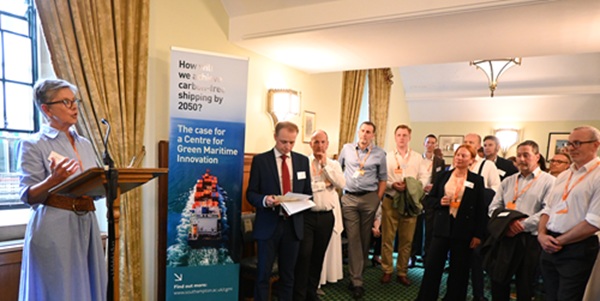
Daniel Hook (RAD Propulsion), Di Gilpin (Smart Green Shipping), and Adrian Went (formerly Griffon Marine Ltd) each spoke to the barriers facing SMEs—particularly the challenge of scaling innovation and accessing coordinated support across research, regulation and commercialisation. All three strongly backed the creation of a national centre to bring together fragmented resources and enable more agile, joined-up delivery.
Together, the speakers illustrated how the cGMI would fill a critical gap in the UK’s innovation landscape by providing the infrastructure, expertise and coordination needed to test and de-risk sustainable maritime technologies at scale and in representative environments.
Earlier in the day, Professor Stephen Turnock (University of Southampton) contributed to roundtable discussions with the House of Commons Transport Select Committee. The session, held to mark the Day of the Seafarer, focused on the maritime sector’s contribution to growth, decarbonisation and competitiveness—and further underlined the national significance of the issues explored in the cGMI event that followed.
The cGMI will draw on the University of Southampton’s internationally recognised strengths in maritime engineering, digital testing, clean fuels and ocean systems, as well as its location in one of the UK’s most significant port cities and premier maritime business cluster.
The lead-in time to adapt ships, ports and infrastructure is significant—so what happens in the next decade will be critical. This transition is not just a necessity; it’s a huge opportunity to create new highly skilled jobs and stimulate growth in communities across the UK.
.jpg)
As global trade is expected to triple by 2050, the need for accelerated decarbonisation is increasingly urgent. The cGMI will ensure that the UK is placed to maintain its leadership in a competitive international challenge generating high skilled jobs and exports whilst substantially decreasing the environmental footprint of an essential global industry.
Find out more about the Centre for Green Maritime Innovation.
To discuss opportunities or request further details, contact: cgmi@soton.ac.uk