Growing Wild Citizens at School: Project supports local pupils to grow their own food and learn about sustainability
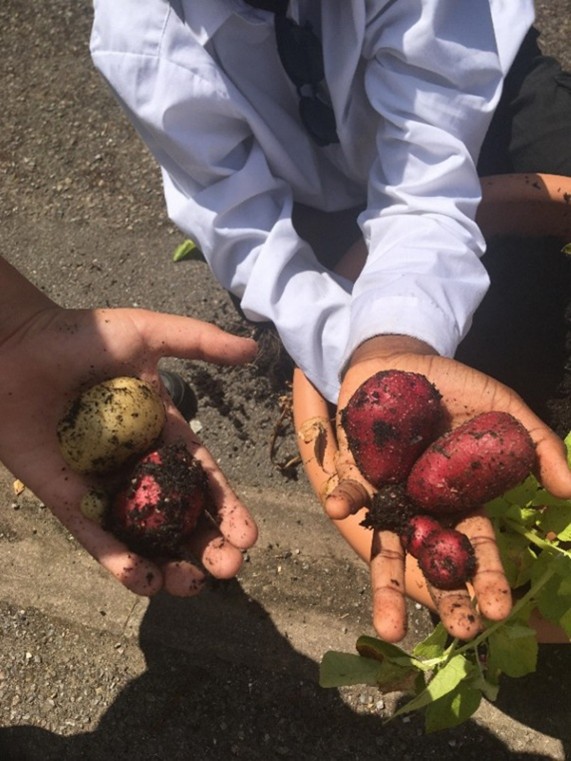
A project working with local primary schools and children to grow food and increase biodiversity helped to increase their awareness and understanding of healthy eating and sustainable food systems.
The Growing Wild Citizens @ School project worked with primary schools in the Southampton area to co-create and deliver a series of activities to increase understanding of how food grows, where it comes from, and how growing food can impact the environment.
The project encouraged children to take a citizen science approach to thinking about the food they eat, and how to grow food plants in their school grounds in a sustainable way. The children monitored how their food plants grew, while considering their impact on health and wellbeing and on the environment.
The project also supported awareness of biodiversity and biodiversity enhancement actions, such as placing bird feeders and insect hotels in the school grounds, learning about attracting pollinators, and safe methods for dealing with animals that eat vegetables.
The research found that children’s participation in the project helped them to understand food systems and issues around food security, making them realise the effort that is required to have fruit and vegetables readily available.
Children also spoke about the fact that they were making a difference, articulating the role that they can play as active citizens in protecting the environment and being a positive influence on others.
The findings of research have been published in the Journal of Emergent Science .
Dr Jenny Baverstock , Principal Enterprise Fellow in the Faculty of Environmental and Life Sciences and lead author on the paper, said: “The children felt they had agency to take what they had learned forward with their families and their communities and it increased the children’s awareness to the fact that they could help people with food who are more disadvantaged.
“From a sustainability angle, it helped their understanding about where and how they can make a difference in the world and thinking about their food and where they connect into the food system.”
Co-author Dr Andri Christodoulou , co-director of the Maths and Science Research Centre at Southampton Education School, said: “Our approach focused on supporting children visualise and have first-hand experiences of processes such as growing food and learning about wildlife.
"Seeing the impact of their actions within their local settings made children feel more confident in their ability to effect change, making them active environmental citizens. Our work also shows how fruitful interdisciplinary collaborations can be with the local community and across our University”.
Feedback from the children involved included: “It’s helping us learn more about the planet and about how we can help grow more food” and “Now I see a packet of strawberries and think ‘How long did it take to grow all those strawberries?’”
“Having grown the food, they recognised how difficult it can be,” added Dr Baverstock.
“For example, they learnt that growing a strawberry takes a lot of effort. They could, quite literally, see the fruits of their labour – they enjoyed tasting the things they had grown and it also helped them to understand more about where food comes from.”
Two student interns supported weekly sessions in the schools from February to mid-July – working with teachers and pupils to plan the growing of food and how to make the most of the school grounds; growing, harvesting and tasting fruit and vegetables; and discussing the food we eat and where it comes from.
Danny Romero Saavedra ( MSc Marine Biology with Oceanography student, now alumnus) said: "Being involved in this research was a rewarding opportunity to explore how schools can empower children to become active citizens through healthy eating, sustainability, and meaningful engagement with their local environment. This enabled me to apply my university learning in practice."
Maleeha Mahmuda (Integrated Master's Environmental Science student, now alumna) said: “I had the amazing opportunity to be a part of the Wild Citizens Project. It combined my passion for the environment and working with children. I thoroughly enjoyed my experience going into schools and having interesting conversations with the children about how they perceive their environment around them. The project became the inspiration behind my master’s dissertation and now being a primary school teacher!”
The project was funded through the Public Engagement with Research Unit Community Development Fund and Higher Education Innovation Funding (HEIF) from the Faculty of Environmental and Life Sciences and the Southampton Education School.
It was supported by community partners, including Southampton City Council – which has since led to further opportunities for collaboration - and the schools themselves.
See the full research findings in the Journal of Emergent Science