Major milestone reached in clinical trial aiming to improve treatment for heart failure
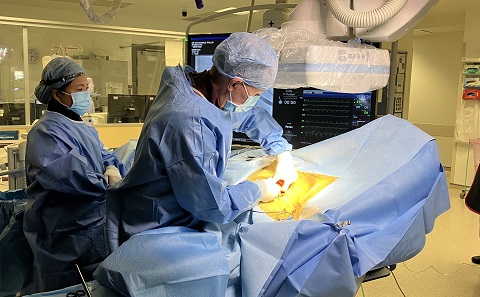
More than 500 patients have been recruited to a world-first UK clinical trial that aims to improve treatment for people with heart failure and reduce deaths from sudden cardiac arrests.
It marks a major milestone in the study which is investigating how best to identify which patients may benefit from having a defibrillator fitted under the skin in their chest to shock the heart if it goes into cardiac arrest.
The BRITISH study is funded by £1.8m from the British Heart Foundation and is led by consultant cardiologists Dr Andrew Flett and Professor Nick Curzen from University Hospital Southampton (UHS) and co-ordinated by the Southampton Clinical Trials Unit.
It’s estimated that over one million people in the UK have heart failure, with around 200,000 new cases diagnosed each year*. Meanwhile the cost to the NHS for treating people with heart failure is estimated at around £2bn per year.
Identifying who really needs a defibrillator
Non-ischemic cardiomyopathy (NICM) is a common type of heart failure which can lead to abnormal heart rhythms, and sudden cardiac arrests are a possible cause of death in these patients.
Many patients with NICM are offered an implantable cardioverter defibrillator (ICD), a small device that is placed under the skin of the chest and can treat a cardiac arrest by delivering an electric shock to the heart.
However, for some patients, the device is never triggered and may therefore be unnecessary, and patients live with avoidable anxiety and risk of complications
“While it is clear that in some cases these ICD devices may save lives, for those who don’t need them it means an unnecessary surgical procedure and living with the worry that the device may go off at any time,” says Dr Andrew Flett, Chief Investigator of the BRITISH trial.
“Previous studies have suggested that scar tissue in the heart muscle may actually be the cause of dangerous heart rhythms for patients with NICM, so our study is looking at whether the presence of scar tissue on an MRI scan can predict who should be fitted with an ICD and who can live perfectly safely without one.”
Reaching 500 patients
The first patients entered the BRITISH trial in spring 2023, and since then over 500 people with NICM have volunteered to be part of this research.
Participants are randomly allocated to one of two groups. Half are fitted with an implantable defibrillator while the others are fitted with an implantable loop recorder (ILR), a device which does not shock the heart, but which monitors heart activity so that the team can review any abnormal rhythms.
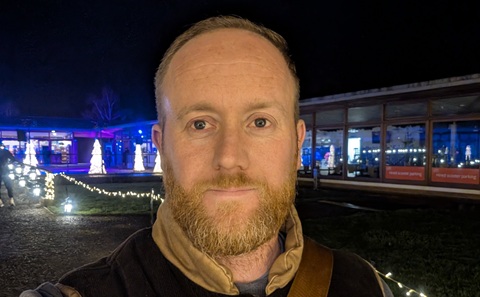
36-year-old Ashley Williams, from Eastleigh, is one of those first 500 patients. Ashley first began experiencing blood pressure problems when he was just 17 and was diagnosed with heart failure in his mid-20s.
“When you’re 17, or even at my age now, you don’t feel like it’s something a person your age should be going through. I was getting a lot of headaches, dizzy spells, tiredness - it was all quite scary really. I was very emotional, it’s horrible when you don’t really know what’s going on with your body.”
After years of medication, dad-of-one Ashley was told that he would need to have a pacemaker fitted, a device to regulate his heart rhythms, and was asked if he would be willing to take part in the trial.
“As soon as I was told that there was a research study going on, I thought ‘I need to do this, it’s important’, because I didn’t realise that people my age could get this. And so many people do not go to the doctors as they feel like they’re invincible I guess, especially young men.”
“It’s been really easy to be involved in the trial. I thought it may mean going to loads of extra appointments, but the device is connected to my phone via Bluetooth so most appointments can be done remotely. “
And Ashley says the best part is being able to play with his son again.
“There was a period when it got really bad and I was in hospital and bed bound and then coming home and explaining to a 5-year-old that I couldn’t play with him. It was difficult for him because he wanted to jump on me and play, and I used to hate saying sorry I can’t do it. But I called it my ‘Iron Man heart’ and I bought him a fake tattoo scar because he wanted to be the same as me and show people his ‘new heart’ too. And now it’s back to playing and having our adventures together. It’s changed everything.”
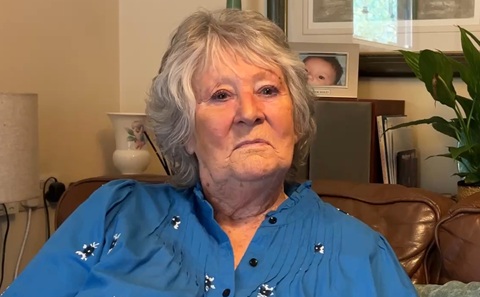
Another trial participant is 87-year-old Hazel Moore from Hedge End. The grandmother of two began experiencing swelling in her legs and severe breathlessness at the end of 2024, and was diagnosed with heart failure after her GP sent her to A&E.
“I was horrified because my mother had died from heart failure and up until then I had been really fit and healthy. So, I was really shocked and very disappointed and upset, and my family were devastated because when you think of heart failure you think the worst.”
“I was at a check-up, and the nurses mentioned the trial and asked if would like to take part and I said I would. As I’d been so well looked after I thought there’s no need to be afraid.”
Hazel went into the ICD arm of the trial and had a defibrillator fitted.
“Because my heart isn’t functioning properly, if it goes into a bit of a spasm, this kicks in and revives your heart. I’ve got a monitor in my bedroom and a couple of times I’ve had a couple of tweaks, but that is all. It’s very reassuring, as without it you’re not quite sure what would happen, so I’m reassured by having it.”
“I’m really, really pleased to be able to give something back because I feel I’ve been so well looked after. I think it’s absolutely wonderful, everything they do is brilliant. And I also feel very lucky to be in Southampton where they do such a lot of research.”
And Ashley is also proud to be taking part in the research trial.
“I think it’s amazing. I feel happy with myself for doing it because it’s going to make a difference for a lot of people. Your heart is one of the most important organs in your body so having this research in place to make sure that we can make people better, I think is really important.”
Gathering the evidence
In total, 1252 patients are due to be recruited to the BRITISH trial over the next two years.
The trial is being conducted by the Southampton Clinical Trials Unit (SCTU) who are responsible for running the study at participating hospitals across the UK.
“The trial will also involve a registry of another 1252 patients who do not have scar tissue and are therefore treated according to current guidelines,” says Anna Cebula, Trial Manager for BRITISH at the SCTU. “This means we will be able to review data from all three groups and compare patient outcomes to establish whether scar tissue is an indicator of who should be fitted with an ICD”.
Dr Flett concludes, “We are so grateful to the 500 patients who have so far agreed to take part in this important trial. Without people like Ashley and Hazel we would not be about to conduct research with the ultimate goal to improve treatment for our patients. The BRITISH trial will inform UK and international guidelines for the treatment of heart failure. Depending on the outcome of the study, it could identify a group of patients who we know will benefit from ICDs, ensuring cost effective use of our health service in the future.”
Watch a video of Ashley and Hazel talking about being part of the BRITISH trial
The BRITISH study is being supported by cardiovascular and heart health organisations, including the British Society For Heart Failure, the British Cardiovascular Society, the British Society of Cardiovascular Magnetic Resonance, and the British Heart Rhythm Society**.
Notes to editors
*Figures from the British Heart Foundation’s UK factsheet .
** Statement of support from cardiovascular and heart health organisations
The BRITISH trial - Using cardiovascular magnetic resonance identified scar as the Benchmark Risk Indication Tool for Implantable cardioverter defibrillators in patients with Non-Ischaemic Cardiomyopathy and Severe systolic Heart failure. Visit the BRITISH website .
The Southampton Clinical Trials Unit (SCTU) is a Cancer Research UK (CRUK) core-funded CTU with expertise in the design, conduct and analysis of interventional, multi-centre clinical trials. The CTU is based within the University of Southampton with offices at the University Hospital Southampton NHS Foundation Trust Southampton General Hospital site. For more information, visit the SCTU website .
University Hospital Southampton NHS Foundation Trust is one of the largest acute teaching trusts in England with a turnover of more than £1 billion in 2020/21. UHS provides hospital services for 1.9 million people living in southern Hampshire and specialist services – including neurosciences, respiratory medicine, cancer, cardiovascular, obstetrics and specialist children’s services – to more than 3.7 million people in central southern England and the Channel Islands. UHS is consistently one of the UK's highest recruiting trusts of patients to clinical trials and in the top ten nationally for research study volume as ranked by the NIHR Clinical Research Network. In partnership with the University of Southampton, UHS has £27 million of NIHR infrastructure dedicated to bringing the latest treatments to patients. Visit the UHSFT website .
About the British Heart Foundation
It is only with donations from the public that the BHF can keep its life saving research going. Help us turn science fiction into reality. With donations from the public, the BHF funds ground-breaking research that will get us closer than ever to a world free from the fear of heart and circulatory diseases. A world where broken hearts are mended, where millions more people survive a heart attack, where the number of people dying from or disabled by a stroke is slashed in half. A world where people affected by heart and circulatory diseases get the support they need. And a world of cures and treatments we can’t even imagine today. Find out more at
bhf.org.uk