’I’m happy to be involved’ - First patient from the south enters a new trial aiming to personalise treatment for an aggressive asbestos-linked cancer
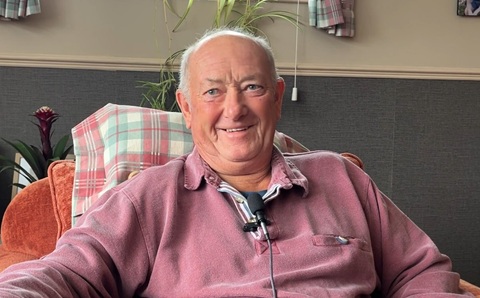
The first Southampton patient recruited to a new clinical trial for people with mesothelioma says he’s looking forward to ‘flying the flag’ for research into the debilitating asbestos-linked cancer.
The SELECTmeso1 trial, led by researchers at the Cancer Research UK Southampton Clinical Trials Unit, is investigating a new personalised treatment for patients whose cancer has returned after initial treatment, potentially giving them more time with their loved ones.
75-year-old granddad Dave Young is the first patient in the south to be enrolled in the trial, after it initially opened in Leicester earlier in the summer.
Funded by Asthma + Lung UK, the trial will test whether a targeted cancer treatment can improve outcomes for patients who have a particular genetic biomarker and has recently started recruiting patients at University Hospital Southampton.
Tailoring treatments
Mesothelioma is a cancer that forms in the lining of the lungs or abdomen and is linked to exposure to dangerous asbestos fibres. Around 2,700 people are diagnosed with the disease each year*, but outcomes and survival rates are poor.
There are currently very few treatment options and often the cancer will return after initial treatment.
In fact, only around 5 per cent of people diagnosed with the disease will survive for 5 years or more.
Recent clinical trials in mesothelioma conducted by the Southampton Clinical Trials Unit, alongside partners at the Southampton and Leicester NIHR Biomedical Research Centres, have shown that targeted treatments can improve survival for people with relapsed mesothelioma, where the disease has come back**.
However, these treatments often only work for some patients but not for others.
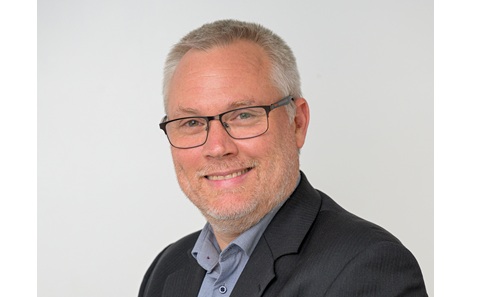
“Whether a particular treatment is effective could be down to the specific genetic signals, or biomarkers, present in the cancer, which are often different between individual patients,” says Professor Gareth Griffiths, Director of the Southampton Clinical Trials Unit and co-Chief Investigator of the SELECTmeso1 trial.
“If we can identify which biomarkers each patient has, then we may be able to personalise the care they get, giving them best chance of successful treatment. This is precisely what the SELECTmeso1 trial is designed to do.”
Almost half of patients with mesothelioma are missing a particular gene called MTAP which means the cancer is more aggressive cancer and doesn't respond as well to existing treatments.
The SELECTmeso1 team are working with pharmaceutical company Bristol Myers Squibb, which has developed a drug called Navlimetostat*** which targets the weak point created by the absence of the MTAP gene and selectively kills those cancer cells, leaving the healthy cells largely unaffected.
“This drug has already been trialled in some other cancers and has been shown to have promising anti-tumour activity,” says Professor Griffiths. “It was also well tolerated by patients without causing too many side effects. Through the SELECTmeso1 trial, we therefore hope to find out whether this could be a viable treatment for patients with this specific genetic signal. If we find evidence that patients benefit, this will hopefully lead to future larger practice-changing trials.”
“I’m happy to be involved”
Dave, a retired engineer who lives in Langley in Hampshire, went to his doctor in October 2024 after experiencing breathing difficulties while walking on holiday. After procedures to drain fluid from his lungs and several tests, he was diagnosed with terminal pleural mesothelioma.
“You feel nothing else but numbness, a finality,” says Dave. “You come back home, there’s sleepless nights, because your whole world is spinning. It’s debilitating. Anything which is too physical or exerts too much has just got to go and at first that’s hard to deal with, because the things you love doing you can no longer do.”
Dave was treated with immunotherapy and chemotherapy, but after that there were no treatment options left.
“My wife’s very positive. She used to research these things and there are trials around. There was a proton beam treatment a while back, so I would ask the nurse if I would be ok for that, but she would say unfortunately not as I’d already had immunotherapy and chemotherapy. But then eventually she said to me, there’s a trial which probably would be suitable for you. So, I said let’s see how we go then, and it came back that yes, I was suitable. So, flying the flag, here I am and I’m looking forward to it.”
Patients like Dave, who have relapsed mesothelioma and are found to have the deleted MTAP gene, will be invited to join the SELECTmeso1 trial. They will be given the targeted treatment in the form of tablets every day, in three-weekly cycles, for up to six months, and the research team will monitor how much their tumour shrinks as well as any side effects they experience.
“It is fantastic to be able to offer this trial to patients here in the south who have not responded to other treatments and have seen their cancer return,” says Dr Judith Cave, Medical Oncology Consultant who is leading recruitment at UHS.
“Not all mesothelioma patients will be eligible to join this particular trial as it is targeting those with the specific deleted MTAP gene. But we do know that more treatments which target other genes are being developed all the time and it is exciting that SELECTmeso1 is the just the start for trials that could see a more personalised approach for mesothelioma patients.”
Looking for more targets
SELECTmeso1 is the first trial in a much larger planned platform clinical trial run by the Southampton Clinical Trials Unit at the University of Southampton. This aims to test several targeted drugs which work against different genetic biomarkers that may be present in a patient’s mesothelioma.
“The idea of the platform trial is that we can run several different trials at once, giving patients more chance of receiving a treatment that works for them,” says Dr Emma Knox, Senior Trial Manager for SELECTmeso at the Southampton Clinical Trials Unit.
“Once the full platform is open, patients will be invited to join and will have a sample of their cancer tested in a laboratory. This will tell doctors about the particular genetic make-up of their cancer and what biomarkers their mesothelioma has. If there is a trial within the platform that is testing a drug that works specifically for that biomarker, they will be invited to join that particular trial.”
If there is no trial running for that biomarker at that time, patients will remain in the platform database and will be contacted if a new trial of a treatment that may work for them comes on board.
Dr Samantha Walker, Director of Research and Innovation at Asthma + Lung UK, said: “Asthma + Lung UK is proud to be funding this vital research, which could be a real breakthrough and has the potential to improve the lives of people living with mesothelioma. With life expectancy remaining low and no current cure available, progress on treating this devastating condition is desperately needed.
“Targeted therapy has already shown to be effective for other types of cancer. If this trial is successful, it would offer new hope for the more than 2,000 people who are diagnosed with mesothelioma every year****. Cutting edge research into new types of treatment for lung conditions is vital to improve health outcomes but funding for lung health research is currently on life-support, despite lung conditions remaining the third biggest cause of death in the UK.”
The trial is also supported by national charity Mesothelioma UK and the its network of mesothelioma nurses based in hospitals across the UK, including at UHS.
Professor Griffiths continues: “The aim of SELECTmeso1, and the wider trial platform, is to see whether stratifying treatment in this way can improve outcomes for patients. If our trials can provide that evidence, we hope that in the future doctors treating people with this aggressive cancer will be able to use a more personalised approach, selecting the best possible treatment for each individual patient.”
And Dave is positive about taking part in the trial: “The thing with research is it might work, it might not, you don’t know. But I think you have to look further down the line and say well, whatever the outcome is there will be lessons to be learned from it. I’m quite happy to be involved with it, even if it does nothing for me, there will be things to be learned for future trials. And the on other hand, there is no alternative, so you just have to do it.”
VIDEO - Dave tells us why he's taking part in the SELECTmeso trial
*Figures from Cancer Research UK
**The MiST, CONFIRM and NERO trials.
*** Navlimetostat, also known as BMS-986504, is a first-in-class, MTA-cooperative PRMT5 inhibitor developed by Bristol Myers Squibb.
**** Mesothelioma, NHS England, September 2022
SELECTmeso is led by Professor Gareth Griffiths and Professor Dean Fennell from the Southampton and Leicester NIHR Biomedical Research Centres (BRC) respectively and run by the Cancer Research UK Southampton Clinical Trials Unit. It is funded by Asthma + Lung UK with Bristol Myers Squibb who are providing the drug for the trial and is sponsored by the University of Southampton. It is the first trial supported by the newly formed UK collaborative for cancer clinical research (UK3CR’s) Mesothelioma Clinical Research Group, which has the remit to develop trials for mesothelioma patients in the UK.
The Southampton Clinical Trials Unit (SCTU) is a Cancer Research UK (CRUK) core-funded CTU with expertise in the design, conduct and analysis of interventional, multi-centre clinical trials. The CTU is based within the University of Southampton with offices at the University Hospital Southampton NHS Foundation Trust Southampton General Hospital site. The unit is part of the NIHR Research Support Service University of Southampton Hub and partners in the NIHR Southampton Biomedical Research Centre. For more information, visit the SCTU website or follow us on social media: LinkedIn, Bluesky, Facebook, X, and Instagram.
Asthma + Lung UK is the only charity in the UK fighting for everyone with a lung condition, aiming for a world where everyone can breathe with healthy lungs. We fund cutting-edge research and provide advice and support for the 12 million people who will get a lung condition during their lifetime. We also campaign for clean air and for better NHS diagnosis and treatment. For further information visit asthmaandlung.org.uk.