Southampton’s growing AI ambitions: Reflections from Professor Thomas Irvine
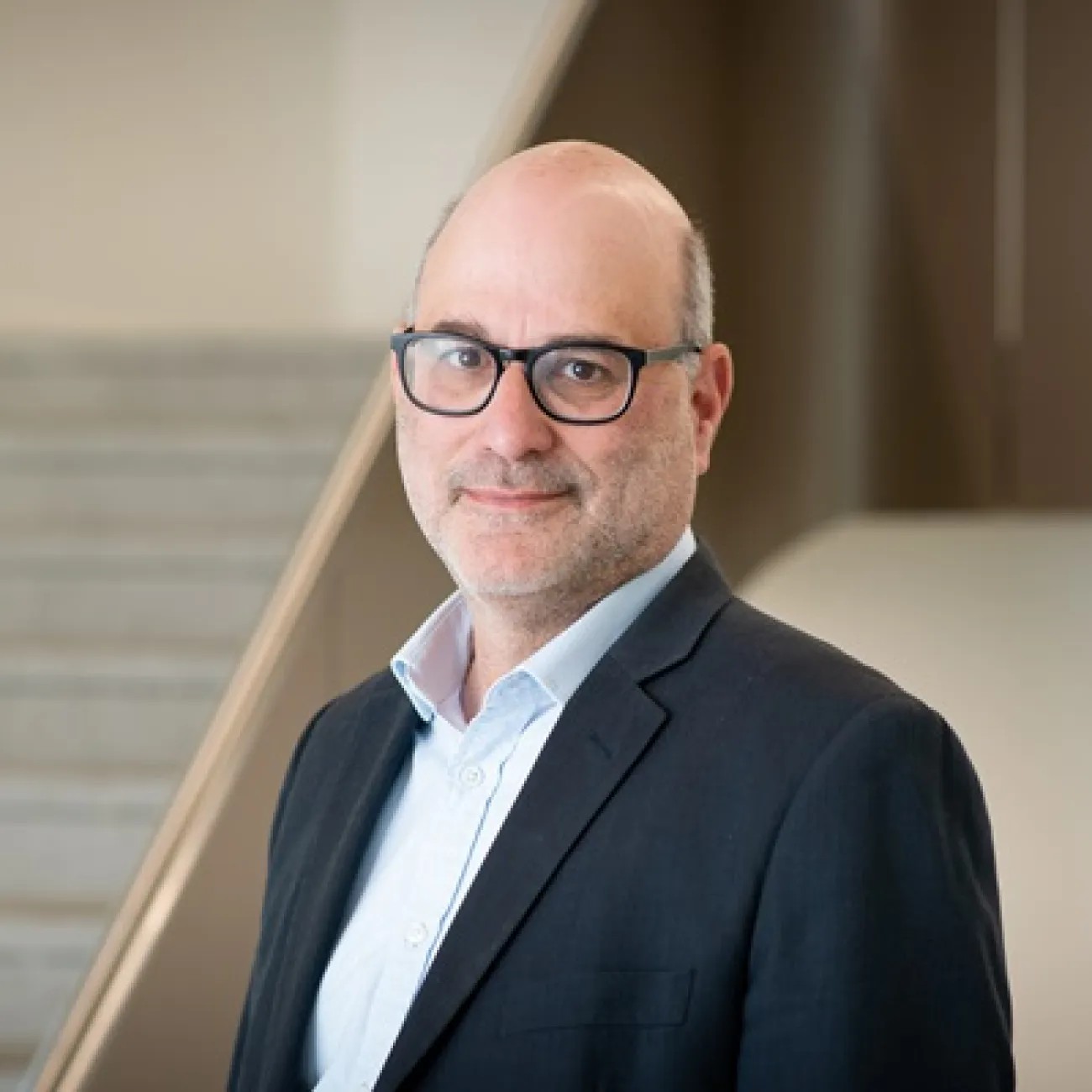
Professor Thomas Irvine is Deputy Director of the Southampton Web Science Institute and a former Fellow of the Alan Turing Institute, where he led the project “Jazz as Social Machine .” At WSI he has been helping shape AI @ Southampton , a new institutional approach to developing the University’s research, teaching and public engagement around artificial intelligence. He was Head of Music at the University from August 2022 to January 2026.
Recently returned from the AI Impact Summit in New Delhi, Professor Irvine shared his reflections on the visit, the future of AI, and the exciting developments soon to launch here at the University.
AI Impact Summit 2026
Hosted by the Government of India, the AI Impact Summit 2026 brought together policymakers, researchers, industry leaders and innovators with the aim of advancing inclusive, responsible and impact-driven approaches to AI development, with a strong emphasis on global cooperation and perspectives from the Global South.
Part political summit, part scientific and technical conference, and part trade fair, the summit explored a wide range of AI applications, from large language models to healthcare and digital governance. The common theme – according to Professor Irvine – was the sense of momentum underlying India’s technological landscape.
“India is a remarkably young, dynamic country,” Professor Irvine said. “It has really taken to digital technology over the last decade. I was unprepared for the energy at the summit. The creative and cultural industries were particularly well represented, and their focus on how India can lead the world in AI-enabled storytelling gave me a lot to think about.”
Professor Irvine highlighted the significant role played by the British High Commission in Delhi in supporting the UK delegation and noted that Professor Dame Wendy Hall’s keynote address as the Research Symposium was a particular high point. Her long-standing leadership in the field continues to be a major asset for Southampton: “We are so fortunate to have someone with 40 years’ experience at the cutting edge lending their expertise, especially to many hundreds of mostly young people in the audience for her keynote”
The summit left Professor Irvine “guardedly optimistic” about the future of AI, especially after meeting so many young people with a positive, outward‑looking sense of what this technology might mean for their country.
UoS Delhi
After the summit, Professor Irvine joined Dame Wendy in a visit to the University of Southampton’s Delhi campus. Both spoke at a though-proving session that brought together UoS Delhi students, academics, and professional services colleagues for a discussion on the evolving role of AI across disciplines, from computer science to music and beyond.
Professor Irvine was impressed by the enthusiasm of the students and the quality of the facilities: “The students were so curious to meet us and we enjoyed meeting and speaking to many of them after the lecture. It really underlines the value of transnational education, and what it can offer our global community.”
A more personal highlight came through an unexpected dinner invitation from a young civil servant detailed by the Indian government to accompany Dame Wendy at the summit. Hosting them at his home, he and his friends shared their hopes for India and for technology. That conversation, Professor Irvine said, left a lasting impression.
“It was remarkable to sit down with young people in India and hear their optimism. I came away wanting to bring some of that dynamism back into my own work and to bottle up that enthusiasm.”
AI, creativity and the Arts
As a scholar of music and technology, Professor Irvine is particularly interested in how AI is reshaping creative practice. He sees great potential for widening access to creativity, but also acknowledges that musicians, artists and students will need to learn how to engage with these tools critically, and that the tech industry will need to listen to their concerns
“What we teach our students may have to change,” he said. “There’s a real opportunity here, but also a responsibility to understand how we as users of technology need to shape the development and deployment of AI in the creative and cultural industries. This is the kind of work WSI has always done: it’s never been more important.”
This thinking underpins one of Southampton’s next major AI developments: the launch of a new Music AI Lab.
New AI Music Lab to launch in March
On 23 March, the University launched its AI Music Lab, an initiative Professor Irvine is leading to explore the impact of AI on music, consider new creative uses, and examine questions around regulation and intellectual property.
One early output will be a proposed new policy proposal Creative Sovereignty as National Security: A Governance Framework for Generative AI authored by WSI PhD student Matt Javanshir and Specialist Policy Officer Alistair Sackley. The proposal aims to shape emerging debates in the sector about how commercial platforms use artists’ intellectual property as material for generative AI models. “We need to be at the table,” he said, noting the pace at which new technologies are challenging existing conventions.
The lab launch followed a day after a successful AI Arts Festival held in Winchester on 22 March. Artists, musicians, and innovators from the University of Southampton, the Winchester School of Art, and beyond came together for an unforgettable celebration of the arts showcasing how the sector is evolving in the age of AI.
Looking ahead
From Delhi’s fast‑moving tech scene to Southampton’s investment in responsible innovation, Professor Irvine sees this moment as an important one for the University.
“We’re at a point where AI is changing what people can do, and how they approach creativity, and the challenge is to ensure that the University remains an active, thoughtful participant as these conversations gather pace.” Professor Irvine sees opportunity in this challenge.