British scientist Dame Wendy Hall talks super intelligent AI and brain-reading tech
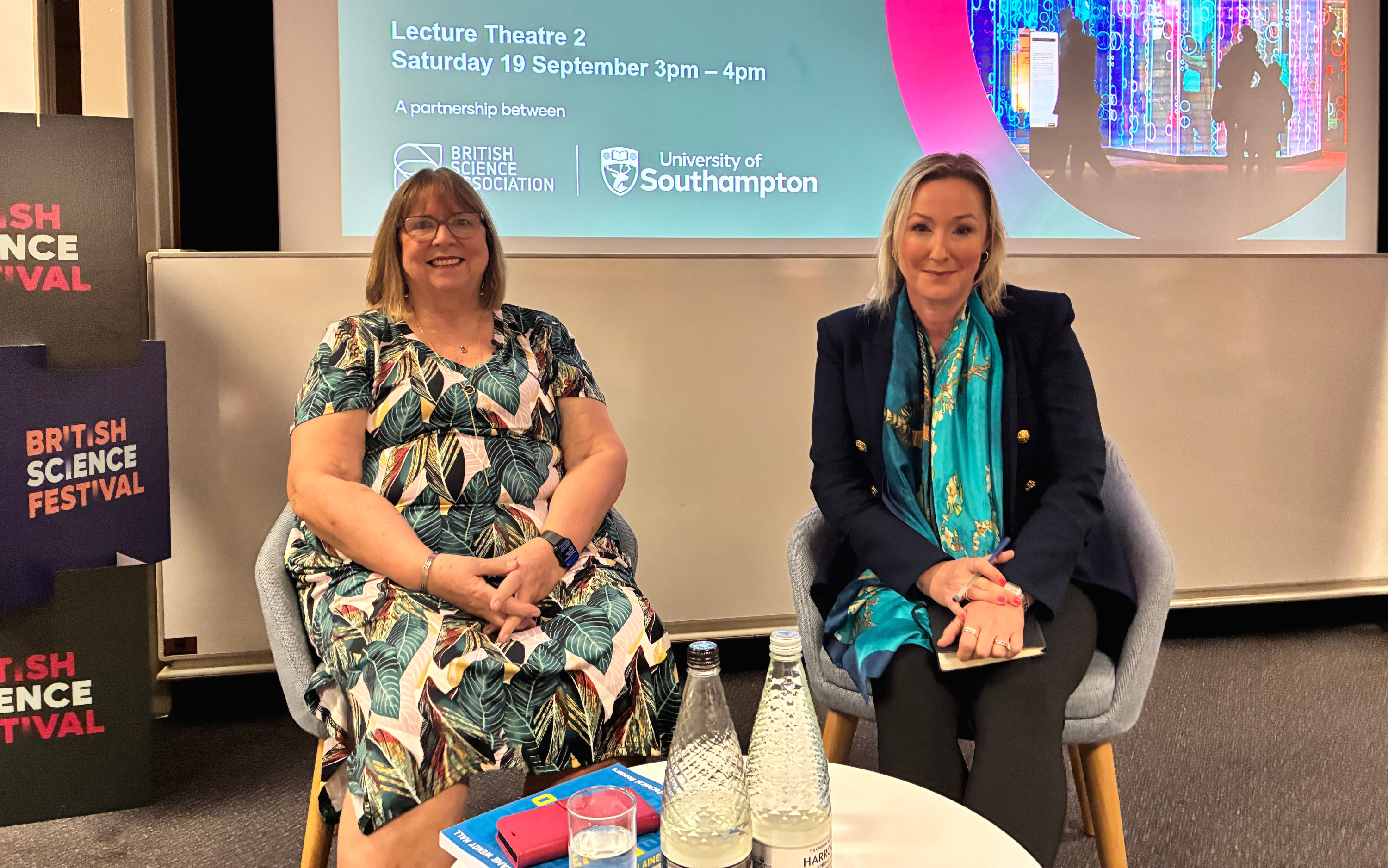
One of the world’s leading voices of AI has insisted that artificial intelligence is not yet an existential threat – but warned it could one day develop super intelligence that may end up controlling humanity.
Dame Wendy Hall, a Regius Professor of Computer Science and Director of the Web Science Institute at the University of Southampton, warned that the systems need more regulation “before it is too late”.
She also called for AI developers, such as OpenAI and Anthropic, to be held accountable for their systems, following news that the latter’s Claude model recently hacked other organisations during testing.
Dame Wendy was speaking to BBC technology editor Zoe Kleinman at an event at this year’s British Science Festival , hosted by the University of Southampton.
“It is the responsibility of the developers to keep their AIs safe until they are released out in the world,” she told an audience of more than 100.
“The internet is open, not really governed, and once these AIs are out, there is nothing that can stop them. We need to make sure these companies are accountable for what their systems do.”
Dame Wendy, who has just become the British Science Association’s President , has been at the centre of calls for the need for AI regulation.
She is a member of the UN Secretary-General’s High-Level Advisory Body on AI and helped draft its Governing AI for Humanity report.
She added: “We need an independent AI authority that will regulate and bring in standards for these companies.”
A new book written by Dame Wendy and tech expert Pete Rai delves into how artificial intelligence actually works, from first principles to generative models.
AI Explained: A Guide for Non-Technical Readers , which is out now, demystifies artificial intelligence using real-world use cases, ethics discussions, and clear logic to explain how they work.
During her Southampton talk, BBC technology editor Zoe Kleinman asked about potential new tech on the horizon.
“Brain-computer-human interfaces - like Elon Musk's Neuralink,” added Dame Wendy.
“Once you have the chip inside your brain, we could have the potential for computers to read our minds, so we absolutely need regulation around this.
“2050 is about the right time for this tech to become mainstream, and we desperately need it to be regulated before then.”
Dame Wendy's legacy was celebrated in a photo exhibition organised by the Royal Academy of Engineering at the University of Southampton.
The Regius Professor of Computer Science was pictured alongside 50 of the UK’s leading engineers to mark the Academy's golden anniversary.
Read more about the Web Science Institute at the University of Southampton at www.southampton.ac.uk/research/institutes-centres/web-science-institute .