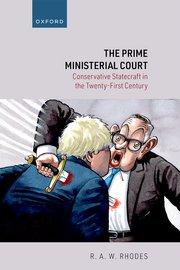
Professor Roderick Rhodes unveils the dark arts of British politics in new book
.jpg)
Professor Rhodes, a distinguished member of our faculty, has released a compelling new book titled ’The Court of Knaves: Power, Betrayal, and the Dark Arts in Twenty-First Century British Politics.’ The book offers an in-depth analysis of the intricate and often shadowy world of court politics within the Conservative governments of David Cameron, Theresa May, and Boris Johnson. Through detailed case studies, Professor [Name] reveals how personal ambition, manipulation, and betrayal have shaped the British political landscape, urging readers to recognize the shifting norms in governance.
Court politics is about who in British government did what to whom, when, how, why, and with what consequences. Professor Rhodes' latest book provides a thorough depiction of the court politics of the Conservative governments of the twenty-first century. It analyses the everyday practice of the dark arts by the British political and administrative elite.
It shows that court politics matter because there are personal, electoral, and governmental consequences. It concludes that British government has a new Establishment skilled in knavery.
The heart of the book is its account of the courts of David Cameron, Theresa May, and Boris Johnson. For each court, there is a description of its knavery; of the ways in which each practices the black arts. The specific topics include the courtiers; the prime minister’s craft; narratives, reshuffles, resignations and leadership challenges, the political games of barons and parliament, Cabinet and executive networks, and the feuds in the court between ministers, advisers, and civil servants. Knavery is everywhere. There is much evidence of betrayal, revenge, lying, scandals, and bullying with such machinations oiled by gossip, humour, alcohol and leavened with harassment in its several guises. Each chapter has a short case study of the court in action; namely, the education wars, the 2018 election, and the Covid-19 crisis. Each case illustrates the personal, electoral, and governmental consequences of court politics.
There are fewer and fewer ‘good chaps’ in government. There are more and more knaves. Decency is in decline. British government needs ‘rules for rulers’. The book identifies several. Above all, it cautions citizens – beware, here be dragons.