SMMI internship project maps the history and growth of marine autonomy in the UK
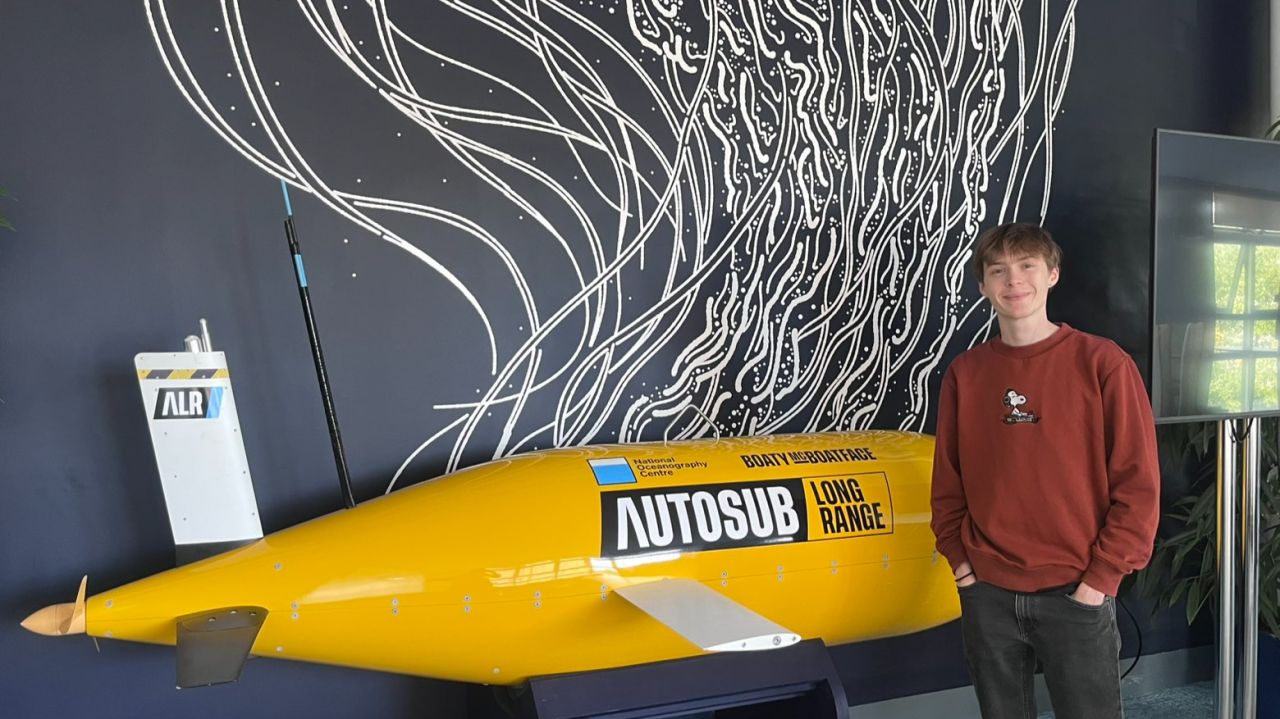
Harvey Thornton, a student intern with the Southampton Marine and Maritime Institute (SMMI), has completed a research project exploring the history and evolution of marine autonomous systems across the United Kingdom.
Harvey Thornton, a student intern with the Southampton Marine and Maritime Institute (SMMI), has completed a research project exploring the history and evolution of marine autonomous systems across the United Kingdom. Harvey's project provides new insights into the technologies, projects and organisations that have shaped the sector's development.
When Harvey joined SMMI, he had limited knowledge of marine autonomy and the diverse range of applications for autonomous systems. Over the course of the internship, however, he developed a comprehensive understanding of the field through an ambitious research project designed to document the growth of marine autonomous systems in the UK.
Harvey's work focused on identifying and cataloguing significant projects and developments across multiple sectors of marine autonomy. Using a combination of grant and funding searches, literature reviews and interviews with members of the marine autonomy community, he assembled a detailed record of the sector's evolution and the key milestones that have contributed to its progress.
The information gathered by Harvey was carefully verified and organised into sector-specific timelines, illustrating how different areas of marine autonomy have developed over time. These timelines highlight the technologies, collaborations and research initiatives that have helped transform marine autonomous systems from emerging concepts into increasingly important tools for industry, science and environmental monitoring.
Harvey presented the findings of his research at the AUV2026 Symposium, where the work was showcased alongside a series of data visualisations designed to communicate complex information in an accessible and engaging way. The visualisations highlighted important trends and connections within the marine autonomy landscape, helping to tell the story of the sector's development over several decades.
Beyond the project's research outputs, the internship provided Harvey with the opportunity to develop a broad range of professional and academic skills, including:
- data collection and assimilation
- data visualisation
- literature reviewing
- presenting and communicating research findings
- concise scientific writing
- creating figures and graphics to highlight key information
One of the most exciting outcomes of Harvey's internship is the potential for the research to be published and shared with the wider marine autonomy community. By bringing together information from a wide range of sources, the project aims to help preserve the history of marine autonomy in the UK while providing a valuable reference for researchers, industry professionals and policymakers.
Reflecting on the experience, Harvey said: "One of the aspects I am most excited about is the possibility of publishing these results so that members of the marine autonomy community can access them.
"I hope this work can contribute to preserving the history of marine autonomy and the drivers of evolution, as well as provide a useful resource to others as the sector continues to develop."
Harvey expressed his gratitude to Blair Thornton and the Southampton Marine and Maritime Institute for providing the opportunity to undertake the internship. He also thanked Sara Aldhaheri (UCL), Professor Gwyn Griffiths MBE, Yuanchang Liu (UCL) and Alexander Phillips (NOC) for their valuable insights, guidance and support throughout the project.
For Harvey, the experience has sparked a lasting interest in marine autonomy and demonstrated the importance of understanding the sector's history as it continues to innovate and expand. As autonomous maritime systems become increasingly important across a variety of applications, Harvey's research provides a valuable contribution to documenting the people, projects and developments that have shaped the field and continue to influence its future.