IROE researchers present offshore wind research at OMAE2026 in Tokyo, Japan
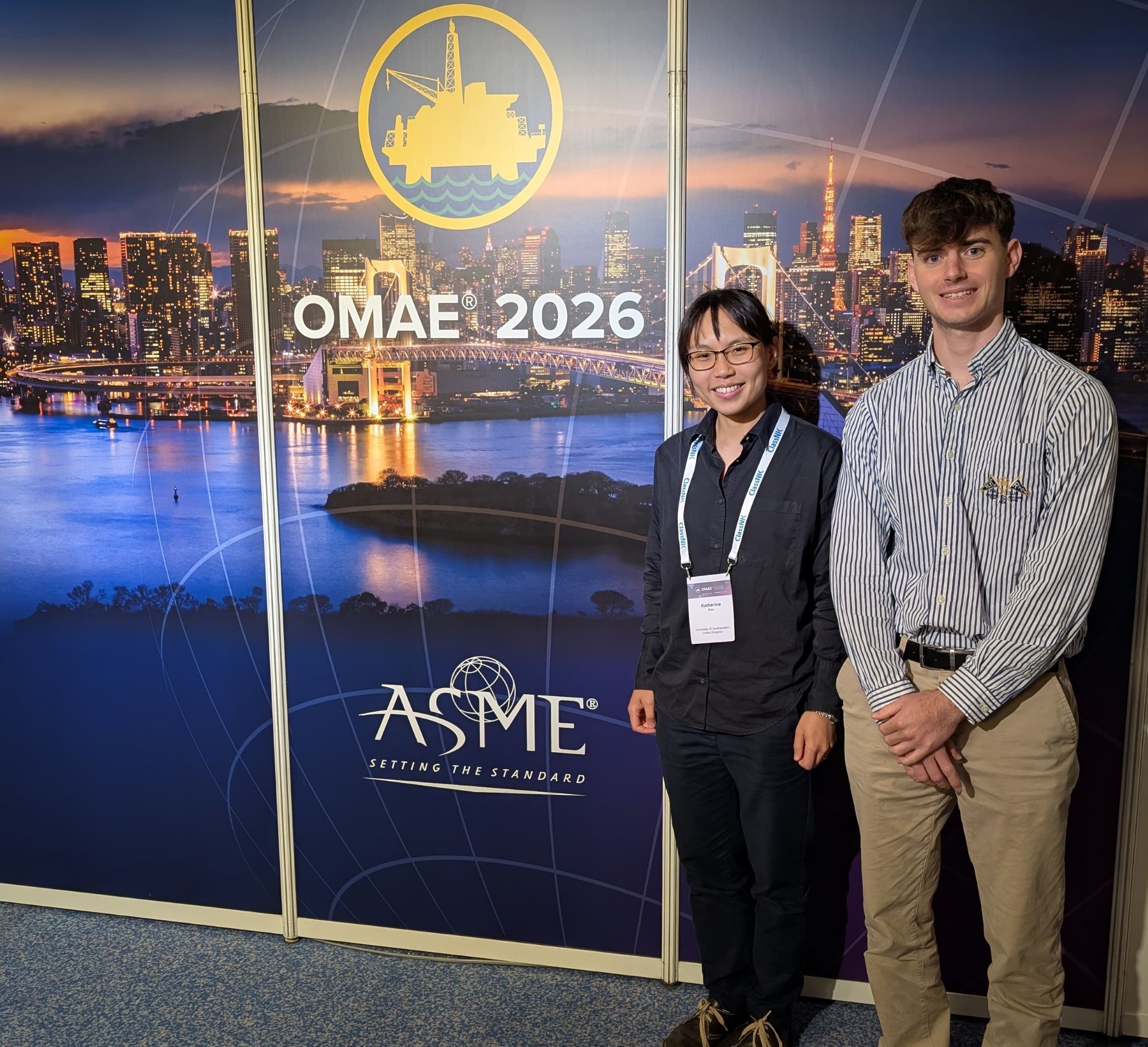
IROE researchers Cedric Muscat and Dr Katherine Kwa presented their latest offshore wind research at OMAE2026, one of the world’s leading international conferences in ocean, offshore and Arctic engineering.
Researchers from the Centre for Intelligent and Resilient Ocean Engineering (IROE), Cedric Muscat (PhD researcher) and Dr Katherine Kwa (RAEng Research Fellow), presented their latest research at the 45th International Conference on Ocean, Offshore and Arctic Engineering (OMAE2026), held in Tokyo, Japan from 7–12 June 2026.
Organised by the American Society of Mechanical Engineers (ASME) , OMAE is one of the world's leading conferences for offshore energy, marine engineering and ocean technologies, bringing together researchers, industry professionals and policymakers from across the globe.
The conference opened with keynote presentations highlighting the rapid growth of the offshore wind sector. Mr Hidenobu Kubota, Deputy Minister for Technical Affairs at Japan's Ministry of Land, Infrastructure, Transport and Tourism (MLIT), outlined Japan's ambitions for offshore renewable energy, including a target of 15 GW of floating offshore wind capacity by 2040. Mr Hayato Suga, President and CEO of ClassNK , emphasised the importance of international collaboration in accelerating the deployment of floating offshore wind technologies.
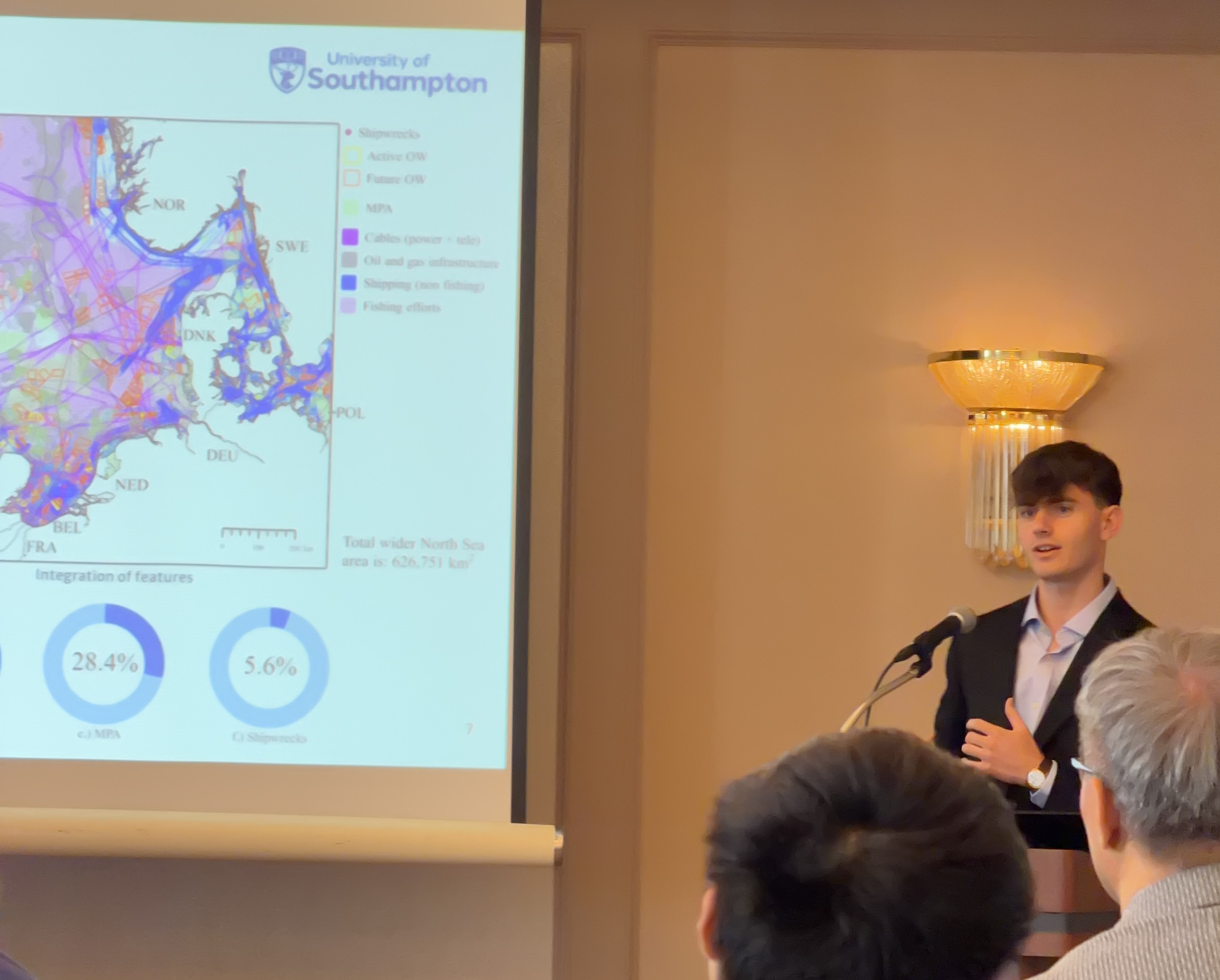
On Monday 8 June, Cedric Muscat presented the paper, coauthored by Dr Hugo Putuhena and Prof Susan Gourvenec ; " Integration and Comparison of Geospatial Data Across Scales, Sectors and Jurisdictions to Inform Offshore Wind Deployment ". The research investigates how geospatial datasets from different countries, sectors and spatial scales can be integrated to support offshore wind planning and decision-making. The work contributes towards improving understanding of opportunities and constraints associated with offshore wind deployment across increasingly complex marine environments.
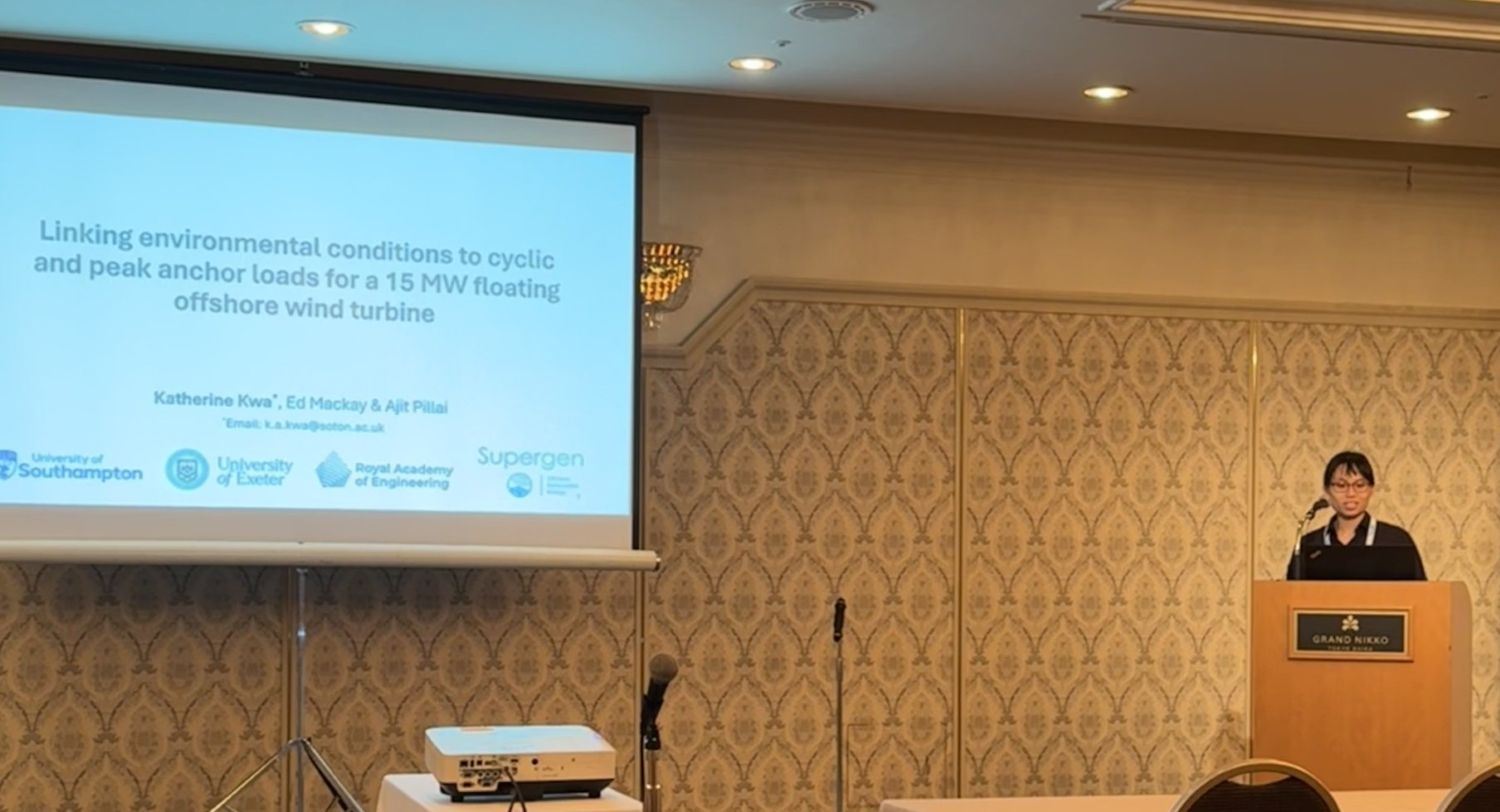
On Wednesday 10 June, Dr Katherine Kwa presented two papers focused on floating offshore wind systems. The first examined the relationship between environmental conditions and cyclic and peak anchor loading for a 15 MW floating offshore wind turbine, supporting the development of probabilistic surrogate modelling which harnesses whole-life anchor design approaches as part of the Supergen ORE Hub Flexible Funded project NextGen Anchor Design . The second explored the use of genetic algorithms to optimise the relative capital cost of floating offshore wind systems, investigating how alternative structural materials and optimisation techniques may improve the economic viability of future floating wind developments as part of a Science Policy Secondment with the UK Department for Energy Security and Net Zero (DESNZ), enabled by the EPSRC IAA and SMMI.
The conference provided an opportunity to disseminate research findings, engage with international experts and strengthen collaborations across the offshore renewable energy sector. Together, the presentations showcased the breadth of IROE research, spanning offshore wind spatial planning, geotechnical engineering, anchor design and floating offshore wind optimisation.