Scientists identify gene signatures in children with severe COVID-19 infection
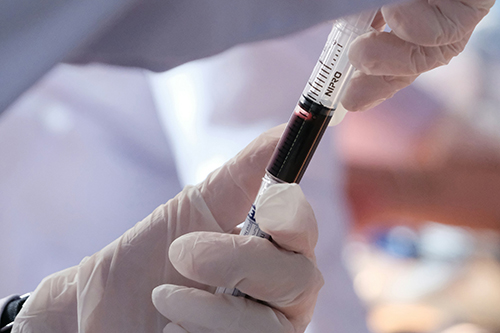
Researchers have identified patterns of gene activity associated with severe COVID-19 in children that are shared with other serious respiratory infections.
The findings, published in BMC Infectious Diseases , offer early clues to how the immune system responds to severe infections, which children are at higher risk and potential targets for treatment.
Lower respiratory tract infections, including COVID-19, respiratory syncytial virus (RSV) and pulmonary tuberculosis (PTB) are major causes of childhood illness and death, particularly in low- and middle-income countries.
Researchers from the University of Southampton and the University of Cape Town, together with international partners, have analysed gene expression in blood samples from 333 children from South Africa.
The team compared samples from children hospitalised with severe COVID-19, RSV and PTB infections with those of children with only mild or asymptomatic COVID-19, and a control group of healthy children.
They identified more than 5,000 genes being expressed differently in children with severe infections. They also discovered ten groups of genes which were expressed in a similar pattern across the different lower respiratory tract infections. These were linked to immune responses, cell regulation and other biological processes involved in infection.
The researchers also identified 82 genes that helped distinguish mild or asymptomatic COVID-19 infection from severe cases, suggesting that gene-expression patterns could potentially be used as an indicator of disease severity.
Dr Negusse Kitaba , Senior Research Fellow at the University of Southampton and lead researcher, said: “These findings provide new insights into the biological pathways involved in disease severity and highlight genes for further investigation as potential biomarkers and therapeutic targets.”
Professor Heather Zar, Director of the South African Medical Research Council Unit on Child & Adolescent Health, University of Cape Town, and Principal Investigator of the three studies in South Africa that informed this work, added: “There’s been limited research examining biological responses to these infections in African children. There’s also been few studies on host gene expression in infants and children with COVID-19 globally, so this study helps to close an important evidence gap.”
Professor John Holloway , Professor of Allergy and Respiratory Genetics from the University of Southampton, said: “This study highlights the value of international collaboration in understanding childhood respiratory disease and provides a foundation for future research into why some children develop severe infection.”
The team say that further research with larger groups of children will be needed to determine whether these promising gene signature discoveries can be developed for clinical use.