Reflecting on Whales: A Month of Science, Art, and Ocean Giants
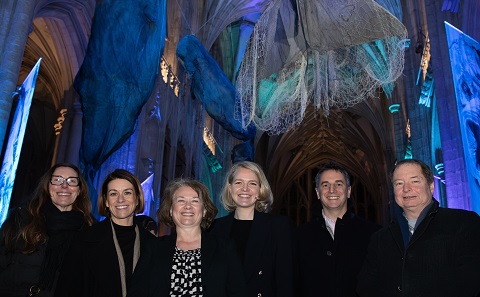
The Whales exhibition at Winchester Cathedral drew to a close on 26 February, marking the end of an extraordinary month of science, art, and public engagement.
As the headline sponsor of the exhibition, we at the Southampton Marine and Maritime Institute (SMMI) are proud to have contributed to this inspiring collaboration.
Through our exhibit space and participation in the wider programme, we brought together science, music, art, history, and law, offering an in-depth exploration of these majestic marine creatures, their environments, and our shared world.
A Stunning Start: Cathedral hosts Private Viewing
Ahead of the public opening, Winchester Cathedral hosted a private viewing on 21 January, welcoming guests—including a group of University of Southampton staff, alumni, and supporters—for an exclusive first look at Tessa Campbell Fraser’s breathtaking whale sculptures. Guests had the opportunity to hear directly from the artist about her creative process. Representing the University of Southampton, Professor Stephanie Jones reflected on the privilege of contributing to an exhibit that brought together diverse disciplines and media to convey a moving yet gentle message in support of ocean conservation.
From 22 January, Whales opened to the public, quickly attracting significant media attention, including features on ITV Meridian News , BBC Online News , and BBC 6 Music. These media highlights helped raise awareness of the overall exhibition’s unique blend of art and environmental messaging.
Within the North Transept, the University of Southampton’s exhibit provided an interactive hub where visitors could engage with pioneering research on whales and the oceans across multiple disciplines. Thousands of visitors ventured through this space throughout the duration of Whales , discovering the innovations and insights by our experts in marine science, the arts, law, archaeology, and even fashion.
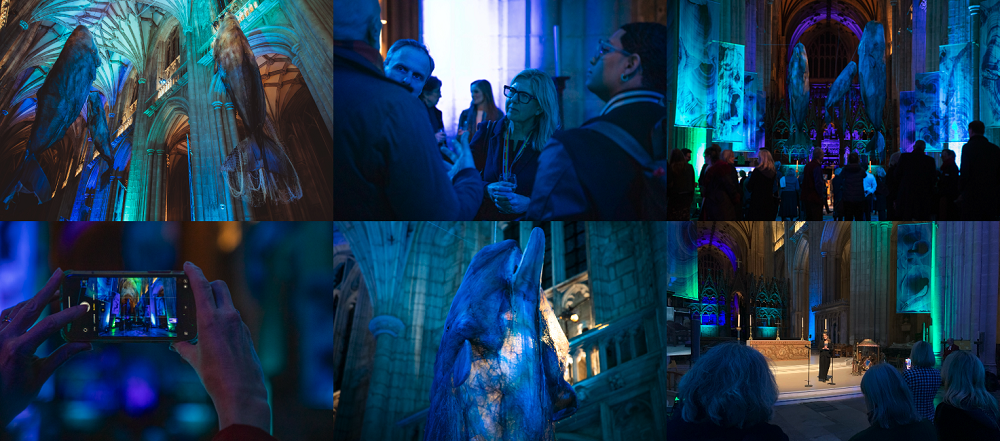
A memorable evening at Winchester Cathedral, where guests enjoyed an exclusive first look at Whales
Ocean Giants: A Night of Science, Art, and Law
On 6 February, nearly 500 people attended Ocean Giants: Whales and the Worlds They Shape , a sold-out evening of interdisciplinary talks and performances.
Professor Jon Copley captivated the audience with his research on whale falls—the deep-sea ecosystems that develop around whale carcasses. He explained that when a whale dies, its body sinks to the ocean floor, creating a unique “island of life” for deep-sea creatures. Scavengers strip the flesh, and species like osedax worms feed on the bones, sustaining these ecosystems for decades. Professor Copley emphasised that these whale-fall habitats are vital for numerous deep-sea organisms. He also highlighted how historical whaling has disrupted these fragile ecosystems by removing whales before their bodies could naturally provide support for deep-sea life, a loss we are only beginning to understand in terms of long-term ecological impact.
Dr Ryan Reisinger explored the movements of whales across the globe, delving into their migration patterns, the ecosystems they shape, and the challenges and opportunities for conserving these ocean giants. He discussed how tracking whale migrations helps scientists understand where whales feed and where they give birth—crucial knowledge for protecting their habitats. Dr Reisinger emphasised that effective conservation requires scientifically coordinated efforts at local, national, and global scales, ensuring that these vast oceanic corridors remain safe for the whales that travel them.
Dr Dina Lupin gave a compelling overview of the legal history surrounding whales, tracing how laws have shaped—and been shaped by—human relationships with these animals. They explored the long history of whaling as a commercial industry, highlighting how whales were once seen as economic resources, including their use in the First World War. Dr Lupin also examined the evolving discussion around legal personhood for whales and other animals, questioning whether this concept aligns with how whales exist in the world. Their talk shed light on the complex ways whales have influenced both national and international legal frameworks.
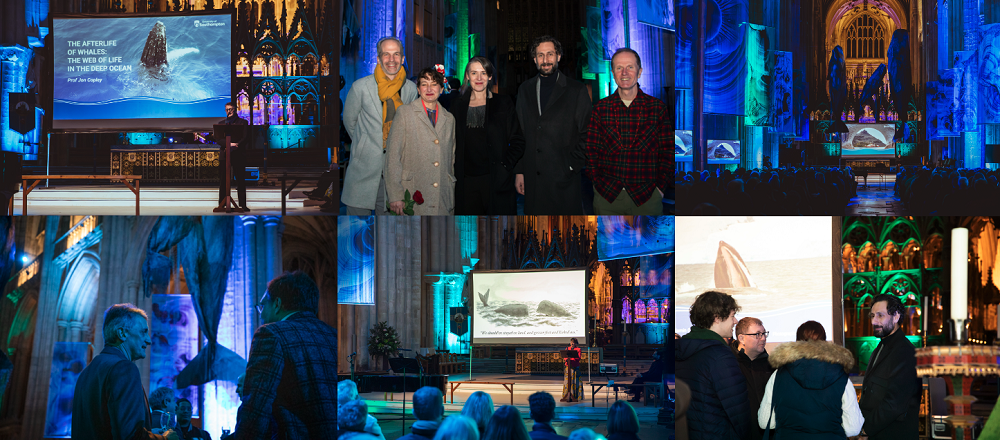
An unforgettable evening at Ocean Giants: Whales and the Worlds They Shape. Nearly 500 attendees were captivated by expert talks on whale falls, global migrations, and the legal landscapes that have shaped our relationship with these remarkable creatures. [Photos by Southpoint Films]
The first of the artistic performances, Philip Hoare delivered a powerful reading from the conclusion of his acclaimed book, Leviathan, or The Whale (2008). This poignant moment was followed by the world premiere of Entail (2025), a unique collaboration between Professor Will May and Dr Benjamin Oliver . A blend of spoken word and piano, Entail paid tribute to Hoare’s evocative writing, weaving text from Leviathan, or The Whale with a musical composition inspired by the themes of the book.
Dr Liz Gre , Dr Benjamin Oliver , Dr Drew Crawford , and Dr Pablo Galaz concluded the evening with the premiere of Echolocations (2025), an immersive live performance in response to Tessa’s monumental whale sculptures and the acoustics of Winchester Cathedral. Inspired by ocean ecologies and human impact on the natural environment, the performance featured spatialised vocals, grand piano, and live electronics. These elements layered, intertwined, and merged to create a poignant new musical experience, reflecting on the complexities of life under water and the urgent need for environmental reckoning. Echolocations explored themes of collaboration and adaptation, drawing connections between the challenges faced by whales and the broader climate crisis.
Both these music premieres are available to watch on YouTube:
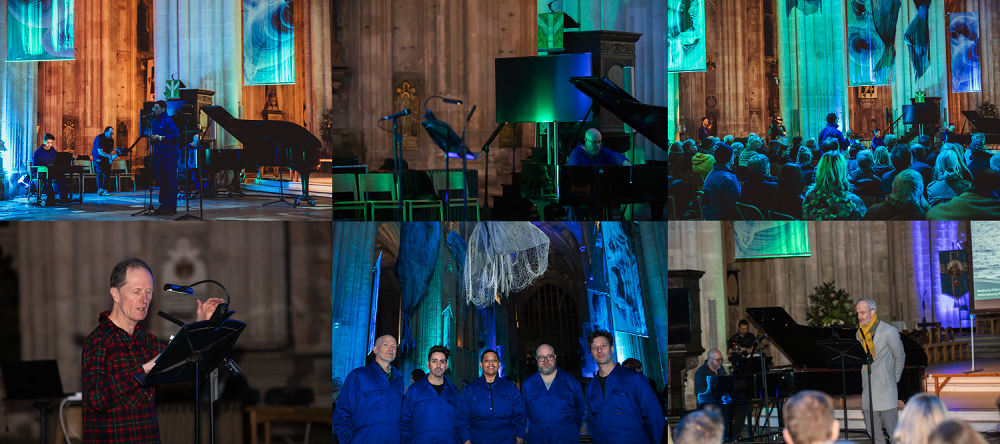
Words and music echoed through the Cathedral, from Philip Hoare’s reading to the premieres of Entail and Echolocations, each exploring whales and their worlds through sound and story. [Photos by Southpoint Films]
Ocean Giants was presented by the Southampton Marine and Maritime Institute and the Southampton Institute of Arts and Humanities .
The event was praised for its seamless integration of research spanning marine ecology, law, literature, and music. Keith Johnstone, a guest at the event, called it "the best university event I have been to in terms of showcasing interdisciplinarity in a connected way." The buzz around the evening continued well beyond the event, with widespread discussion across the University and beyond.
For a deeper dive into the themes explored in Ocean Giants —from whale vocalisations and migration routes to the far-reaching effects of human activity—read Dr Ryan Reisinger and Dr Drew Crawford’s article in The Conversation , where they share further insights into the whales at the heart of the talks and performances.
Other media coverage of the event included features in UoS News , Daily Echo , Hampshire Chronicle .
Watch the event highlights on YouTube: ' Ocean Giants at Winchester Cathedral '.
Half-Term Highlights: VR Experiences, Palaeontology, and Interactive Postcards
Throughout the February half-term (15–22 February), our University of Southampton exhibit was brought to life with hands-on experiences for visitors of all ages.
Antarctic VR Experience
On Saturday, 15 February, families embarked on an immersive 360° Antarctic virtual reality (VR) adventure aboard the RRS Discovery. They explored shipbuilding techniques and encountered penguins in a realistic five-minute film. Archaeologists
Dr Felix Pedrotti
and Neil Cooper assisted 137 visitors as they navigated this exciting journey to the icy continent. This experience is part of the University of Southampton’s
digital twin project
, which has created a 3D model of the RRS Discovery—the ship that first took explorers Scott and Shackleton to Antarctica. In collaboration with
Dundee Heritage Trust
,
National Oceanography Centre
, and the
Scott Polar Research Institute
, this initiative offers new insights into early Antarctic exploration and helps preserve the legacy of this historic vessel. Kimberley Barber, Regional Editor at the
Hampshire Chronicle
, joined the VR adventure and shared her experience!
Palaeontology Exploration
Long before whales dominated the oceans, marine reptiles like pliosaurs and ichthyosaurs ruled the seas. Visitors to the exhibit learned how Earth's oceans have evolved over time, with scientists using state-of-the-art data science and climate modelling techniques to uncover the mysteries of oceanic life. Throughout the half-term break, palaeontologists
Emily Ball
and
Aspen Sartin
guided attendees through the fascinating world of prehistoric sea creatures. The showcase was designed by
Dr Alison Cribb
and
Dr Richard Stockey
from the School of Ocean and Earth Science, bringing this exciting research to life for all ages.
Interactive Whale Postcards
Visitors to the exhibit were invited to take home one of three beautifully designed interactive augmented reality (AR) whale postcards, created by
Julian Stadon
and Ross Popovs from the Winchester School of Art. These postcards offer a unique, immersive experience that brings whale migrations to life. By scanning a QR code, visitors unlocked a 3D journey through the ocean, tracing the paths of whales and exploring their ecologies and whale song. Built on data from the WWF’s
Protecting Blue Corridors
report
, in which Dr Ryan Reisinger played a key part, the postcards highlight critical migratory paths and the threats whales face, supporting ongoing ocean conservation efforts.
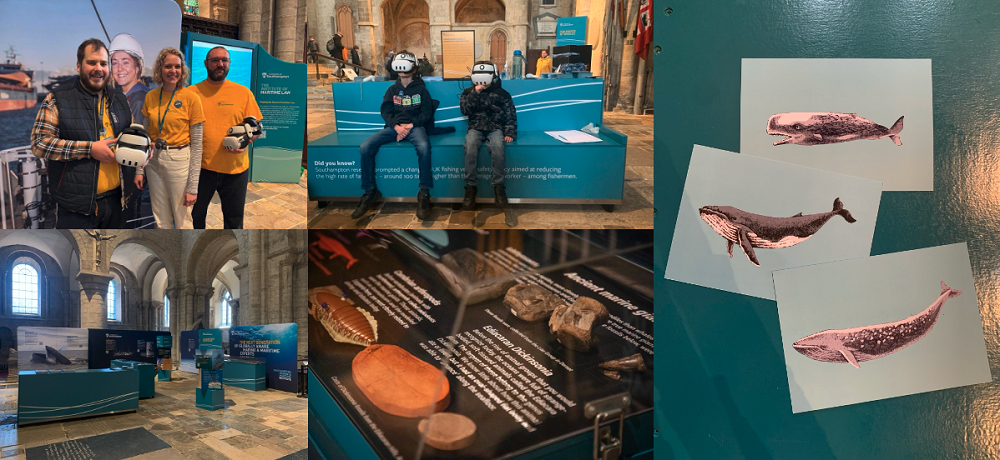
Half-term hands-on activities brought the SMMI exhibit to life—from an Antarctic VR journey aboard RRS Discovery to palaeontology showcases on ancient marine life. Visitors also explored whale migrations through interactive AR postcards, blending art, science, and conservation.
A Memorable Closing & Last Late-Night Opening
As the exhibition neared its final days, visitors took advantage of one last late-night opening on 26 February. This final evening offered a quieter, more contemplative experience beneath the soaring whale sculptures—an opportunity to reflect on the connections between art, science, and conservation.
The success of these events and engagements would not have been possible without the dedication and enthusiasm of so many individuals and teams. Our sincere thanks go to all who contributed, including:
- The Winchester Cathedral team, especially Clare Lean and Ollie Taylor, for inviting us to participate and for their meticulous support and facilitation throughout the exhibit and the events we ran as part of their programme
- Professor Stephanie Jones, SIAH, and all our speakers and performers at Ocean Giants
- Our palaeontology and VR teams for bringing our exhibit to life in half-term
- Julian Stadon and Ross Popovs for the incredible whale postcards
- Waxsii ’s Paul Haynes for the design of the SMMI exhibit
- Jo Hazell for the expert copywriting of research highlights on display
- Valley Graphics for printing and production
- Shawn and the Offix team for exhibit set-up and logistics
- Southpoint Films for capturing Ocean Giants
- Lucy Collie for leading media outreach
As we bid farewell to the exhibition, we reflect on the incredible opportunity Whales has provided to engage with the public in meaningful, interactive ways. By blending and showcasing diverse areas of expertise and inviting people to participate, we got to spark important conversations and encourage problem-solving in fresh and creative ways.
Looking ahead, the SMMI is excited to continue these conversations, nurture the connections made, and create more opportunities for future generations to engage with pressing challenges facing our oceans.
Author:
Carin Reisinger is the Collaboration & Scientific Communications Manager at the Southampton Marine and Maritime Institute (SMMI), fostering community building, driving collaboration, and showcasing marine and maritime research.