MA (Ed) Dissertation through flexible study
If you are a professional with a particular area of research interest in the field of education, the MA (Ed) by Dissertation through Flexible Study may offer you an ideal route towards a Master’s degree.
Individual study
This innovative programme does not adopt a traditional classroom model of delivery, but enables you to develop specialist expertise through a combination of independent study and small-scale research, usually in your own work context, with tutor support and full access to University facilities.
Specialist study is available across a wide range of areas, and we encourage you to contact us to discuss whether we could support you with your particular area of interest. For example, in recent years some generic areas have included:
- investigating aspects of pedagogy
- addressing curriculum-related issues in schools and colleges
- enhancing professional development
- investigating issues of inclusion and widening participation
- developing technology-based approaches to learning.
Group study
The programme is also ideal for groups working more collaboratively, and can be tailored to address organisational needs, for example, groups of colleagues working together within a single school/organisation or across a number of schools/organisations. Subject to demand, we can offer a bespoke pathway which combines a small taught component with group seminars and individual tutorials, emphasising collaboration and the role of constructive dialogue between peers as co-investigators. Group members undertake distinct but related projects, and workplace tutorials can be arranged.
To Apply
You apply through the University's online application form. Be aware that your application will not be processed until you have supplied all the required information which includes evidence of your qualifications and a research proposal. We may invite you for interview before making an offer. You can find more details here.
Contacts
Enquiries: educate@southampton.ac.uk
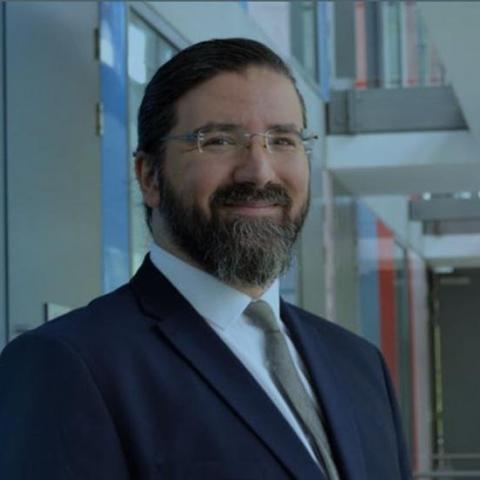
Programme tutor: Doreen Challen
Fees
Standard postgraduate taught programme fees are chargeable.
Career opportunities
You can follow the 'Flex' MA with minimal disruption to your existing career
You can strengthen your knowledge of a specialist area
Exceptional opportunities for colleagues to collaborate in complementary research or in organisational development
Key facts
One year full-time or two years part-time
Flexible start date of the next available semester
Suitable for self-motivated professionals who can work independently for extended periods
Tailored contact sessions can be arranged outside normal working hours
Typical entry requirements
Selection process:
Intake: variable
Entry normally requires a first degree and/or teaching or other professional experience, and standard University language requirements (if applicable). You will also need to demonstrate that you are well equipped to study independently, and that you possess, or are able to develop, the skills and attributes that will be essential.
Your application must be accompanied by a dissertation project proposal of about 500 words. Specific guidance is available on request. The outline will be reviewed in detail by the Programme Tutor and potential specialist supervisors.
We recommend, however, that before applying, you contact the programme tutor. The Programme Tutor may wish to have a telephone converstation with you prior to application. For further information email educate@soton.ac.uk.
Visit our International Office website or the NARIC website for further information on qualifications.
Typical course content
By definition, there are no compulsory taught modules for this programme. For an indicative outline of the content, refer to the Learning and Teaching tab.
If circumstances permit, you have access to other available Master's modules in the Education, and to participate in the broader academic life of the School. This might include for example attending lectures, seminars and accessing online learning and teaching resources.
Bespoke programme
If a School, College or other body or institution has a group of staff they wish to follow a Masters programme, we would invite them to contact the Programme Tutor to discuss how the MA Ed by Dissertation through Flexible Study may be tailored to meet both the institution’s and participant’s needs.
Please note: This specification provides a concise summary of the main features of the programme and the learning outcomes that a typical student might reasonably be expected to achieve and demonstrate if s/he takes full advantage of the learning opportunities that are provided. More detailed information can be found in the programme handbook (or other appropriate guide).
Mode of study
The programme may be followed full-time (one year) or part-time (two years). Your learning is structured around three assignments leading up to a dissertation, all of which must form a coherent portfolio. Topics are agreed with your tutor.
Assignment lengths are 4,000, 8,000 and 12,000 words, and the dissertation 16,000 (or equivalent). Although featuring a common theme, each must be distinctive and without replication.
As a ‘Flex’ student, you will work independently, in your workplace or from home, but with the support of tutorials and access to all library services for students, including electronic journals. Your studies are likely to include a balance of literature-based reading and writing, and independent research activity.
Tutor support
You will be allocated a tutor with expertise matched as far as possible with your area of interest, who will support you throughout the programme. There are no conventionally taught classes or set readings. Instead, you benefit from one-to-one tutorial assistance from your specialist tutor. Tutorials are, where possible, tailored to your requirements and can take place outside normal university hours (including, by arrangement, evenings, weekends and vacations). Where possible these are face-to-face, but where students live at a distance from the University, alternative approaches are used including email, and video links.
Assessment
Formative assessment provides feedback on your work in progress. Although your tutor will provide constructive critical commentary on your work, student-tutor dialogue also plays an essential role.
Summative assessment is based on the three assignments and dissertation, and reflects your performance in relation to Master’s level typical performance indicators.