Engineering and the Environment

Helen Czerski

BA, MSci, PhD

Primary position:
Research Fellow

Background

Helen graduated from the University of Cambridge in 2001 with a BA and MSci in Natural Sciences (Physics), and again in 2006 with a PhD in experimental explosives physics. During this time she also worked at the University of Toronto in Canada and Los Alamos National Laboratory in the USA. A continuing fascination with the world of small-scale phenomena that happen too fast for humans to perceive led her from explosives to the study of ocean bubble formation. After three and a half years spent working in the USA (at the Scripps Institution of Oceanography, and the Graduate School of Oceanography at URI), she returned to the UK in 2010 as a research fellow at the ISVR. Her interests are the optics and acoustics of bubbles, the structure of the bubble plumes in breaking waves, and the influence of bubbles on air-sea gas transfer.

She’s also passionate about public engagement on scientific topics, and has extensive experience of public lectures and demonstrations, as well as science media work.   You can find out more about that here.

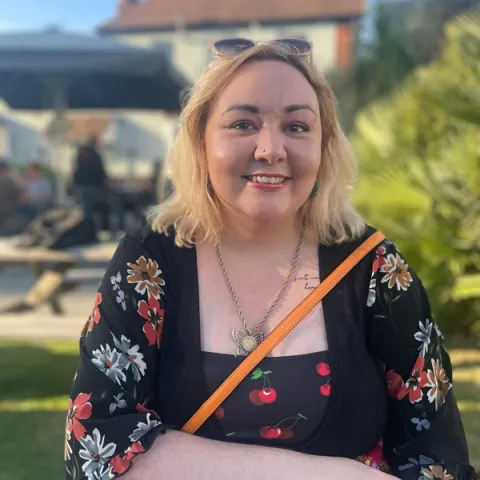
Dr Helen Czerski's photo

Publications

The University of Southampton's electronic library (e-prints)

Article

Vagle, Svein, Gemmrich, Johannes and Czerski, Helen (2012) Reduced upper ocean turbulence and changes to bubble size distributions during large downward heat-flux events. Journal of Geophysical Research, 117, C00H16. (doi:10.1029/2011JC007308).
Twardowski, Michael, Zhang, Xiaodong, Vagle, Svein, Sullivan, James, Freeman, Scott, Czerski, Helen, You, Yu, Bi, Lei and Kattawar, George (2012) The optical volume scattering function in a surf zone inverted to derive sediment and bubble particle subpopulations. Journal of Geophysical Research, 117, C00H17. (doi:10.1029/2011JC007347).
Czerski, H. (2012) An Inversion of Acoustical Attenuation Measurements to Deduce Bubble Populations. Journal of Atmospheric and Oceanic Technology, 29, (8), 1139-1148. (doi:10.1175/JTECH-D-11-00170.1).
Czerski, H., Twardowski, M., Zhang, X. and Vagle, S. (2011) Resolving size distributions of bubbles with radii less than 30 μm with optical and acoustical methods. Journal of Geophysical Research, 116, C00H11-[13pp]. (doi:10.1029/2011JC007177).
Czerski, Helen, Vagle, Svein, Farmer, David and Hall-Patch, Nick (2011) Improvements to the methods used to measure bubble attenuation using an underwater acoustical resonator. Journal of the Acoustical Society of America, 130, (5), 3421-3430. (doi:10.1121/1.3569723). (PMID:22088016).
Czerski, Helen (2011) A candidate mechanism for exciting sound during bubble coalescence. Journal of the Acoustical Society of America, JASA Express Letters, 129, (3), EL83-EL88. (doi:10.1121/1.3553175).
Czerski, Helen and Deane, Grant B. (2011) The effect of coupling on bubble fragmentation acoustics. Journal of the Acoustical Society of America, 129, (1), 74-84. (doi:10.1121/1.3514416).
Czerski, H. and Deane, Grant (2010) Contributions to the acoustic excitation of bubbles released from a nozzle. The Journal of the Acoustical Society of America, 128, (5), 2625-2634. (doi:10.1121/1.3484087).
Deane, Grant B. and Czerski, Helen (2008) A mechanism stimulating sound production from air bubbles released from a nozzle. The Journal of the Acoustical Society of America, 123, (6), EL126-EL132. (doi:10.1121/1.2908198).
Czerski, H. and Brown, L.M. (2008) Application of the slip circle construction to a spherical indenter. Journal of Physics D: Applied Physics, 41, (7), 074001. (doi:10.1088/0022-3727/41/7/074001).
Czerski, H. and Proud, W.G. (2007) Relationship between the morphology of granular cyclotrimethylene-trinitramine and its shock sensitivity. Journal of Applied Physics, 102, (11), 113515-113523. (doi:10.1063/1.2818106).
Czerski, Helen, Proud, William G. and Field, John E. (2006) The relationship between shock sensitivity and morphology in granular RDX. Central European Journal of Energetic Materials, 3, (3), 3-13.
Czerski, H., Greenaway, M.W., Proud, W.G. and Field, J.E. (2004) Beta-delta phase change during dropweight impact on cyclotetramethylene-tetranitroamine. Journal of Applied Physics, 96, (8), 4131-4134. (doi:10.1063/1.1790067 ).

Conference or Workshop Item

Sobester, Andras, Czerski, Helen, Zapponi, Niccolo and Castro, I.P. (2013) Notes on meteorological balloon mission planning. In, AIAA Balloon Systems (BAL) Conference, Daytona Beach, US, 26 - 28 Mar 2013. 15pp, 1-15. (doi:10.2514/6.2013-1295).
 

Research

Research Interests

Ocean bubbles, bubble acoustics, air-sea gas transfer, ocean bubble optics

Why study bubbles?

Bubbles are an important component of the boundary between the ocean and the atmosphere.   The sea and the sky are both enormous, and anything that is exchanged between those two enormous things has to go through a very thin layer at the surface of the ocean.   And in lots of places (especially when it's very windy), that layer is full of bubbles.    In particular, bubbles help the exchange of different gases in both directions across the boundary, and they also spit tiny particles (aerosols) up into the sky.   These sorts of details are important in weather and climate models, and my aim is to provide to those models the basic information about how bubbles form and what they contribute.

My particular focus is the natural bubble coatings.  These change the way bubbles are formed and destroyed, and they have a strong influence on the bubble's ability to transport gases and particles.   I have laboratory experiments to study the fundamental physics of coated bubbles, and I go to sea to catch them in action.


See the Research Projects section below for details of specific projects.

Primary research group:  ISVR Fluid Dynamics and Acoustics Group

Research projects

The influence of surfactants on the mechanisms of ocean bubble formation

It is known that bubbles are important for the fluxes of gas and particles across the air-sea interface, as well as for the acoustical properties of the upper ocean and on ocean optics.   Currently, very little is known about the effect of natural surfactants on ocean bubble production, and the consequences of these surfactants for gas and particle fluxes.  The aim of this project is to understand the effects of surfactants on the detailed physics of bubble formation, and then to make measurements at sea to compare with the predicted physical changes.   The lab experiment is a tank built to watch bubbles fragment in turbulence.   The water properties (temperature, salinity, surfactant content and particulate content) can be varied to study bubble formation in different environment.   Acoustical and photographic data are used to follow many fragmentation events (usually 500-1000 for each set of conditions), and overall result is a set of fragmentation statistics.   This includes the frequency of fragmentation events, the number and size of bubbles produced in each event and some information about the dynamics of the events.   Comparing these will allow predictions for how bubble production under breaking waves will be affected by differing conditions, and this will lead to predictions for how gas and particle fluxes will also change.

Turbulent Exchange: Aerosols, Bubbles and Gases

This project is a collaboration between the University of Southampton and the University of Leeds.  

Bubbles fragmenting in turbulence

Bubbles fragmenting in turbulence

Fragmented bubbles

Fragmented bubbles

Experimental bubble tank

Experimental bubble tank

Acoustical resonator

Acoustical resonator

Doing surfactant experiments

Doing surfactant experiments

Resonator deployed in the Pacific

Resonator deployed in the Pacific

RaDyO scientists on board the KM

RaDyO scientists on board the KM

KM and lil KM

KM and lil KM

Contact

Dr Helen Czerski
Engineering and the Environment
University of Southampton
Highfield
Southampton
SO17 1BJ

Dr Helen Czerski's personal home page

Room Number: 13/3063

Telephone: (023) 8059 3082
Email: H.Czerski@soton.ac.uk