Chemistry

Research Group: Computational Systems Chemistry

Chemistry at Southampton University has a world class reputation in developing and applying computational methods to chemical, biological and materials problems.

Currently Active: Yes

Our existing research activities are broadly based, covering multiple length, timescales, and methods, but are founded on strong activity in the development of new theories and computational techniques. The research is, however, unified by the common theme of exploring interacting systems, where the larger scale behaviour of the whole system arises from complex interactions of individual smaller components. Our activities are underpinned by the University’s 8000-core supercomputer, which is currently the largest in any UK university, and by an EPSRC-funded Centre for Doctoral Training in Complex Systems Simulation. The range of domains covered is quite broad, from nanoscale materials properties, atmospheric chemistry, through to biological systems.

Classical and quantum mechanical methodology development

We are pioneering the development of new methodologies for the simulation of matter, ranging from linear-scaling density functional methods in the form of the ONETEP software, through to classical and combined quantum mechanics/molecular mechanics methods for calculating protein-ligand binding affinities. The development of these approaches is always strongly motivated by relevant application areas.

Multiscale modelling

Multiscale modelling is a powerful approach in which simulations on different scales, and with different underlying approximations are unified, either by sharing independently derived parameters, or by running together as a hybrid model. We are combining simulations from the quantum mechanical through to differential equation modelling of biochemical pathways to understand better, for example, the role of calcium signalling and its effect on certain metabolic diseases.

Drug design, binding, delivery, transport and metabolism

We have a strong track record in developing and applying simulation-based methods to the drug development process, not only in predicting drug binding geometries and affinities, but also in modelling drug transport. This last problem required the development of a unique dual-resolution simulation approach combining coarse-grain membrane models and atomistic representations of a drug.

Semiconductor and metallic nanoparticles

We are studying the electronic and structural properties of a variety of nanostructures, such as semiconductor nanorods which can act as luminescent chromophores with optical properties that can be tuned by suitably adjusting their size and shape, and therefore the potential that confines electrons and holes. These can be used as light emitters in display applications, lasers, or biological labelling.

Membrane transport phenomena

Complex systems are underpinned by the notion that function emerges spontaneously and often unpredictably from the underlying individual system components. This is particularly true for biological organisations. We are using very-large scale simulation models of biological systems, focussing specifically on the membrane environment, and including realistic models of bacterial membranes, to understand how the complex interplay of molecular interactions delivers biological function.

Atmospheric chemistry

State-of-the-art electronic structure calculations are carried out on reactive molecules and their reactions of atmospheric importance in support of experimental kinetics and spectroscopic projects.


Experimental design and refinement

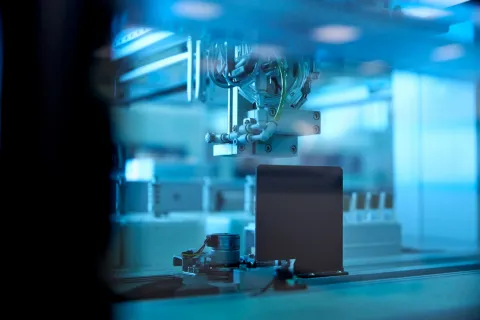
In addition to our work on modelling chemical systems, we are also developing automated approaches to link experimental and modelling data directly. Work in this area includes the development of electronic lab notebooks, automated laboratory monitoring, advanced methods for data storage, curation and sharing, and using distributed computational resources for data storage and computation.


This research is supported by research council grants and is underpinned by strong industrial links with organisations ranging from international pharmaceutical companies, Microsoft and specialised chemical software companies to smaller biotech start-up firms.


Subscribe to this feedComputational Systems Seminars in Chemistry

What's related

Selected publications associated with this group from the University of Southampton's electronic library (e-prints):

Cipriani, Giam Pietro and Makris, Miltiadis (2011) PAYG pensions and human capital accumulation: some unpleasant arithmetic. The Manchester School(doi:10.1111/j.1467-9957.2011.02251.x)
Makris, Miltiadis and Siciliani, Luigi (2011) Optimal incentive schemes for altruistic providers. Journal of Public Economic Theory (In Press)
Makris, Miltiadis (2009) Endogenous political competition and political accountability. Economics Letters, 104, (3), 151-153. (doi:10.1016/j.econlet.2009.05.006)
Makris, Matiadis (2009) Private provision of discrete public goods. Games and Economic Behavior, 67, (1), 292-299. (doi:10.1016/j.geb.2008.11.003)
Makris, Miltiadis (2009) Incentives for motivated agents under an administrative constraint. Journal of Economic Behavior and Organization, 71, (2), 428-440. (doi:10.1016/j.jebo.2009.03.013)
Makris, Miltiadis (2008) Complementarities and macroeconomics: Poisson games. Games and Economic Behavior, 62, (1), 180-189. (doi:10.1016/j.geb.2007.04.001)

Members of staff associated with this group:

Research projects associated with this group:

Attard: Biologically Active Amphiphiles

Essex: Cheminformatics, Bioinformatics and Education

Attard: Theoretical Studies Of Biological Processes: Modelling Of The Class I Immune Response Pathway

Khalid: Designing Biosensors

Frey: End-to-End Digital Support for Chemical Research e-Science Project

Dyke: Use of High Temperature Photoelectron Spectroscopy to study the decomposition of Organic Azides and other High Energy Density Materials

Attard: Theoretical Studies Of Biological Processes: Studies Of The Origins And Implications Of Language-Like Features In Junk DNA

Frey: Laser spectroscopy

Attard: Synthesis of Nanostructured Materials In Liquid Crystalline Phases

Attard: Theoretical Studies Of Biological Processes: Modelling Of Robustness And Control In Membrane Lipid Biosynthetic Pathways

Attard: New Adjuvants For Synthetic Vaccines

Dyke: Photoionisation Studies of Reactive Intermediates with Synchrotron Radiation

Attard: Physical Properties Of Biomembranes And Their Roles In Modulating The Activity Of Membrane Proteins

Essex: The simulation of rare conformational change events in proteins

Khalid: Self Assembly of DNA-lipid complexes for gene therapy

Dyke: Simulation of Electronic and Photoelectron Spectra of Reactive Intermediates

Skylaris: Simulations of biological molecules

Skylaris: Simulations of nanostructures

Dyke: Studies of Reactions of Atmospheric Importance; Characterisation of Intermediates and Measurement of Rate Constants and Branching Ratios

Essex: The simulation of biological membranes

Essex: The simulation of protein-ligand systems

Skylaris: Theory and method development

Khalid: Transport mechanisms in bacteria: Autotransporters

Frey: Ultrafast nanscale x–ray scattering

For current opportunities visit our studentship pages.