About the project
This project will improve our understanding of the role of the gut-brain axis in the pathophysiology of mental ill-health following critical illness. You will characterise the gut microbiota of critically ill mechanically ventilated patients and study gut-brain metabolomic communications and their association with mental health outcomes.
There is growing evidence describing a bidirectional communication between the gut and brain: “the gut-brain axis” (GBA). The gut microbiota is central to this network producing neuro-modulatory compounds and altering the bioavailability of important precursors.
Dynamic perturbations in the gut microbiota resulting from critical illness and related clinical interventions are significant. However, the exact link between critical illness, gut microbiome changes and the development of post-ICU cognitive and mental health impairments have not been characterised.
We need to understand the gut microbial contribution to post-ICU dysregulation. We will then be able to develop interventions to prevent or treat the debilitating cognitive and mental health impairments that are suffered by more than 40% of survivors of critical illness.
You will study critically ill patients from ICU admission to 3 months post-recovery. For each patient you will measure:
- temporal changes in their gut microbiota
- biochemical interactions between the microbiota and their gut
- their psychological health during the recovery period
You will then carry out a mechanistic study using laboratory in vitro human gut model systems. You will assess the potential of gut microbiota targeted dietary interventions to favourably alter these mechanisms.
This is a joint PhD between the University of Southampton and the University of Reading. You will be registered at and spend most of your time in Southampton.
You will gain experience in:
- Nuclear magnetic resonance (NMR) spectroscopy and mass spectrometry-based metabolomics
- microbiology
- bioinformatics
- critical care
There will be opportunities for you to present your research findings at international scientific meetings.
External supervisor
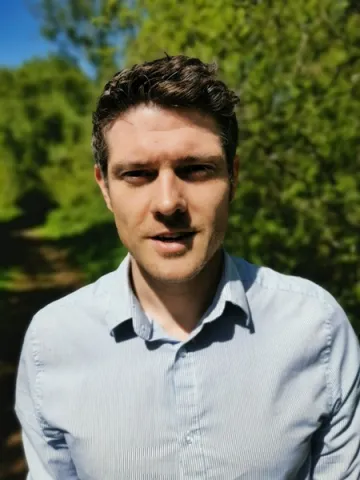
Alongside Professor Swann, you will also be supervised by Dr Ahilanandan Dushianthan.