After studying BEng Civil Engineering at the University of Southampton, an independent project on earthquake-resilient bridge columns led to published research and the opportunity to continue the work as a PhD. The long-term aim is to help advance the construction of earthquake-resistant structures around the world.
Choosing civil engineering
I studied BEng Civil Engineering at the University of Southampton. I had always enjoyed maths and science throughout school, and took Maths, Physics and Chemistry at A level. I like the structure, strategy and methods used to tackle problems in these subjects.
I chose civil engineering because I appreciate the creativity involved in designing complex infrastructure. I am fascinated by how civil engineers think outside the box to solve challenges across railways, water, structures, geotechnics and design. I am keen to contribute to innovative and sustainable solutions for global issues, and to see first-hand how they improve people’s quality of life.
Discovering earthquake engineering
For the independent project, students could choose a supervisor based on their area of expertise. I came across the earthquake engineering project offered by Dr Mehdi Kashani. It interested me because we had not previously been taught anything like it on the course.
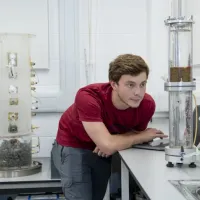
My project investigated ways to make bridge columns more resilient during an earthquake. A damaged bridge could prevent aid and rescue teams from responding, so the research explored adding elastomeric materials between the segments of a segmental column to dissipate energy. In the lab, I tested different materials and compared which would be best suited to this purpose in my dissertation.
The project was very enjoyable because, although I had completed lab work in other modules, this research was different and had clear real-world importance. I carried out the testing with a PhD student, who later published the work as a paper.
The Black Futures Scholarship has given me an amazing family and community where I've felt welcomed and supported from day one.
Karl Minta - BEng Civil Engineering
Continuing the research
The project’s success raised further questions that could not be answered within the scope of the undergraduate project alone. My supervisor suggested continuing the research as a PhD, and I am now investigating ways to improve the performance of structural walls during earthquakes. Before this, I had planned to continue to the fourth year of the MEng and then graduate.
Dr Mehdi Kashani’s expertise has been a big part of where I am now. I began with no knowledge of earthquake engineering, but his guidance and enthusiasm helped me develop a strong interest in the subject.
Joining the Black Futures community
Supported by the Black Futures Scholarship programme, I have found a welcoming community and valuable opportunities to connect with other students and researchers across the School of Engineering.
Since joining the programme, I have welcomed opportunities to meet fellow Black Futures Scholars, access networking and career development activities, and contribute ideas that help create a more inclusive and equitable environment within the Faculty.