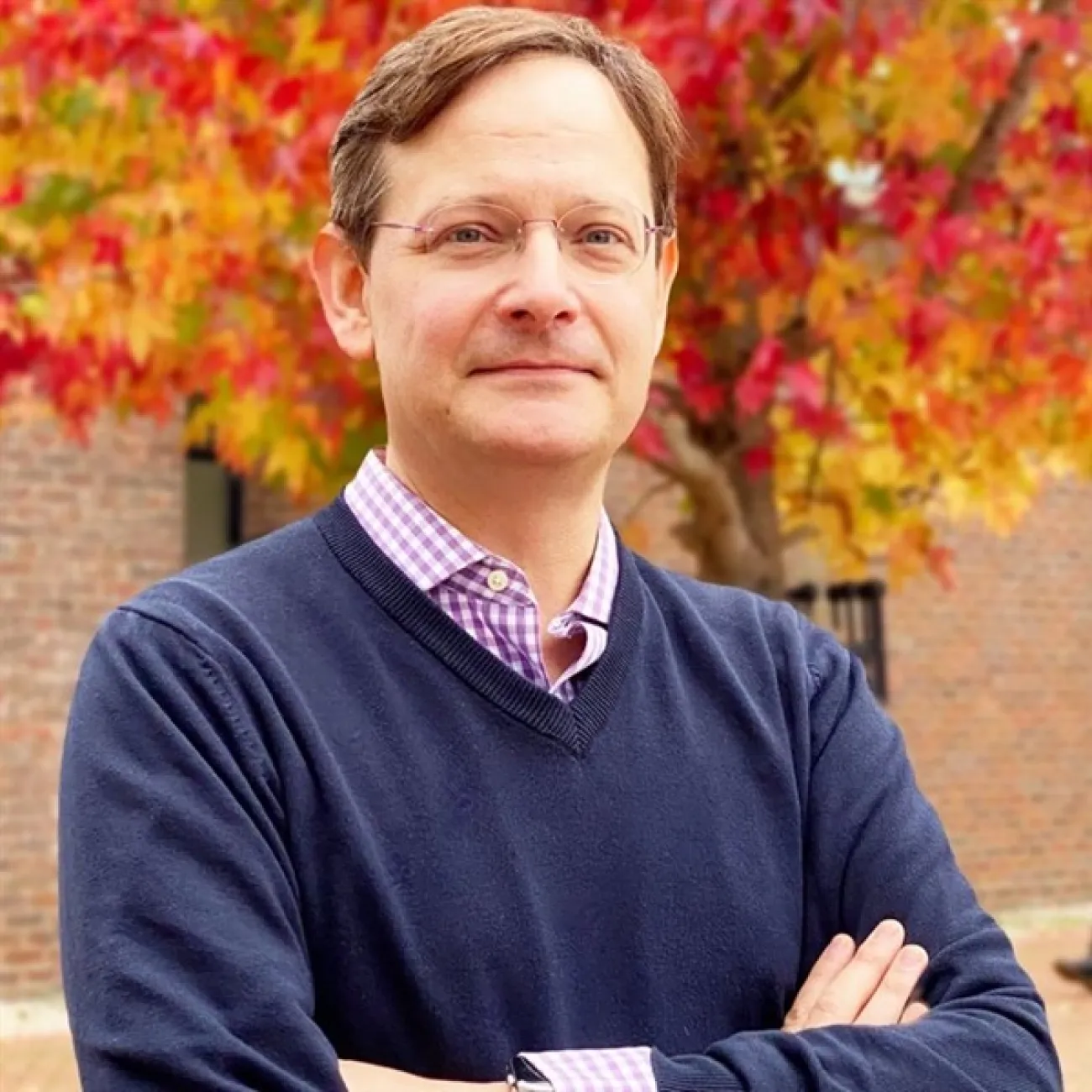
Jason Reifler is Professor of Political Science in Politics and International Relations at the University of Southampton. He joined Southampton in 2024 after eleven years at the University of Exeter, where he co-directed the Centre for Elections, Media and Participation, and he previously held posts at Georgia State University and Loyola University Chicago. He holds a PhD from Duke University and worked as a pollster in Washington, DC before entering academia.
His research asks how citizens form political judgements, and why those judgements are so often resistant to correction. He is best known for his work on political misperceptions and fact-checking, including "When Corrections Fail" (with Brendan Nyhan), one of the most widely cited studies in the field, and a subsequent programme of experimental research on debunking and prebunking, vaccine hesitancy, climate beliefs, and confidence in elections. His most recent book, The Power of the Crowd (Cambridge University Press, 2025), examines how audiences themselves can both degrade and improve social media as a source of information. A second strand of his work concerns foreign policy and public opinion, including Paying the Human Costs of War (Princeton University Press) with Christopher Gelpi and Peter Feaver, and more recent research on European defence and security.
He has led large international research programmes, including the ERC Consolidator Grant project DEBUNKER on the causes and consequences of European misperceptions, alongside awards from the ESRC, the US National Science Foundation, the Volkswagen Foundation and the British Academy. He sits on the scientific advisory board of the Mannheim Centre for European Social Research (MZES), and on the editorial boards of Political Behavior and the Journal of Elections, Public Opinion and Parties; he previously served on the boards of Electoral Studies and the International Journal of Press/Politics. He was named a Clarivate Highly Cited Researcher in 2025 and elected a Fellow of the Academy of Social Sciences in 2026.