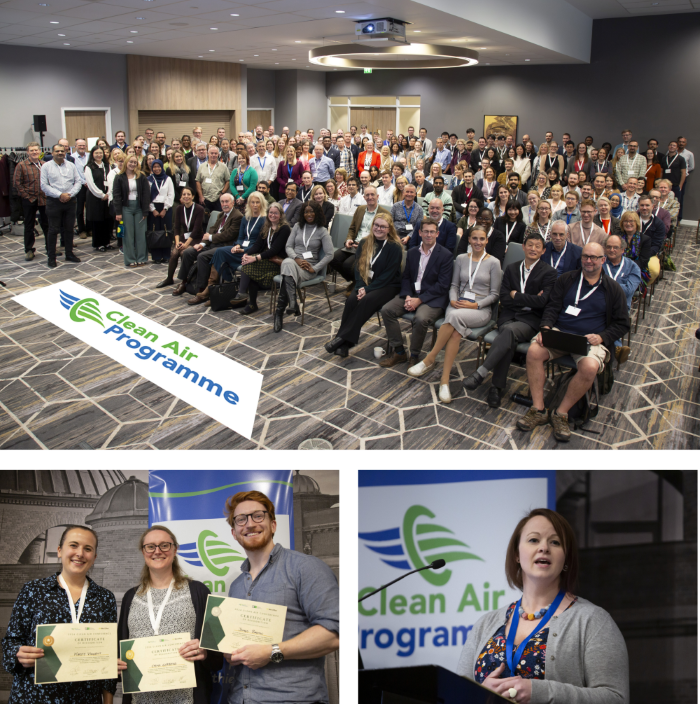
We bring together researchers from a range of specialties, spanning the physical, social and life sciences to the atmospheric sciences, arts and humanities. By working together, we can better predict and understand exposure to air pollution and its effects on our health, including the impacts on vulnerable groups such as children and older people.
Our community of engaged researchers and scientists enable the UK to address these challenges and effect change where it is needed, through:
- policy
- behavioural change
- legislation
Our work helps industry respond to the need for new technologies to limit emissions and exposure to air pollutants, reducing associated health risks and supporting cleaner growth.
Vision
Having awakened interest in the Wave 1 programme, our next challenge in Wave 2 is to facilitate the uptake of new research for public benefit and create a legacy for the investment overall.
Mission
We will work to build a programme legacy comprising our:
- networking
- communications
- knowledge exchange
We will create an integrated Clean Air Community with engaged stakeholders operating with increased knowledge and understanding.
Values
- remain respectful of different approaches.
- take advantage of expertise and technological advances in the UK.
- harnessing research talent to translate into societal benefits.
Why study air pollution?
Poor air quality is acknowledged as the top environmental risk to public health in the UK, with air pollution in the UK is responsible for ~40,000 early deaths and has a cost of ~£20bn pa to health services and business. For example, air pollution makes us more susceptible to respiratory infections and other illnesses, where particulate matter, nitrogen dioxide and ozone were estimated to cost UK businesses £2.7bn in productivity losses in 2012, and are projected to cost the NHS and social care systems between £5.3bn and £18.6bn by 2035.
How is the programme delivered?
The programme is a £42.5m research and innovation investment supported through the UK Research and Innovation Strategic Priorities Fund (SPF) and is delivered across two waves of SPF funding.
Through the first wave of investment (£20.5m), we have supported research and innovation to find solutions for clean air through:
- predictive understanding of future air quality challenges
- a systems approach to analysis
- new technologies and innovative policy and practice interventions
Our work benefits vulnerable groups, improves public health and supports clean growth.
Through the second wave of investment (£22m), we want to help the UK proactively tackle new and emerging air quality issues, relating to changing emissions, and the need to evaluate exposure across all outdoor and indoor environments as a continuum, and their impacts on vulnerable groups of people.
The programme also supports a Clean Air champion team who provide leadership and coordination across the programme and with the wider research and stakeholder community.
Our partners
The Clean Air programme is jointly delivered by the Natural Environment Research Council (NERC) and the Met Office, with:
- Economic and Social Research Council (ESRC)
- Engineering and Physical Sciences Research Council (EPSRC)
- Innovate UK
- Medical Research Council (MRC)
- National Physical Laboratory (NPL)
- Science and Technology Facilities Research Council (STFC)
- Department for Environment, Food and Rural Affairs (Defra)
- Department for Health and Social Care (DHSC)
- Department for Transport (DfT)
- Scottish Government
- Welsh Government