About the project
Developing scalable carbon dioxide removal technologies is a critical challenge for achieving net-zero emissions. This PhD will investigate novel approaches for producing highly reactive mineral materials that accelerate natural carbon capture processes. The project combines materials chemistry, particle science and geoscience to develop sustainable solutions for permanent carbon sequestration.
Achieving global net-zero targets will require both substantial reductions in greenhouse gas emissions and the deployment of technologies capable of removing carbon dioxide directly from the atmosphere. Among the most promising approaches is mineral carbonation, a natural process in which minerals react with carbon dioxide to form stable carbonate products, permanently locking away carbon for geological timescales. Although naturally occurring, these reactions are too slow to provide meaningful climate mitigation.
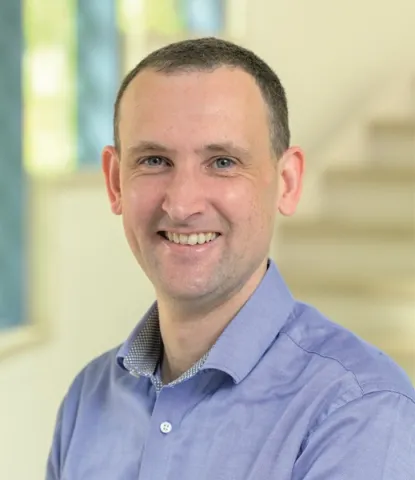
This PhD project, jointly supervised by Professor Geoffrey Hyett (Chemistry) and Professor Damon Teagle (Ocean and Earth Science), will explore innovative methods for generating highly reactive mineral particles capable of dramatically accelerating carbon dioxide uptake.
The research will investigate how emerging materials-processing technologies based on can modify mineral properties and enhance their reactivity towards atmospheric carbon dioxide.
The project sits at the interface of chemistry, geoscience, materials science and sustainability research. You will study how particle characteristics influence carbonation behaviour, establish relationships between material structure and carbon uptake performance, and assess the scalability and practical potential of these approaches for future carbon removal technologies.
Research activities will include advanced materials synthesis, particle characterisation, reaction kinetics, carbon uptake measurements and process evaluation. You will gain experience in a wide range of modern analytical techniques, including X-ray diffraction, electron microscopy, thermal analysis and surface characterisation methods. The project offers an exciting opportunity to contribute to research with global environmental impact while developing highly transferable scientific skills.
The School of Chemistry & Chemical Engineering is committed to promoting equality, diversity inclusivity as demonstrated by our Athena SWAN award. We welcome all applicants regardless of their gender, ethnicity, disability, sexual orientation or age, and will give full consideration to applicants seeking flexible working patterns and those who have taken a career break. The University has a generous maternity policy, onsite childcare facilities, and offers a range of benefits to help ensure employees’ well-being and work-life balance. The University of Southampton is committed to sustainability and has been awarded the Platinum EcoAward.