

Meningitis changed my perspective
After nearly losing her life to meningitis, Becca came out the other side with a new perspective on health, recovery, and becoming a doctor. (15 seconds)
Discovering Southampton
Medicine was one thing that made sense to me as a career. When I came to look at Southampton on an open day, I liked the feel of the city and the campus, and it just felt like a welcoming place to be.
And when I arrived here, I loved it. As soon as I moved in, I was so excited to be around new people, a new city, have that independence, and make friends.
When life turned upside down
One of my friends from home was visiting for the weekend and we'd gone out for dinner. When we got home, I started vomiting and couldn't stop. I had fever and headaches. It turned out to be meningococcal septicemia: sepsis caused by meningitis bacteria.
I was in a coma for 2 weeks – and in intensive care for a total of 6 weeks. I needed to have both legs amputated because of the sepsis, and I also lost parts of my hands. At the time, I wasn't sure what my future was going to look like, and whether I could go back to uni.
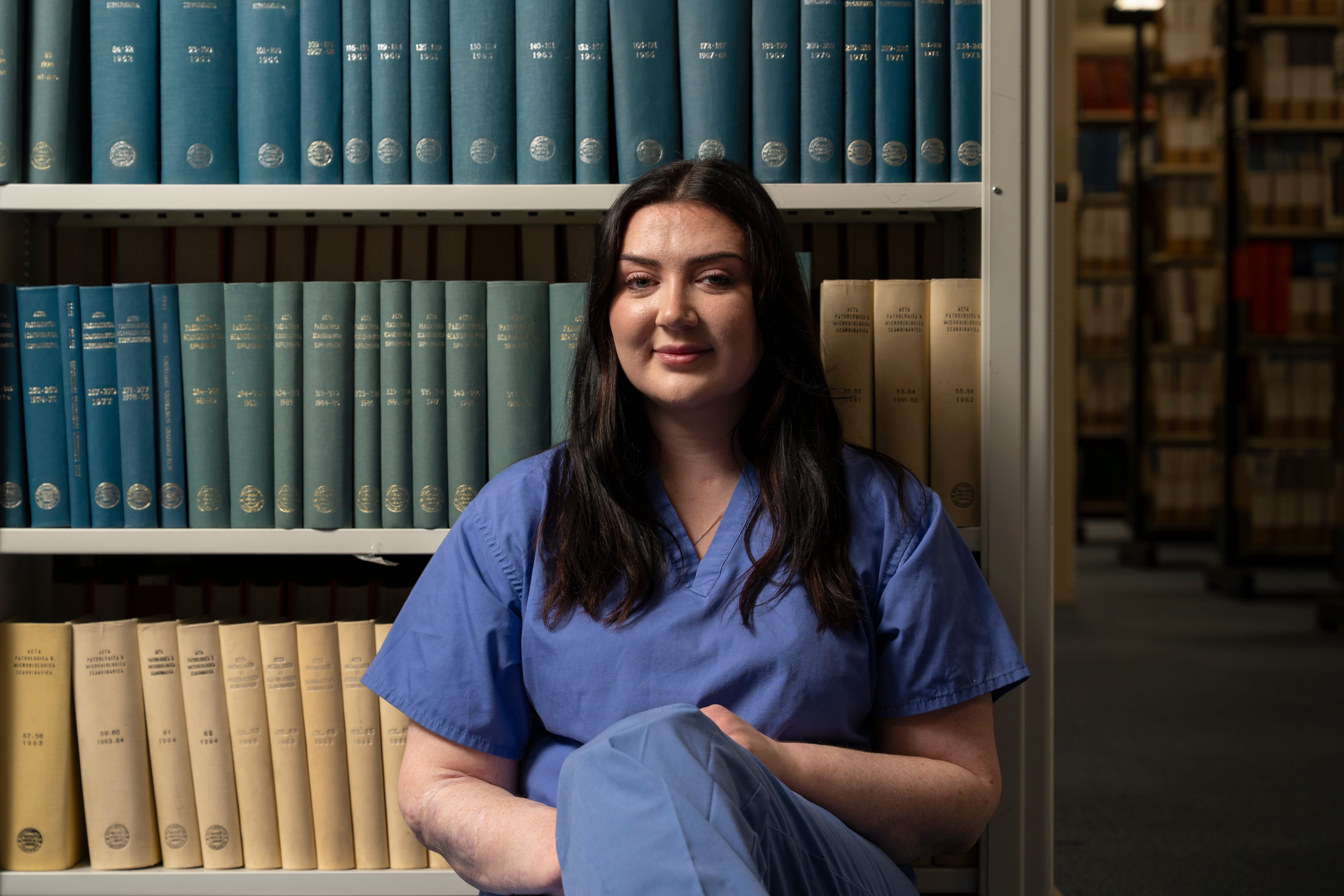
“What do you want for your first leg?”
It was hard to have settled into independent living and then lose that independence and daily functioning. It was also very isolating; I didn't meet another young amputee for a couple years.
The team would say something like, “What do you want for your first leg?” And I didn’t know what to say, so I’d be like, “I don't know, a leg, please.” Luckily, I’m very close to my family, and they supported me through all those challenges.
I tried to accept that, “this is what life is now” and to make my life how I wanted it again.
I had to learn to walk on prosthetics. Learning to walk again was a very intense process, but it was good to feel I was moving forward finally and getting my life back. It was exhausting, but in the end, I walked out of there.
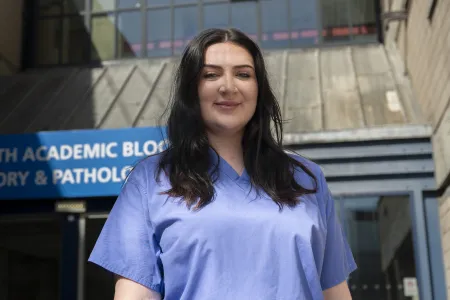
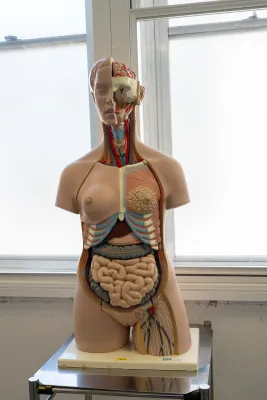
Medicine was the one career choice that made sense to me. My journey through recovering from meningitis and septicaemia hasn’t changed my goals. I think my experiences will make me a better doctor, who understands the bigger picture of what a patient is going through.
Finding my place and people again
It was hard to come back into another year group and make different friends, as well as balancing my recovery with studying. Several times, I've needed to suspend my course to take time out to recover. I feel like I’ve been here forever now – I'm part of the furniture!
I'd lost parts of both of my hands, so I self-referred onto a hand transplant programme.
There is only one team in the UK that does hand transplants, in Leeds, so it can be a very long wait. I was on the list for just over a year until I got my call.
The hand transplant was a great step forward for me. It was so empowering because it was my choice, and it’s really helped me with my independence and confidence.
A family atmosphere with real community spirit
I really like the medicine community at Southampton; the medicine society is very big, all the medics are part of that, and they do different events throughout the year.
In medicine we have ‘families’ – your medic ‘parents’ in older years mentor you and give you advice. I've got great grandkids now in medicine, so that's quite sweet.
I love my course and especially enjoy the variety of placements – we get to change what we’re doing every 6 or 7 weeks, which keeps us on our toes! It’s great to try those different areas and think about your career. Something that surprised me was how much I enjoyed paediatrics this year.
Passion for raising awareness
I work with Meningitis Now charity, as an ambassador for them. I think it's really important that people are aware of the symptoms and getting vaccinated. During the Kent outbreak I did a lot of media engagement, through the charity, to raise awareness. With university students being such a high-risk group, it’s so important to be aware of meningitis.
I’m a now rep for young people affected by meningitis, and I hope I can give people some hope that there's life after meningitis.
I’m also very passionate about organ donation, and for people to know about the importance of having those discussions with their families and their loved ones. I’m helping to raise awareness of how amazing hand transplants are, because mine made such a huge difference to my life.
New perspectives
I could have easily lost my life to meningitis back then, at the age of 19. That helps keep things in perspective for me.
I feel very grateful that I was able to come out the other side, come back to uni, and make a life for myself. Things are really good now, just how I wanted to live my life before all of this happened.
Living with a disability is not always easy. But I love my course, have a lot of good friends, a loving boyfriend, and my family. So, I’m very grateful I've been able to come out the other side and carry on with things.
What I’ve been through hasn’t changed my career direction, but I think it’ll make me a better doctor, who understands patients and what they're going through, and makes sure to involve their families.
Explore related pages
Read more of our people's stories
From digital divide to a healthy balance sheet
A fascination with puzzles, the ethos that small changes create a ripple effect and the need for truly accessible digital finance.

The harmony made when research and performance collide
Rebalancing the narrative of how music influences culture; exposing new audiences to African American women’s compositions through live performance.
From chemistry to business: a CEO's story
The vision: transform the chemical industry. From white sticky mess to gamechanger – recycling waste carbon dioxide into high-value chemicals.


