Stable Isotope Ratio Mass Spectrometry Laboratory (SIRMS lab)

More Information

About the Stable Isotope Ratio Mass Spectrometry Laboratory (SIRMS lab)

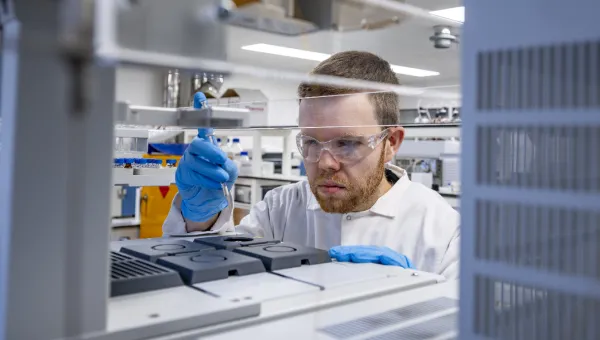
The Stable isotope Ratio Mass Spectrometry Laboratory (SIRMS Lab) is a research and teaching facility of the University of Southampton located at the National Oceanography Centre in Southampton, UK. It is hosted within Ocean and Earth Science at the University of Southampton. The facility is available for use by staff, students and external clients.

It was initially established in 1998 and has been completely refurbished in 2015 by the University of Southampton. With the support from the Natural Environment Research Council (NERC) and the University of Southampton, new instrumentation was added to extend its capabilities to serve as a central stable isotope facility for the University and external clients.

The facility enables the measurement of light stable isotope ratios such as δ2H, δ13C, δ15N, δ18O and δ34S in a wide range of organic and inorganic materials with dedicated gas source isotope ratio mass spectrometers (IRMS) operated in dual inlet and continuous flow modes. 

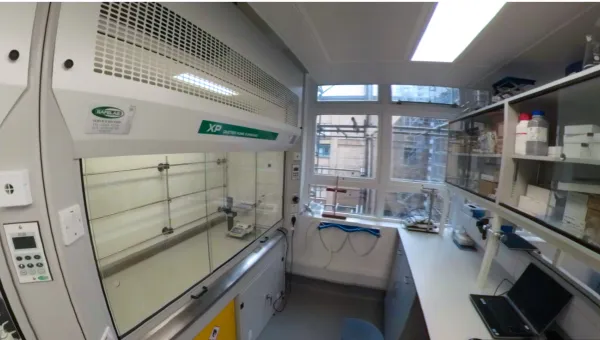
The areas of research comprise geology, biology, chemistry, ecology, medicine and archaeology. The lab consists of two dedicated laboratory spaces, which have the necessary technical infrastructure to operate several mass spectrometers and peripherals under optimal conditions.

Highlights

We currently offer the following types of analysis:

  • δ13C and δ18O in carbonates
  • δ13C, δ15N and δ34S as well as %C, %N and %S in bulk organic samples
  • δ2H and δ18O as well as %H and %O in bulk organic samples and minerals
  • compound specific δ2H and δ13C in organic extracts
  • % total organic carbon (TOC) in sediment samples
  • % total inorganic carbon (TIC) in sediment samples

We can also provide sample preparation services such as freeze drying, grinding, weighing or decarbonation.

There is a separate wet laboratory and weighing room available adjacent to the lab, which contain an ultraclean laboratory dishwasher, a drying oven, ultrasonic baths and two Sartorius ME5 microbalances with 1µg resolution.

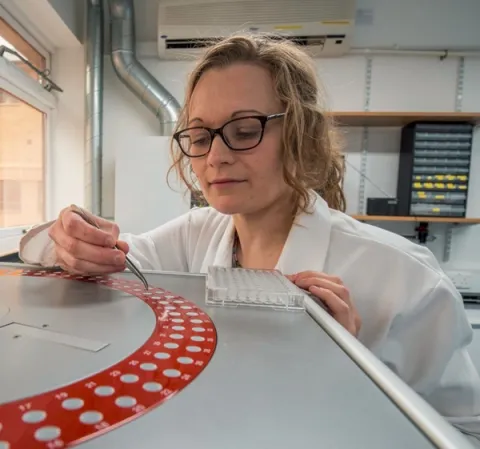
The facility also includes a palaeoclimate sample preparation laboratory in a separate space from the analytical lab, which offers a suite of microscopes, drying ovens, sieves, ultrasonic baths, water purifier and a freeze dryer, which can be used for extensive and long term sample work up like washing, wet sieving and sample drying as well as single foraminifera specimen picking for subsequent stable isotope analysis.
Complete our MS Form to request sample analysis from the Stable Isotope Ratio Mass Spectrometry Facility.

Technical specification

Instrumentation: inorganic materials

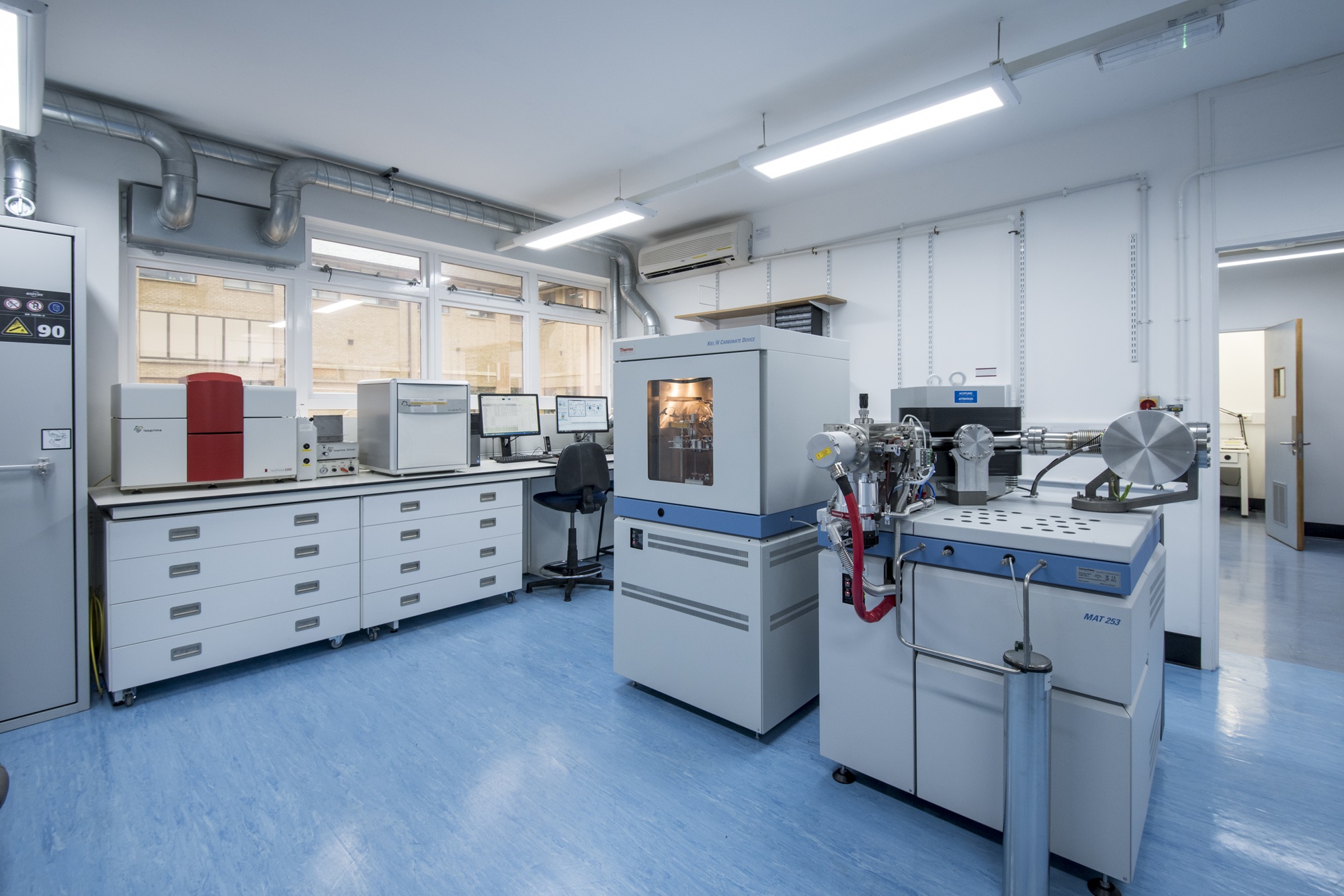
Thermo Scientific DI-IRMS MAT 253 (dual inlet mode) with an automated Kiel IV Carbonate Device for the analysis of δ 13 C and δ 18 O in a broad size range of biogenic carbonate samples (5-120 µg) including single species, mainly foraminifera, but can be used for bivalve shells, brachiopods, otoliths, corals and bulk marine or terrestrial sediments as well. 

This state-of-the-art instrument provides the highest linearity at highest sensitivity for this type of analysis, while enabling high sample throughput through full automation of the analytical process. An overall external precision of 0.04‰ for δ 13 C and 0.08‰ for δ 18 O is reached for samples greater than 20µg.

Some examples for applications of this type of analysis are in the palaeoclimate area with the reconstruction of sea surface temperature, ice volume, sea level and palaeo-productivity. In the field of archaeology it can be used to help to track human and animal migration.

Thermo Scientific DI-IRMS MAT 253 with Kiel IV Carbonate Device


Instrumentation: organic materials

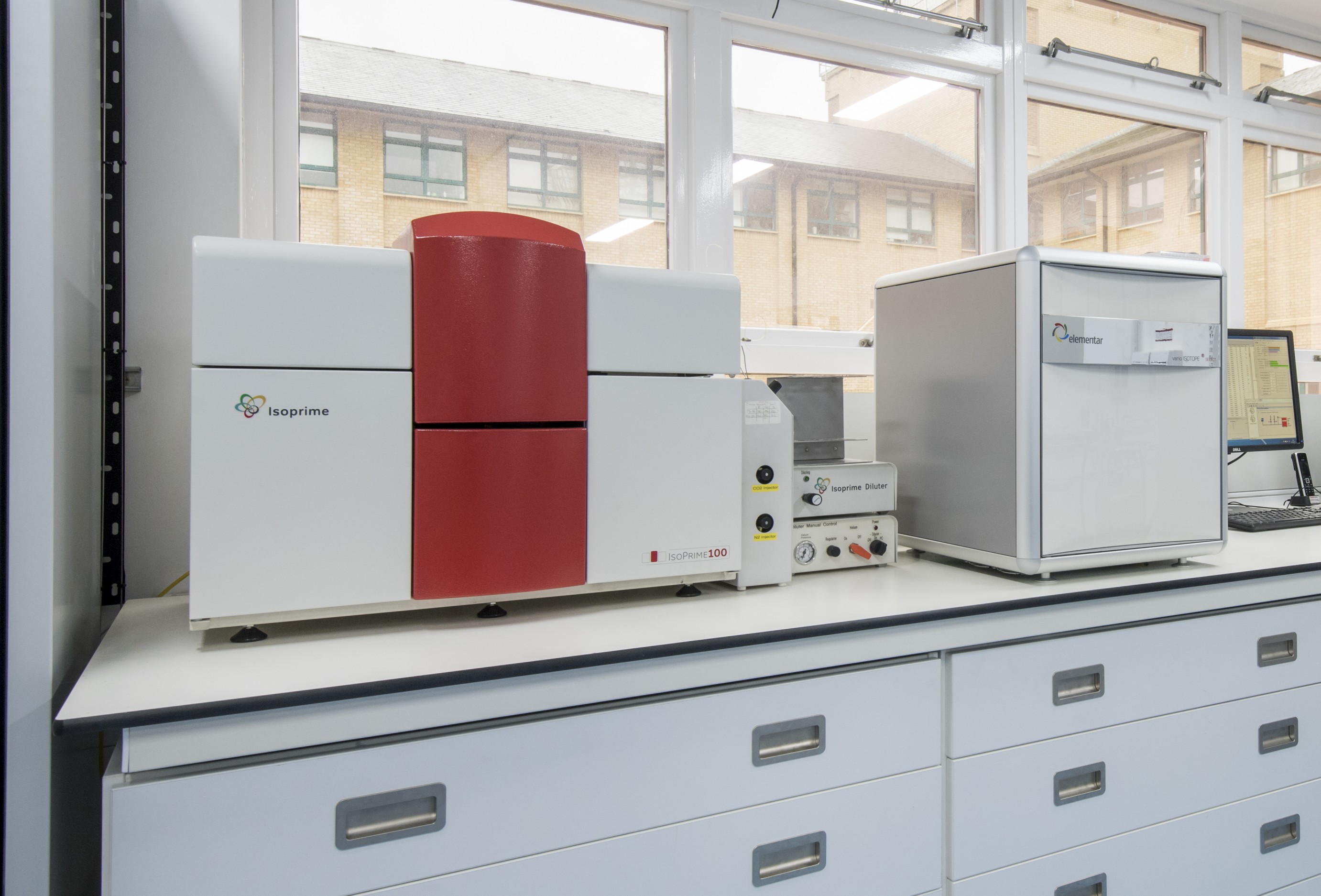
Elementar Vario Isotope Select Elemental Analyser interfaced with a refurbished Isoprime continuous flow IRMS (Isoprime 100) for routine analysis of primarily δ 13 C and δ 15 N as well as elemental concentration (%C and %N) of bulk organic matter. This includes sediments, animal tissue, plant material, plankton filters, food and beverages etc., including isotopically enriched samples.

This type of analysis is used in ecology, food web studies, palaeoclimate reconstruction, geolocation (isoscapes), animal migration, archaeology and biogeochemistry.

Elementar Vario Isotope Select Elemental Analyser


Our Elementar Vario PyroCube Thermal Conversion Elemental Analyser interfaced with an Isoprime GeoVisION continuous flow IRMS is currently dedicated to the analysis of δ 13 C, δ 15 N and δ 34 S simultaneously in a broad range of bulk organic materials as well as the corresponding elemental concentrations ( %C, %N, %S ). Sample matrices include sediments and soils, plan material, animal tissue, glass fibre filters, etc.

Options:

  • The instrument can be configured to run stable isotope analysis of δ 18 O and δ H of any bulk organic matter in a 1400°C pyrolysis mode as well (plus %O and %H ).
  • In combination with an Agilent 7890 gas chromatograph (GC) with an Isoprime GC-5 combustion interface connected to the Isoprime GeoVisION IRMS we can offer compound specific δ 13 C or δ H analyses ( CSIA , e.g. in selected compounds like fatty acids and lipids from complex organic extracts).

Applications:

  • geolocation (Isoscapes)
  • forensics 
  • hydrology 
  • ecology 
  • palaeoclimate reconstruction
  • product authentication
  • food web studies
  • animal migration
  • archaeology
  • biogeochemistry


Stable Isotope Ratio Mass Spectrometry Laboratory (SIRMS lab)

Get in touch to find out more about our facility and how we might be able to work with you.

Mr Bastian Hambach

Stable Isotope Ratio Mass Spectrometry Laboratory (SIRMS lab), University of Southampton, National Oceanography Centre, European Way, Southampton. SO14 3ZH

Related research areas